
To talk about moving in together well, pick a calm private moment, name the topic out loud instead of hinting, explain your own reasons without asking for a decision, then ask open questions about what your partner actually wants. You need a rough budget, your lease dates, and a sense of your deal-breakers before you start. The whole conversation usually takes one evening and a few follow-ups spread over a week.
Most couples do not struggle with the idea of living together. They struggle with the fact that asking out loud makes it real, and with the possibility of hearing a no that is not a maybe.
What You Need
Bring facts, not feelings alone. Facts keep a hard conversation from turning into a debate about who loves whom more.
- Your lease end date and notice period. In most US leases that is 30 to 60 days, so the timing of a move is often decided months ahead.
- A preliminary budget. Rent, utilities, internet, renters insurance, moving costs, deposits, and the furniture and kitchen equipment one of you does not own yet.
- Your reasons. Company, saving money, finishing a degree, a job move, caring for a family member, or simply wanting more time together. Money is the most common reason and the hardest to say out loud, but it is a legitimate one.
- Your deal-breakers. Things that would make you leave or ask for a second bedroom. Know these before you fall for a smooth answer.
- Household priorities. Quiet hours, pets, guests, working from home, how clean the kitchen has to be, whether you want a shared bed on day one.
- How much time each of you can give this. Apartment hunting and landlord conversations take evenings. If one of you works nights, plan around that now.
How to Talk About Moving in Together: Step-by-Step
How to Talk About Moving in Together Without Rushing
Readiness is not a date on the calendar. Two people dating for two years can be less ready than two people dating eight months, because one has never had a real fight with the other and the other already knows how they repair.
Before you raise it, check three things on your own. Can you name three reasons you want to live with this person beyond convenience? Have you both been through something hard together and come out the other side? And could you describe a realistic worst case, like a breakup with a shared lease, without falling apart?
Therapists who work with couples often point to the difference between sliding into cohabitation and deciding on it together. Sliding is the slow drift where one person’s stuff appears at yours until neither of you remembers choosing it. Deciding means both people said yes out loud, to a specific plan, on a date you both know. Couples who decide tend to have a much easier time, because the question on the table is the expectations, not whether the relationship is serious.
When you bring it up, be careful about the shape of the question. “Would you ever consider moving in together?” invites a safe maybe. “I’ve been thinking about living together in the next year. What does that look like to you?” invites a real answer. You are sharing your direction, not demanding a date.
Compare What Each Person Wants From the Move
Write your lists separately before you compare them. Comparing afterwards, once each of you has said it out loud, goes much better than trading lists live.
Cover location and commute, how much space you each need, pets, privacy, guests, accessibility, and where you both see yourselves in three years. Then sort everything into two piles: needs and preferences.
A need is something you cannot do without. A preference is something you would like. Two bedrooms may be a need for someone who works from home and shares walls with thin plaster. Whether you adopt a dog together is usually a preference, and preferences are where compromise is normal and easy.
The pile that gets skipped is identity. One of you may picture a shared life with the same friends, the same meals, the same holidays. The other may want to keep their own routines intact. Say that out loud before the move, not after the third argument about a holiday.
Review the Finances Honestly

Money is where most cohabitation fights start, and it is usually the topic people avoid because it feels cold for a romantic conversation. Say it plainly instead. Couples who agree on numbers before signing anything tend to have far less resentment later.
Go through the monthly recurring costs first: rent, utilities, internet, renters insurance, subscriptions, parking, and pet costs. Then the one-time costs: deposits, first and last month, moving help, and anything one of you has to buy.
Decide how rent gets split. Fifty-fifty is simple and fair when incomes are close. When they are not, a percentage of take-home income keeps the ratio stable even as salaries change. Pick the method once and write it down, including what happens if one of you loses income for a while.
Be clear about debt. Student loans, medical bills, and credit card balances do not disappear when you merge households, and a partner who hides one is telling you something. Agree on what the other person is and is not responsible for, since in most states someone who is not on the lease or the account is not liable for it.
Two questions people skip: whose name is on the lease, and who gets access to whose accounts. Shared accounts for a shared bill are sensible. Shared access to personal banking is a bigger decision and needs its own conversation.
Agree on Responsibilities and Personal Space
Divide the actual labor before you divide the space. Rent and utilities are easy because they are numbers. Chores are where resentment hides, because the person who notices the empty bin is usually doing the noticing.
List everything that has to happen in a month: dishes, bins, vacuuming, laundry, dishes after dinner, bathroom cleaning, fridge leftovers, restocking, and maintenance. Then assign each one an owner. A rotation works better than shared responsibility, because “we” doing something means nobody does it.
There is a name for the invisible planning work of tracking what the home needs, and it is the mental load. If one of you is keeping the list in your head, say so and split the tracking too.
Personal space needs its own rules. Agree on alone time and how much, quiet hours during the day for work or sleep, whether you each get a room, how often friends can stay over, and whether doors close or stay open. Remote work changes this more than couples expect, so negotiate calls, headphones, and camera-on days like anything else.
Choose a Location and Housing Checklist
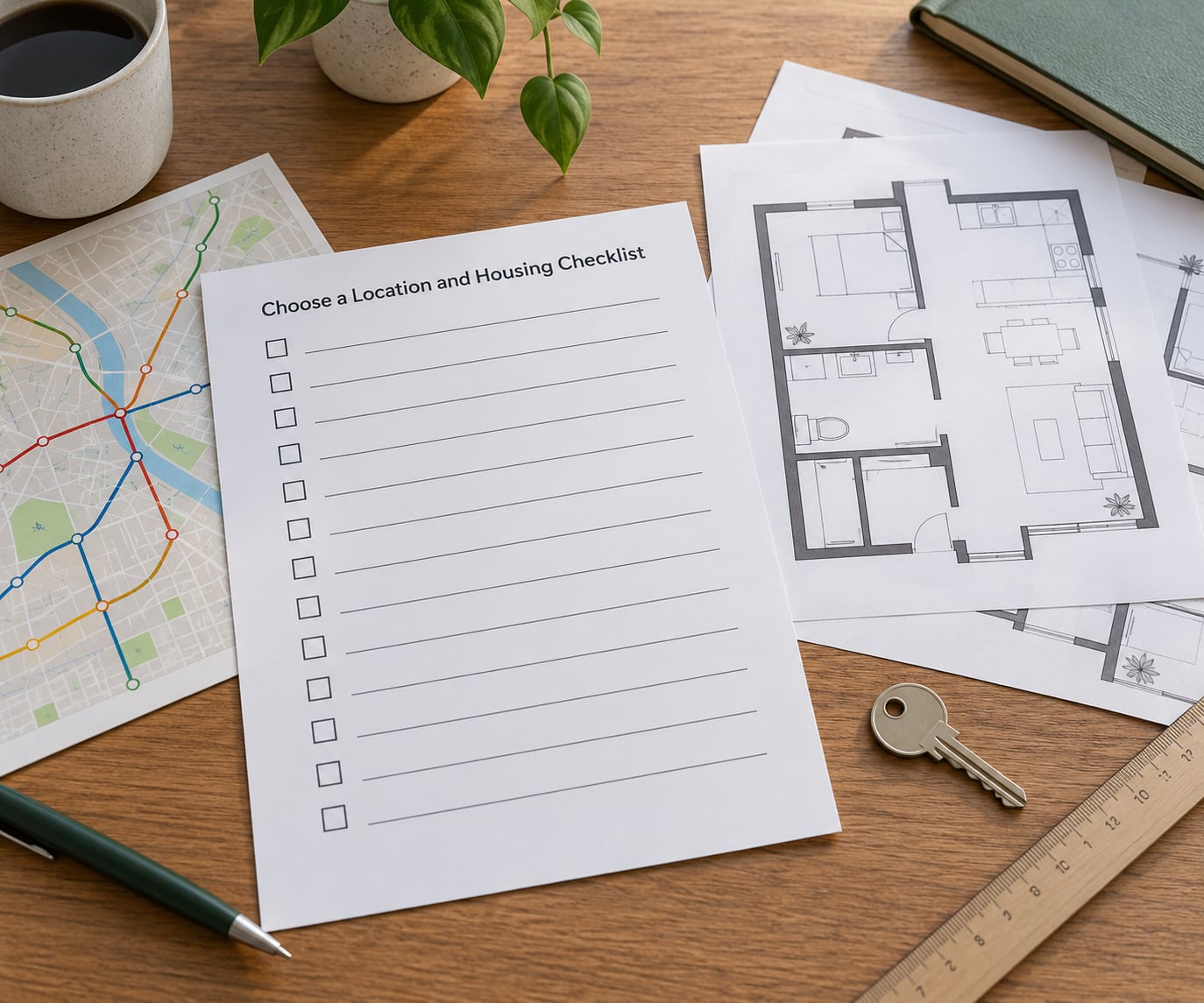
Turn what you each said you want into a checklist you can actually search with. Both of you write a separate list, then merge them and rank.
Cover max commute time, neighborhood safety at night, home size, parking or transit access, schools if that matters, pet policy, accessibility, and lease terms. Add the things that end up mattering more than expected: in-unit laundry, a second bathroom, storage, sunlight, walkability, noise from neighbors, and how thick the walls are.
Two structural decisions sit above the apartment hunt. The first is moving into one person’s existing place versus finding something new together. Moving into an existing place is cheaper and faster, but one person owns the space and the other can feel like a guest without defined rights on paper. Finding somewhere new is slower and costs more, and the most-upvoted advice in UK parenting forums tends to be that a fresh place is worth the wait for exactly that reason.
The second decision is the lease. Longer leases give stability and worse breakup math. Shorter leases or month-to-month terms cost more and keep the exit easier. Whichever you pick, agree on what happens to the deposit and the furniture if you split before the term ends.
Set a Timeline and Try the Plan
Break the move into dated steps instead of one big event: decide, search, apply, give notice at both places, pack, and move in. Put the dates somewhere you both see. A calendar shared by two people solves more disagreements than most conversations do.
Then test the plan before you commit to a year. Some options that work: several long stretches of a week at each other’s place, a month-to-month arrangement, a six-month sublet while one of you stays, or keeping separate leases for a defined trial period with a set date to decide.
Whatever the trial, watch the unglamorous things. Who does the dishes when you are both tired. What happens when one of you needs silence at nine on a Tuesday. How you argue and whether you repair. Those are the real preview.
Make the Final Decision Together
At the end, say the plan back out loud in your own words, including the parts that are still unsettled. Something like: “So we are looking at two-bedroom places near the transit line, splitting rent by income, each keeping our own room, and deciding in three months whether to sign a twelve-month lease.”
Name the unresolved things honestly. If guest policy is still fuzzy, say it is still fuzzy and put a date on it. Unstated assumptions turn into disputes later, and a named open question is just a task.
Do not use ultimatums. A deadline you announce as a threat is a pressure tactic, and it produces a yes that does not hold. If either of you is not genuinely ready, pause the timeline. Deciding not to move in together is a real outcome, and it is often the healthiest one on the table.
Common Mistakes
Treating a move-in as proof of commitment. Ask instead what the two of you want. Cohabitation without a shared plan is very common in the US, roughly 59% of adults aged 18 to 44 have done it, so it is not a milestone by itself. The older idea that moving in raises divorce risk has largely been debunked, and the real driver of breakup risk is money, not the lease.
Assuming income equals contribution. The partner who earns more may pay more, but that does not settle who plans meals, tracks the utility bills, or remembers the filter needs changing. Divide money and labor separately, out loud.
Skipping the hard topics because the mood is good. Money, chores, and alone time get harder the longer they wait. Pick the evening when nothing else is going on and start with the least charged one.
Compromising too quickly. Agreeing to a 50/50 split that stretches one person, or a guest policy you hate, to keep the peace, builds resentment. A real compromise leaves both people able to live with it.
Trusting vague promises. “We will figure out the bills later” means you will not. Replace every promise with a number, a rule, or a date.
Skipping the trial period. The most common regret in long-running relationship advice threads is moving in before the relationship has been tested by conflict. A few months of shared nights costs nothing compared with a shared lease you cannot leave.
Conversation Tips and Useful Phrases
The wording does most of the work. Scripts you can say out loud beat advice to communicate better.
- Opening: “There is something I have been thinking about for a few months, and I want to talk it through rather than just spring it on you.”
- Asking: “What does the next year look like for you?” then stay quiet long enough for a real answer.
- Stating a need without blame: “I need two nights a week where I am completely on my own. That is not about you.”
- Handling a hard no: “Thank you for telling me honestly. Is the concern about timing, about us, or about the practical side of it?”
- Disagreement: “We have now said the same thing three different ways and landed in the same place. Can we each take a day before we try again?”
- Scheduling: “Let us put Thursday evening in the calendar for this so neither of us has to remember.”
- With family or friends: “We have made a decision after thinking about it carefully. I would really like to hear your thoughts, but we are not changing it today.”
That last line matters. Family and friends who think it is too soon are adding an external pressure the two of you did not choose. You can hear them once, thank them, and stop rehearsing the decision for other people.
Frequently Asked Questions
How do I start the conversation if one person is more excited?
Do not pretend the gap is not there. Say it plainly: I am more ready than you are, and I want to understand what would need to happen for you to feel ready. Ask whether it is timing, money, loss of independence, or something about the relationship itself. Then agree on a date to talk about it again instead of pressing for an answer tonight. Unequal enthusiasm is information, not a negotiation.
How should we divide expenses if we have different incomes?
Two common methods work. Split by percentage of take-home income, which keeps the ratio stable even when salaries change, or split fifty-fifty and let the higher earner cover extras. Either is fine as long as you pick one, write it down, and revisit it at a set point, such as every six months or after a raise. Keep money separate from labor and decide both in the same conversation.
What if our lease dates do not line up?
Most leases require 30 to 60 days notice, so a mismatch is common and usually solvable. One person can serve out the remaining term while the other moves in and you search together, or you can start looking early and time the handover. If neither can absorb the overlap, a short month-to-month rental buys you room. Agree on how the overlap is paid before you start, not after the deposit is due.
Do we need to be engaged or married before moving in together?
No. Plenty of couples cohabit first and marry later, and plenty of engaged couples live apart for years. What matters more than the ring is whether you have done the actual work: talked about money, chores, alone time, guests, and what happens if you break up. If those conversations have gone well, the legal status is not what protects the relationship.
How long should we take to decide whether to move in together?
There is no correct number of months, and a year of dating does not guarantee readiness. Give the conversation two to three sittings over a couple of weeks, then decide whether you agree on the practical terms. If you cannot agree after that, the obstacle is not the timeline. A trial period, such as extended stays or a month-to-month arrangement, is a perfectly reasonable answer for couples who want more information first.
Conclusion: Start With One Honest Conversation
Learning how to talk about moving in together comes down to three things: shared readiness instead of pressure, specific plans instead of vague promises, and permission to pause. Gather your facts, name the topic plainly, go through money and household labor honestly, and give the answer room to breathe for a few days.
Start tonight by each writing down your three reasons, your three nonnegotiables, and the month you would feel ready. Then compare the pages.