A short video call does two jobs at once: it confirms the person on the other end is really who their profile says they are, and it tells you whether you want to spend an evening in person. Learning how to video chat before a first date takes about five minutes of planning and ten minutes on the call itself.
The awkward part is rarely the technology. It is asking. So here is the plan: how to ask without making it a test, which app to use, what to check before you join, how to keep the call short, and what to watch for while you are both on screen.
What You Need Before the Call
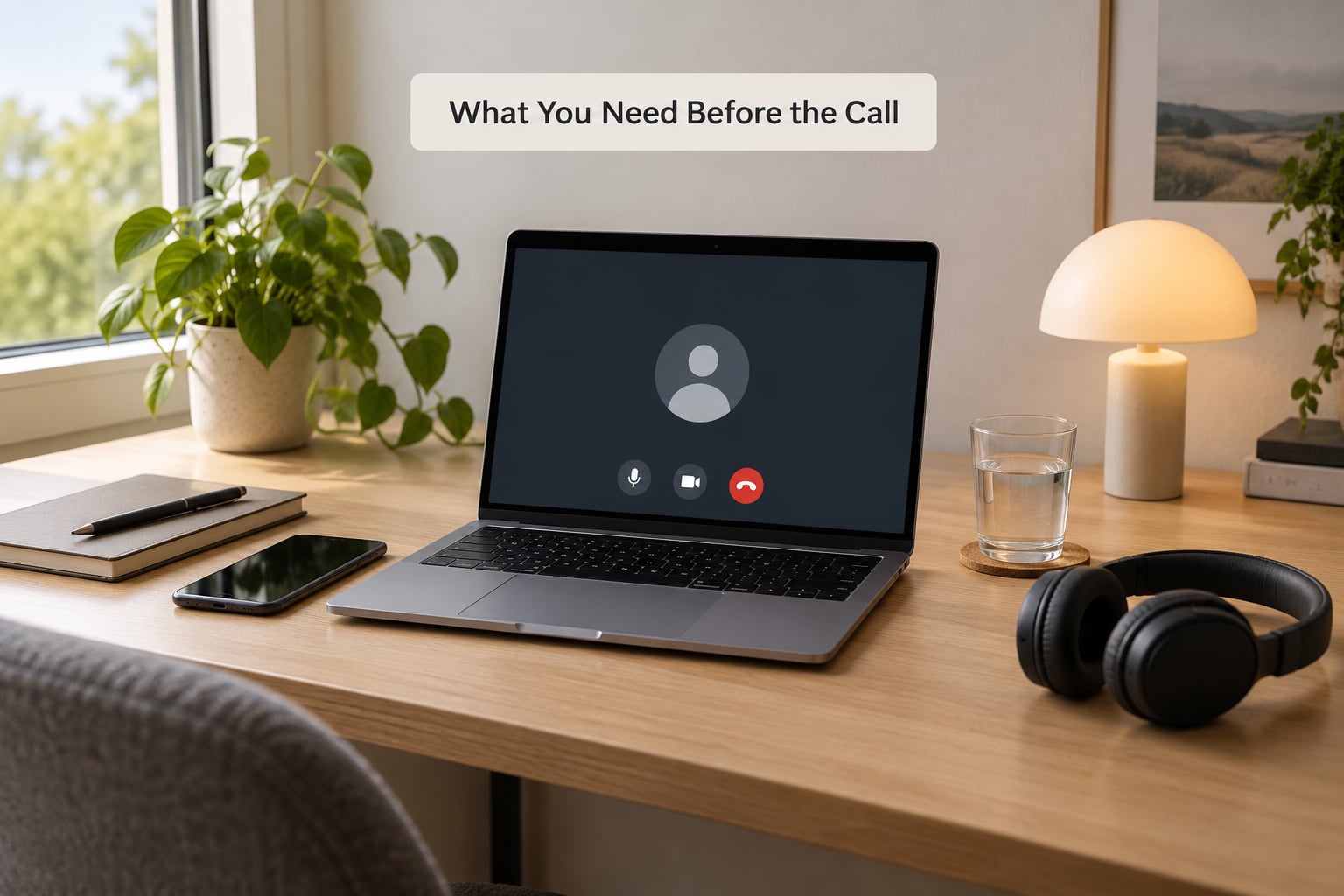
You need four things, and none of them are expensive or hard to arrange.
A private space. Check who can see or hear you before you commit to a time. A room with a door you can close beats a shared living room, and a bathroom is a last resort rather than a choice. Say something simple if you need to, like “I am at my sister’s for this one, can we do tomorrow instead?”
Light in front of you, not behind you. A window or a lamp facing your face is enough. Sitting with a bright window behind you turns you into a silhouette, and the other person squinting at a dark outline is not a good compatibility test for either of you.
A device and connection that hold up. A phone on a full charge and steady wifi will do. Mobile data is fine if it is strong, but expect the picture to soften on a busy network.
A plan for boundaries. Decide in advance how long you are willing to be on the call, what you will not discuss, and what you do if you want out. People who set that quietly beforehand handle an awkward call far better than people who hope it will pass.
A plan for after. If the call goes well, you are still meeting in a public place, telling a friend where you are, and sorting your own transport home. A video call lowers the risk of meeting a stranger; it does not remove it.
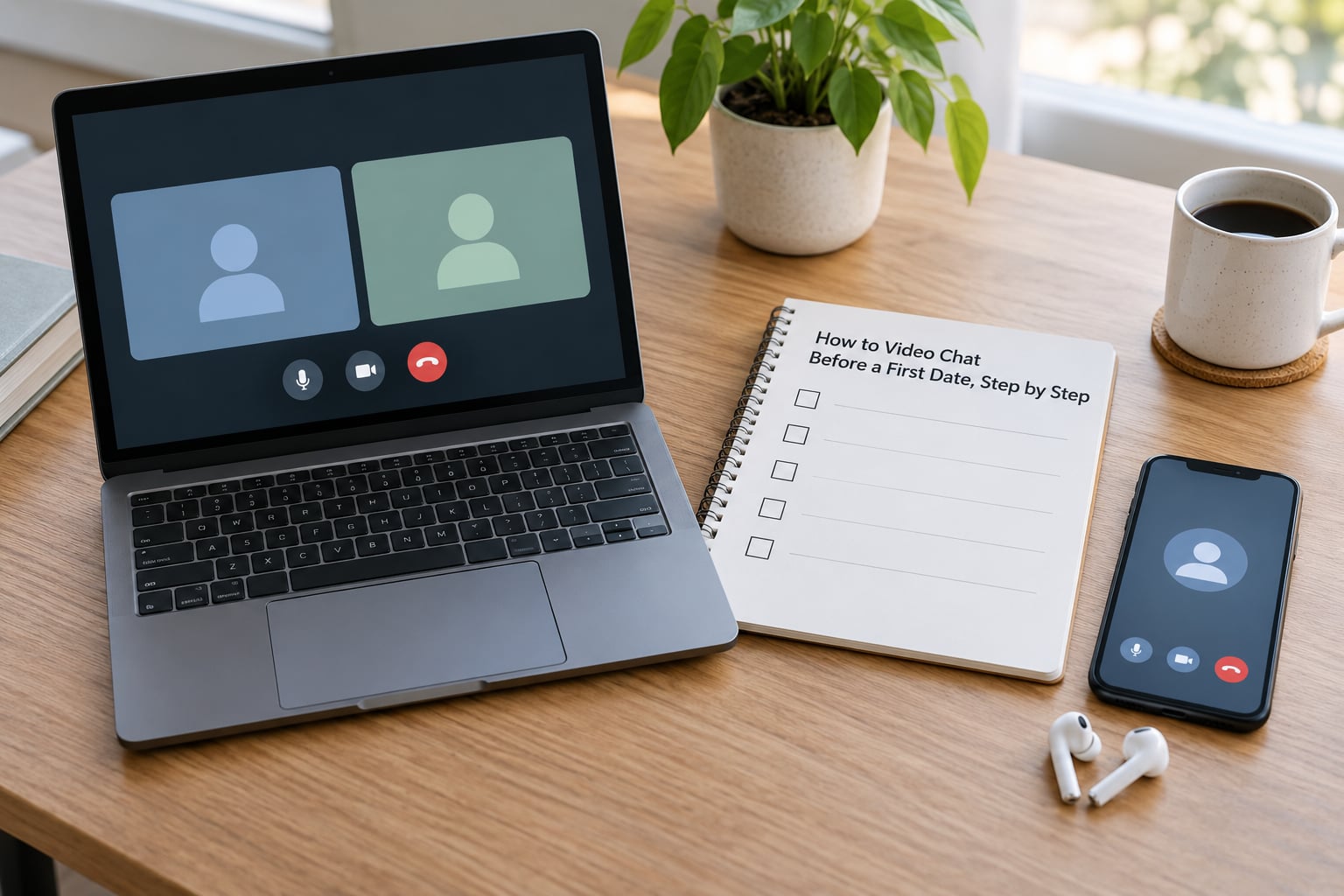
How to Video Chat Before a First Date, Step by Step
Step 1: Ask When You Both Feel Comfortable
Ask a couple of days into chatting, once you have exchanged enough messages to have something to talk about but before the conversation has hardened into a pen-pal rhythm. Earlier than that and it feels transactional. Much later and you have already built up an idea of the person that a real face can contradict.
Keep the ask small and specific. A time, a length, and no pressure works better than “we should video chat sometime”, which gives the other person room to never answer.
- Simple ask: “I would be up for a quick video chat before we meet, just to say hi properly. Ten minutes, maybe Wednesday evening?”
- Lower-pressure ask: “No pressure at all, but would you be open to a short call before we plan anything?”
- When they cannot: “That is completely fine, we can skip it.” Then move on. A person who respects a no is easy to meet in person.
People in r/dating_advice and r/hingeapp report the same pattern over and over: the ask itself is not usually the problem, the vagueness is. A clear, brief, easily-declined request gets accepted far more often than an open-ended suggestion.
Step 2: Choose a Familiar and Private App
Use the video feature inside the dating app if it has one. Staying in-app keeps the conversation on the platform where the profile, the photo verification badge and the block and report tools already live, and it means nobody is asking you to install anything or share a phone number too early.
If the app has no video, agree on something both of you already have installed. The usual options are FaceTime on Apple devices, Google Meet, WhatsApp, or a Google Voice number if you would rather not hand over your personal number. Skype still works but most people now have something more recent on their phone.
Skip anything that arrives as an unexpected link, and skip anything that needs a download, a VPN, or a screen-sharing permission. Legitimate video calls do not need that. A request to move to a different app before you have spoken to anyone is a reason to slow down, not speed up.
Step 3: Test Your Setup Before the Call
Two minutes of checking saves an awkward ten minutes. Send a test call to yourself, or open the camera on both devices and look at the picture before the other person is waiting on the other end.
- Camera height: at or just above eye level. A laptop flat on a desk gives you a view up someone’s nose, which is a hard look to recover from.
- Audio: earbuds with a microphone beat laptop speakers, and they stop other people in the room hearing your half of the conversation.
- Background: a tidy wall, a shelf, a lamp. Nothing with your full name, your address, a family photo, or a building layout that shows exactly where you live.
- Connection: close streaming apps and downloads. If the picture keeps freezing, switch to audio rather than spend the call apologising for buffering.
- Battery and storage: both are the boring reasons calls die mid-conversation.
Nothing about you needs to look perfect. Reviewers consistently report that an apologised-for messy kitchen or a slightly nervous opening reads as human, and honest is easier to like than staged.
Step 4: Keep the First Call Short and Structured
Ten to twenty minutes is the sweet spot. Shorter than that and you learn almost nothing about how they talk. Longer and you are both on camera performing, which is tiring and tells you less than a good coffee does.
Give the call a shape so neither of you is rescuing silence. A simple run: open with a light question, spend a few minutes on something from your existing chat, then get real about logistics and the date itself.
- Open easy (two minutes). Where you are, what you have been doing today, a low-stakes opinion you both have.
- Build on the chat (five minutes). Pick up something you have already joked about or disagreed on. Text humour reads very differently out loud.
- Get concrete (five minutes). What you each enjoy doing, what a normal week looks like, what you are looking for right now.
- Sort the date (three minutes). Where, when, who is paying, how long you are staying.
- Close cleanly (one minute). Say what you enjoyed and confirm the plan. Waving on a date is fine, ending on a yes or no is better.
Have two or three prompts in your back pocket in case it goes quiet. Ask what they are reading, what they would do with a free Saturday, or what made them take the photo on their profile. Silence is usually nerves on both sides, not a verdict.
Decide how you will end it early if you need to. “I have to run, but this was really nice, let’s talk later” works. Disappearing without a word feels worse than any awkward call.
Step 5: Look for Compatibility Beyond Chemistry
Attraction is easy to fake for fifteen minutes. What you are actually gathering on this call is how they treat small moments.
Watch how they handle a server, a barista, or anyone else on the call. Notice whether the questions they ask back are real or interview-shaped. Listen for whether they talk about people in their life with warmth or with a running scoreboard of what others did wrong.
Readers in r/OnlineDating put it plainly: a call does not create chemistry, it just shows you whether there is any to build on. A good reaction to your request is itself a signal. Someone who is willing to be seen, makes time, and does not mind a slightly messy background is telling you something real about reliability.
On the other side, a flat refusal with no reason, a camera that is conveniently always broken, or a rush to get you onto another app before any conversation has happened are all reasons to pause.
Step 6: Decide Whether an In-Person Meeting Makes Sense
Afterwards, write down three things: did the person look like their photos, did the conversation flow both ways, and did I want more of it or less? Two out of three is enough to justify a coffee. Zero is a clean, early no that cost you nothing.
If you do meet, keep the first meeting short and public. A coffee, a drink in a busy bar, or a walk where other people are around. Share the venue and time with a friend, keep your own transport, and do not share a drink you did not see poured.
For a long-distance match, the call changes role. It stops being a prelude and becomes the date itself, which is fine, as long as you both know that and you still keep your other contacts outside the app until you have met in person at least once.
Common Mistakes to Avoid
Sharing a public link to strangers. Never join a link you did not expect. Use the app’s own call button, or a contact you both added on purpose.
Joining a call from a profile that does not match. If the video shows someone you did not agree to meet, end it, block, and report inside the app.
Getting flirty too early. A ten-minute call with someone you have never met is not the place for that. Keep the tone warm and ordinary.
Recording the call. Never, for any reason, without telling them first. It is illegal in several places and it ends things immediately.
Oversharing personal details. Keep to your first name, your general area, and your work in broad terms. No home address, no workplace entrance, no bank details, ever.
Ignoring small warning signs. A background that never quite matches, a partner who appears in frame at the wrong moment, a story that changes every time you ask, a mention of money or investment. Block and report rather than investigating further.
Treating awkward silence as a verdict. Most first video calls are slightly awkward. If both people are trying, keep going for another few minutes.
Pressuring someone who said no. If they do not want to be on camera, respect it. One person in r/datingoverthirty described being called demeaning and blocked for hesitating, and regretted not simply complying. Nobody owes a stranger their camera.
Forgetting the follow-up. Send one message the same evening. Silence after a call you both enjoyed is its own answer.
Frequently Asked Questions
Should I video chat before a first date?
Yes, if you want to. A short call confirms the person matches their photos and shows you whether you enjoy talking to them, and it saves you a wasted evening. It is not required and it is not a pass-fail test. Treat it as one comfortable data point, then still meet in a public place.
Is it normal to ask for a video call before meeting?
It is common, and most people expect it. What matters is how you ask: name a time, name a short length, and make it easy to decline. A vague message like we should chat sometime tends to get ignored, while a specific and low-pressure request usually gets a straight answer.
How long should a video chat before a first date be?
Ten to twenty minutes. Long enough to hear how they talk and to notice whether the conversation goes both ways, short enough that nobody is performing. Longer calls often get exhausting, and very short ones tell you almost nothing beyond whether the connection works.
What if they refuse to video chat?
A single no with a reason, such as poor wifi, an uncomfortable room, or genuine camera shyness, is worth respecting. A flat refusal with no reason, a camera that is always broken, or pressure to move to another app instead is a red flag. Either way, nothing changes about meeting in a public place.
Is there any risk in video chatting with a date?
Yes, but it is mostly about information rather than safety. A live call can be faked with filters or AI-generated video, so treat it as one layer of checking, not proof. Keep your first name and general area private, use the in-app option when there is one, and never share addresses, workplace details, or financial information.
What if I hate being on camera?
Say so early, before the ask, and offer alternatives: a voice call, a short video at a time when you are at home, or meeting in a public place straight away. Plenty of people hate cameras and date perfectly well. What matters is honesty in advance, not pretending to be comfortable on the spot.
Conclusion
Start with one small decision: pick the option you are most comfortable with, the in-app video button if there is one, and message a specific short time with an easy way to say no. Fifteen minutes of talking saves you a whole evening of finding out the person was never real, or simply not for you.
Then keep the in-person part cautious and ordinary. Public place, your own transport, a friend who knows where you are. Even after a video chat in 2026, that is still the sensible plan.