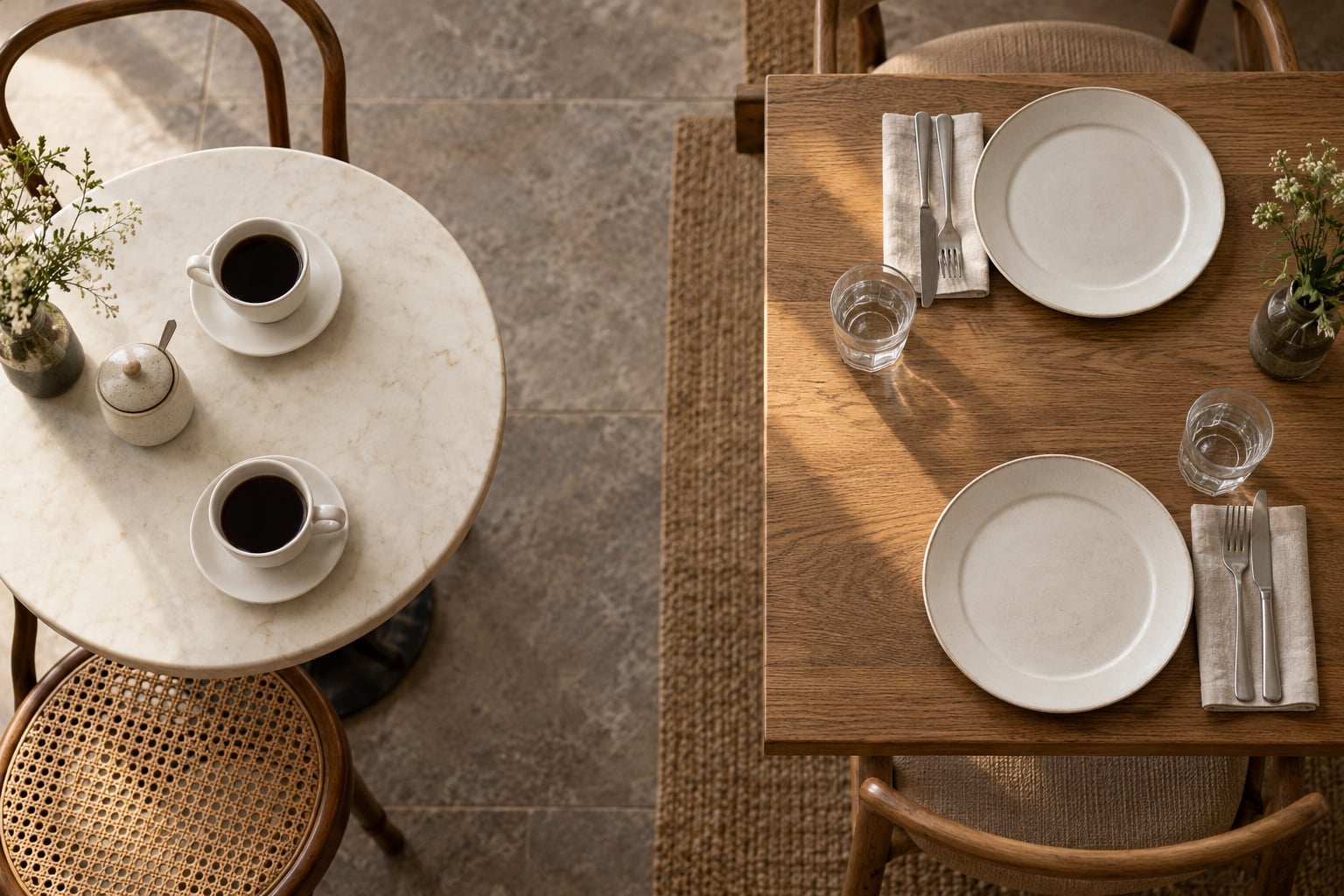
If you are meeting someone for the first time, coffee is the safer pick and dinner is the better pick only when you already know there’s something worth an evening. A coffee date is a short, low-pressure daytime meeting where the conversation is the whole activity; a dinner date is an evening meal that runs two to three hours and carries real social weight. For most first dates, the coffee date vs dinner date decision comes down to how well you already know the other person.
That rule is the most repeated answer in the Reddit and GirlsAskGuys threads on this question: strangers you met online get coffee, people you have already been talking to for weeks get dinner. Everything else — cost, safety, conversation pressure, whether the date reads as romantic — flows from that single fact.
This guide is for first-time daters, people returning to dating after a long break, and anyone picking an online match’s first in-person meeting. It also covers the practical bits nobody writes down: who pays, how long the date should last, and how to offer coffee without sounding like you didn’t try.
Updated for October 2026.
Table of Contents→
- Coffee Date vs Dinner Date Which Is Better at a Glance
- Coffee Date vs Dinner Date: Cost and Time
- Coffee Date vs Dinner Date: Conversation and Comfort
- Coffee Date vs Dinner Date: Safety and Flexibility
- Coffee Date vs Dinner Date: Romance and Second-Date Potential
- Which Should You Choose?
- Frequently Asked Questions
- Conclusion: Choose the Date That Feels Sustainable
Coffee Date vs Dinner Date Which Is Better at a Glance
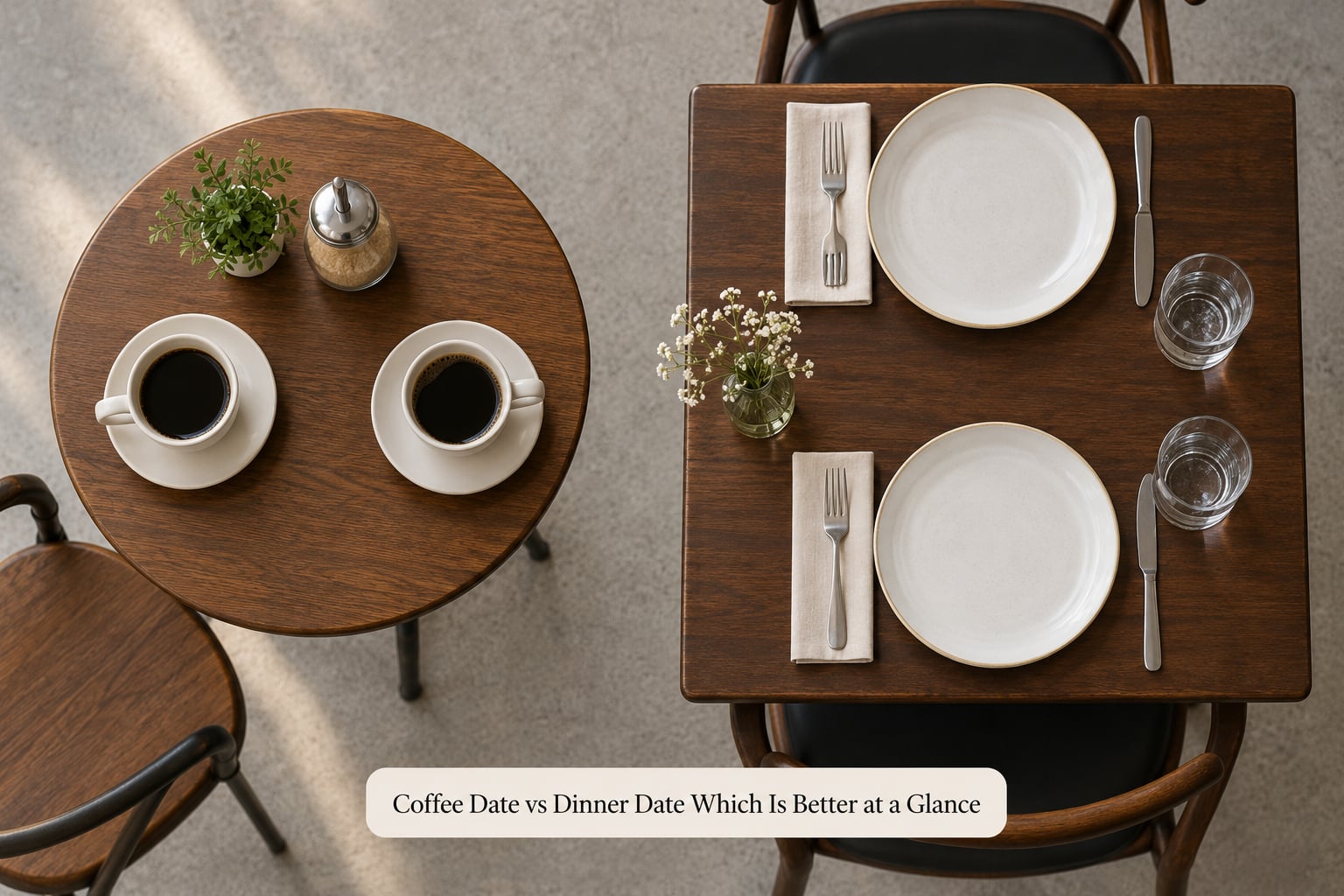
| Factor | Coffee date | Dinner date |
|---|---|---|
| Best fit | Online matches, blind dates, anyone you have not met in person | Someone you have already talked to, or an existing friend |
| Typical length | 45 to 90 minutes | Two to three hours |
| Cost commitment | Low, two drinks and maybe a pastry | High, an entree each plus drinks and transport |
| Conversation pressure | Medium, no activity to buffer silence | Lower, food gives you both something to do |
| Easy to end early | Very easy, you finish your drink and go | Hard, you wait on the check and the courses |
| Transport home | Simple, daytime and early evening | Needs a plan, alcohol and late timing |
| Romance level | Low to moderate | High |
| Food expectation | None, nobody has to order a meal | Real, and it shapes the whole evening |
| What it signals | I want to know you before I invest an evening | I’m willing to give you my whole night |
| Who should pick it | The person who knows less about the other | The person who knows more, or both of you |
Read the table bottom-up and the pattern is obvious. Coffee wins every practical row. Dinner wins every emotional row. The columns are answering two different questions: coffee asks whether the meeting is safe and worth the time, dinner asks whether the meeting feels romantic.
Coffee Date vs Dinner Date: Cost and Time
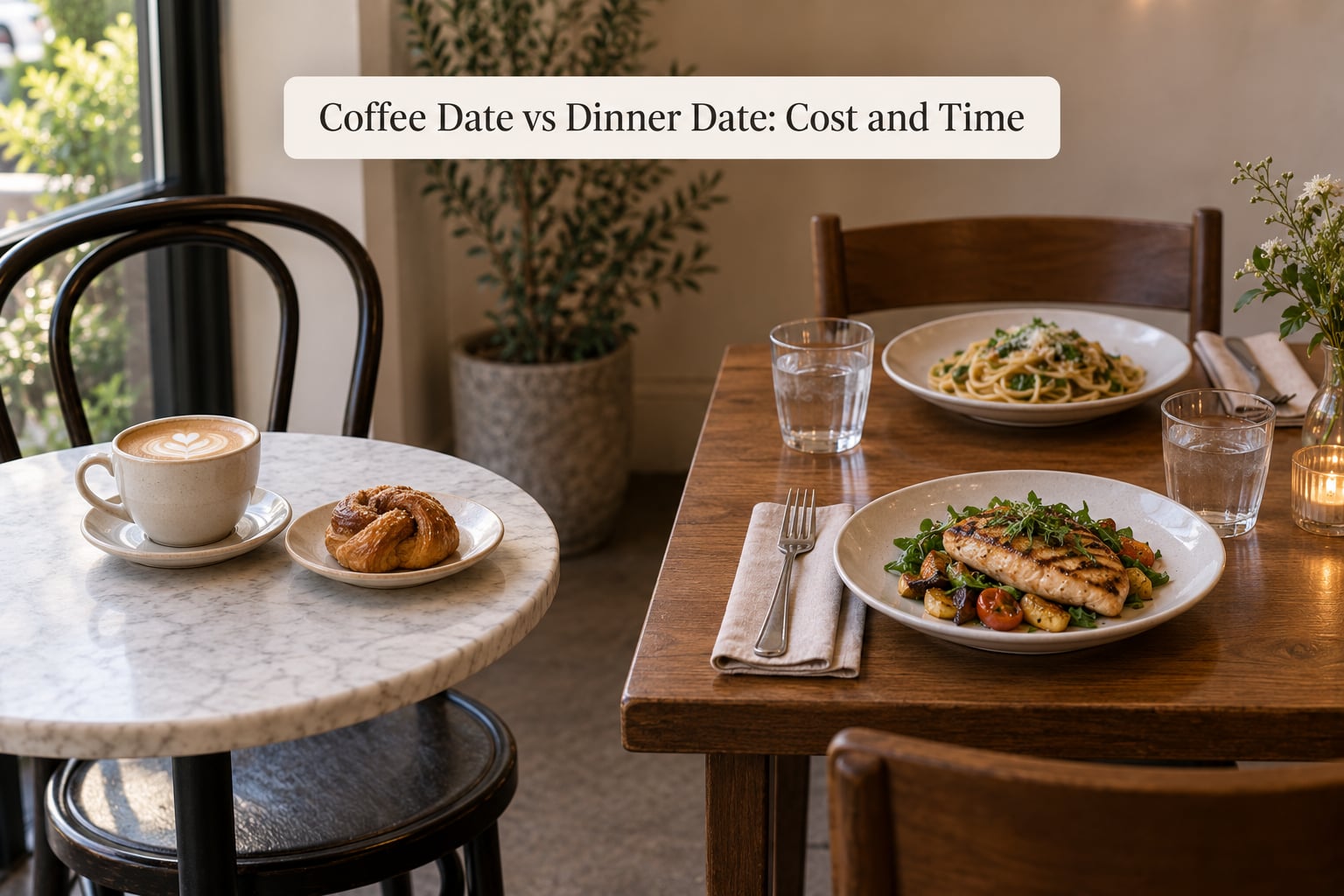
Coffee is cheap enough that a bad match costs you a drink and an hour. Dinner multiplies the downside: a two-hour meal, a ride home, and the quiet knowledge that somebody ordered food because of you. When you have met exactly zero times in person, that asymmetry is the whole argument.
Cost also shapes behavior in ways people rarely admit. Someone who invited dinner is quietly hoping for a long evening, and that expectation sits on the table from the moment you sit down. Someone who invited coffee has not pre-committed either of you to staying, and that freedom changes how honest the conversation gets.
Typical coffee dates run 45 to 90 minutes. Under 45 minutes feels like an audition; past 90 minutes the staff start stacking chairs. Dinner runs two to three hours including ordering, eating and a slow walk to the car. If your evening only has an hour in it, pick coffee or pick something else entirely.
Who pays on a first date
The old assumption is that one person offers and the other accepts. A cleaner read is to decide before you order, then say it out loud. Offering to cover the first round is generous without being transactional. Splitting evenly is normal and nobody sensible will read it as cheap.
What reads badly is the ritual where one person pays and then quietly expects something for it. A simple line settles it: “I’m grabbing this one, next one’s on me.” Or: “Let’s just split, it keeps things easy.” Both are fine. Silence is not.
On a coffee date the money moment is small enough to be unremarkable. On a dinner date you are making a bigger statement, and that is a reason to be explicit rather than generous.
Coffee Date vs Dinner Date: Conversation and Comfort
Coffee puts two people across a small table with nothing to do but talk. That is its charm and its trap. Some readers describe it warmly as the easiest way to find out if there is any vibe at all in ninety minutes. Others describe it as a job interview with better lighting.
Both reactions come from the same design flaw, which is that there is no activity to absorb the gaps. Dinner fixes this because ordering, eating and deciding on dessert create natural pauses. It also lets you look somewhere other than directly at someone, which lowers the stakes of being seen.
How coffee date vs dinner date changes the conversation
Choose coffee for an introvert, a socially anxious person, or anyone who talks better while walking. Choose dinner when the two of you already volley easily and you want the night to have a shape.
Coffee conversations tend to stay practical. Work, hobbies, where people live, what they do with Sundays. Dinner conversations drift. Alcohol and low light loosen people, and a shared meal creates the kind of small friction and ease that makes honest answers possible.
The flip side: coffee is often kinder. Nobody has drunk enough to say the thing they will regret, and nobody is dealing with a bill.
How to make a coffee invitation sound intentional
The low-effort reading comes from how the invitation is worded, not from coffee itself. “Wanna grab coffee sometime” sounds like filler. Try: “Thursday at 3, the cafe on Elm, 45 minutes — I want to hear about your move.” Time, place and a reason for the meeting turn the same drink into a plan.
If you would rather have dinner, counter-offer instead of quietly agreeing to something smaller. “Coffee works, and I’d love to see you properly over dinner next week” keeps the coffee date short and names something bigger.
Coffee Date vs Dinner Date: Safety and Flexibility
This is where coffee date vs dinner date stops being a style question. A public daytime cafe with a door, a window and an obvious exit is one of the safer first-date formats available. Dinner is two hours in a room where leaving early means abandoning a half-eaten meal while someone watches.
Women in the forums pick coffee for exactly this reason. The stated logic is simple and hard to argue with: if it goes wrong, I can get away in twenty minutes instead of being trapped until the check comes.
Safety checklist for either format
- Choose a place with an obvious exit. Street-facing seating or a seat near the door beats a booth in the back of a room.
- Share your location live. Most phones do this through their built-in location sharing in messages. Send it to a friend, not just keep it in your head.
- Arrange your own transport home. A coffee date is easy to end with a bus or a walk. A dinner date with drinks needs a plan you control, not one you hope someone else arranges.
- Tell a friend the name, the place and the time. One message before you sit down. Nobody has ever been annoyed by this.
- Do a five-minute check-in call with someone nearby. It is a normal safety habit used by people who work in risky jobs, and it is useful on any first date.
Flexibility works the same way. Coffee can stretch into more coffee, or into a walk, or into dinner if the chemistry is obvious. A coffee date that turns into a nine-hour outing is a real thing that keeps happening. Dinner does not stretch; it ends when it ends.
That easy exit also makes coffee dates better for people who dislike being ghosted or left hanging. Nobody owes you two hours. A short date that ends badly costs you an afternoon instead of an evening.
Coffee Date vs Dinner Date: Romance and Second-Date Potential
Dinner is the more romantic format and it is not close. Low light, a shared plate, an hour of unhurried talking, the walk back to the car. Dinner gives you more of the ingredients that make someone feel chosen rather than screened.
Coffee has a quieter advantage. It is easier to tell whether someone is actually interested when nobody is performing over a meal. You can watch how they treat the staff, whether they check their phone, whether they ask you things or wait to be asked.
The coffee-to-dinner escalation ladder
- First meeting. Coffee, weekday afternoon, public, 45 to 90 minutes.
- Second meeting. Coffee again, or a walk, or something active. Still public, still daylight.
- Third meeting. Dinner, or an activity with a meal attached. By now you have data on how they treat you.
- After that. Whatever you both want, including the quiet option that is not a venue.
The mistake is skipping to step three with someone you met online last Tuesday. Dinner is a reward for knowing someone. Coffee is the fee for finding out.
One more practical detail: how you end the coffee date matters more than people expect. Finish naturally, pay your share, say something warm about wanting to do it again, and text within the hour. Silence after a first coffee date gets read as indifference far more often than it deserves.
Which Should You Choose?
Use your situation rather than a general rule. Here is what each scenario usually calls for.
- You matched online and have never met. Coffee. Always. Daytime, public, with your own ride home.
- A blind date arranged by friends. Coffee, and tell the friend which cafe so they can collect you.
- You have texted daily for a month. Dinner is reasonable now. You have enough signal to know it will not be wasted.
- It is a second date. Coffee, a walk, or an activity. Dinner can wait for the third.
- You are dating someone quiet or anxious. Coffee or a walk. Dinner’s performance pressure works against them.
- It is a weekday and you both have jobs at 8am. Coffee in the late afternoon. It signals seriousness without eating your whole evening.
- They do not drink coffee, or neither of you drinks alcohol. Neither format is mandatory. A walk, a market, a museum afternoon, or bubble tea does the same job.
What about a 2pm coffee date
It is not weird, but it does read differently than people expect. Early afternoon says daylight, public and low-commitment. If you want coffee to feel like a date rather than a meeting, aim for late afternoon instead, around 4pm, when there is still daylight but the day is clearly about the two of you.
When neither one fits
Drinks, a walk, mini golf, a market, a museum, cooking together at someone’s home if you already know them well enough. A date needs one shared activity and some time. Coffee and dinner are just the two formats people default to, not the only ones that work.
Frequently Asked Questions
Is coffee or dinner a better first date?
Coffee is usually the better first date, especially with someone you matched online and have never met. It is shorter, cheaper, in daylight and easy to leave. Dinner earns its place once you already know there is something to talk about, usually by the second or third meeting. The rule most people land on: strangers get coffee, people you know get dinner.
Why is a coffee date considered a red flag?
Some people read coffee as low effort because they assume it is what you offer when you do not want to commit an evening. In practice the objection is about wording and context, not the drink. Offer a specific time, a specific place and a reason, and a coffee invitation reads as intentional. The framing people keep coming back to is that a coffee meetup is a sensible low-risk screening step rather than a statement about interest.
Is a 2pm coffee date weird for a first date?
It is unusual, not weird. Early afternoon carries a daytime, low-commitment feel, and some people read it that way. If you would rather the meeting read as a date, late afternoon around 4pm keeps the daylight and casual tone while feeling deliberately planned. Weekend mornings work well too if that suits both of your schedules better.
Who should pay for the first date?
Decide it before you order and say it out loud. Offering the first round is generous without creating an expectation. Splitting evenly is completely normal and nobody reasonable treats it as cheap. What does land badly is one person quietly paying and then expecting something for it later, because the imbalance shows up again on date three.
How long should a first date last?
A coffee date runs 45 to 90 minutes. Shorter than that feels like an audition, and longer than an hour and a half in a cafe starts to wear the room down. Dinner runs two to three hours including ordering and eating. If you only have an hour free, choose coffee or another short format rather than squeezing dinner into it.
What should I avoid on either type of first date?
Skip heavy drinking on a first meeting, since it blurs judgment and complicates getting home. Avoid interrogating them about income, past relationships and future plans. Do not bring up an ex to test the waters. Put the phone away for the whole meeting. And do not force a second date out of politeness, because an unwanted second date is worse than a clean ending.
Conclusion: Choose the Date That Feels Sustainable
The coffee date vs dinner date question gets tangled because people argue about which format is better in general, and there is no general answer. Coffee is better when uncertainty is high. Dinner is better when you already have a reason to be in the same room for three hours.
Start with coffee if you have never met in person. Pick a shop with a window, a real exit and somewhere to sit that is not a bench in the middle of a queue. Share your location, keep your own ride home and text within the hour when it ends.
Move to dinner once you have seen each other twice and the conversation is easy. Dinner is the format people are actually hoping for, and it delivers the romance and the time that coffee cannot. Just do not spend it on someone you have not screened yet.