
Dating in your forties is mostly a matter of being honest about what you want, showing up as your actual self, and building a life with room in it for someone else. The mechanics are simple: decide what you are looking for, present yourself clearly, meet in places that suit your schedule, and judge people on how they treat you over time. It takes patience and a few honest conversations with yourself, but nothing about it requires pretending you are twenty-five again.
What makes this decade different is not that it is harder. It is that you finally know your own patterns, and most people your age can tell within a few messages whether you are faking it. That cuts both ways. It also means the people worth meeting recognise you faster than they would have at twenty-five.
What You Need
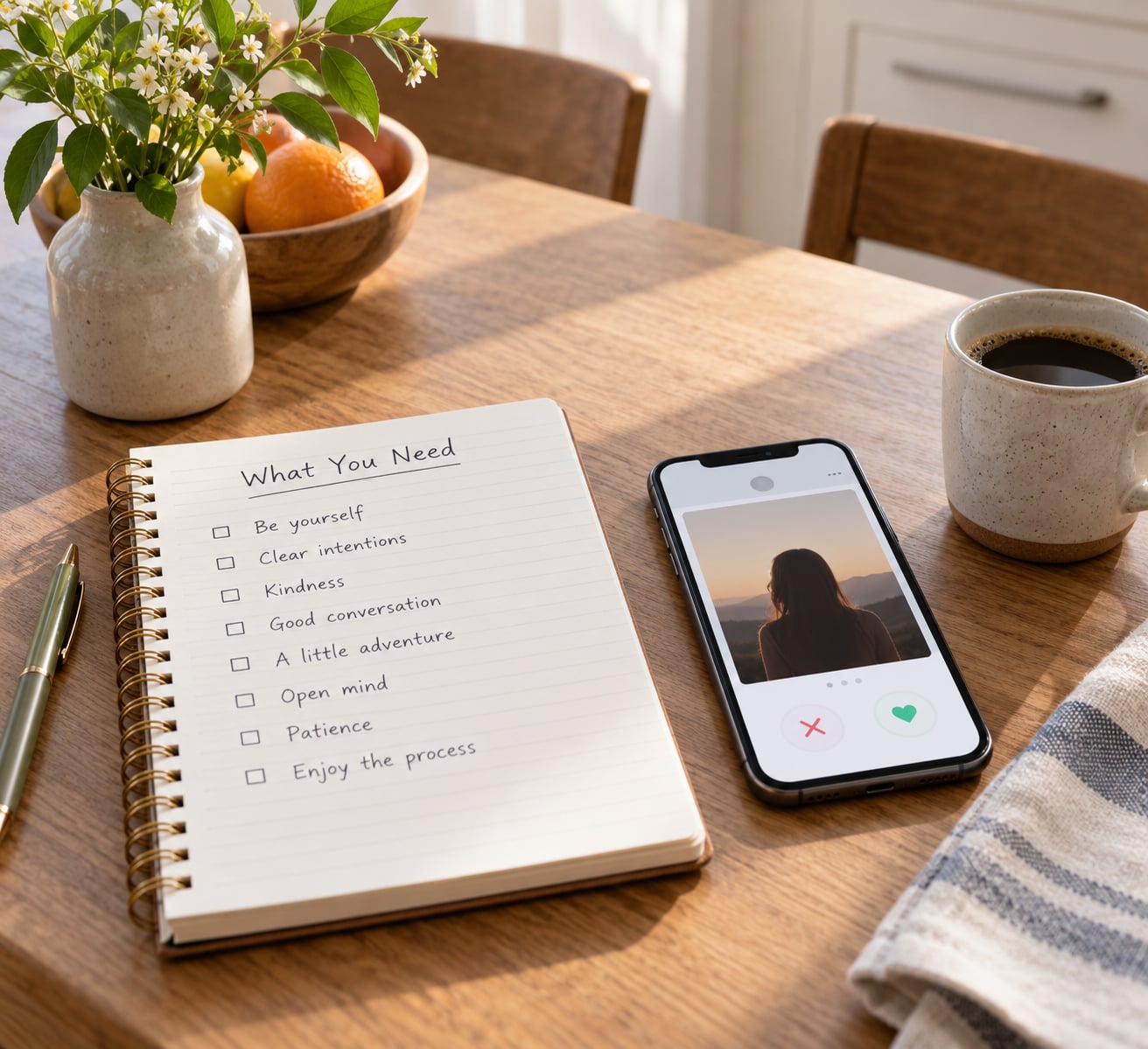
Before you download anything, get five things straight. You will make faster decisions and waste far less time on people who were never going to fit.
Your actual situation. Are you divorced, widowed, freshly separated, or single because you never partnered up? Each one shapes the first conversation you have with a new person, and pretending otherwise tends to surface around week three. Being specific costs you nothing and saves everyone a bad month.
A clear goal. Casual dating, companionship, a long-term relationship, and marriage are four different searches with four different profiles behind them. Ambiguous intentions leak out in small ways, and people you are not actually compatible with will drift away rather than waste a month.
Photos that are current. You need three to six recent pictures, at least one headshot in decent light, and one that shows you doing something you enjoy. An album from a decade ago sends a message you did not mean to send, and it filters out the people who would have been right for you.
Honest answers about your schedule. Most people over forty have demanding jobs, kids, aging parents, or a long commute. Write down the blocks of time you could realistically give another person. A schedule you can actually keep beats an ambitious one you break twice.
A safety plan you keep to yourself. Know where you will meet, who knows where you are going, and what you will do if something feels off. Most readers never need it. The ones who have it do not think about it again.
Step-by-Step: How to Date in Your Forties
1. Decide What You Are Looking For
Start with the version of this that feels slightly embarrassing. If you want to meet someone and see whether it grows into something, say that. If you want a partner, say that. People who want marriage will not always walk away from someone who wants to take it slowly, but they will walk away from someone who pretends.
Then list what is actually negotiable. There is a difference between a dealbreaker and a preference, and confusing the two is how people end two years into a relationship resenting the weather. Non-smoking, wanting kids, living in the same city, no one in the relationship being inseparable from their ex: these are structural. Bad karaoke is a preference.
2. Refresh Your Dating Profile
Your profile is not a CV. Write it the way you would describe your week to someone you already like. Two or three sentences about what your days look like, what you are actually into right now, and what you are hoping to find, in that order.
Swap vague lines for specifics. “Enjoy good food and live music” tells a reader nothing. “Sunday is sourdough and a record store, then a long walk with an unreasonable dog” tells them a great deal. Specifics make it easy to reply to you, and easy replies are the whole game.
Say what you want plainly. A line like “Not looking for anything rushed” filters out people who are, and saves you a coffee you did not want. If dating apps are not in your plans yet, some people get better results from one good profile on a site plus a few hours a week in person.
3. Choose Where to Date in Your Forties
App fatigue is real, and most people who quit say the same thing: they are tired of being the only one trying. App choice still matters, though, because each platform quietly sorts for a different intent. Match and similar sites skew toward people who want a relationship and are older. Hinge leans serious and prompt-driven, and being active matters more than being clever. Bumble puts the first move in the other person’s hands, which suits some people and frustrates others entirely. Tinder remains the widest and youngest pool, so if you are 42 you may find the volume noisy.
Offline options reward patience in a way apps never do. A hiking group, a dance class, a cooking workshop, a volunteer shift, or a community sports league puts you in the same room as the same people repeatedly, which is how friendships and eventually relationships actually form. Speed dating has come back for the over-40 crowd too, and its appeal is obvious: no chatting for three weeks before you find out you have nothing to say.
Friend introductions are the most underrated channel. A mutual friend already knows both of you, which removes the entire trust-building phase and gets you to a real conversation immediately. Ask two people you trust what they would set you up with. Just do not turn one rejection into a six-month silence with that friend.
4. Start Conversations That Reveal Compatibility
Openers that work skip the weather and ask something answerable. Reference something in their profile, then leave a hook: “You have a photo from the half marathon, so you are braver than me, what got you into it?” That gets a real reply and a real story.
Two or three messages in, stop auditioning and start finding out whether you are compatible. Good questions are about how people live. What a typical weekend looks like. Whether they want children. How they handle a disagreement. Whether they are around for their own kids on a school night. Adults over forty do not need small talk to survive a conversation, so skip most of it.
Watch the pace. Someone who cannot hold a decent conversation for ten exchanges usually will not hold one across dinner either. Someone who answers every question in one line probably has more energy elsewhere. Aim for a rhythm where both of you write back within a day or two and neither of you is doing all the work.
5. Plan a First Date That Feels Easy
Keep it short, public, and conversation-shaped. Coffee, a drink, a walk, a meal that does not run past two hours. Around this age, people usually know within about an hour whether there is anything there, so an evening that runs long wastes everyone’s time.
A video call first is normal now, not suspicious. It confirms the person behind the photos, and it is easy to do while walking the dog. If someone declines a video call but cheerfully meets in public, that is their business. If they decline both, move on.
On payment, the fairest approach is to offer to cover the first one and not to keep score. Someone who expects you to always pay is telling you something about the long run; someone who insists on splitting is also telling you something. Neither is a dealbreaker, and both are information.
Share your plans with a friend, put your phone in your pocket for the first thirty minutes, and ask two questions you would genuinely like answered. That is a complete first date.
6. Evaluate the Experience Honestly
Judge on consistency rather than intensity. Excitement is cheap and available; being on time, remembering what you said last week, and following through on small promises is rare and meaningful. People over forty tend to be flattered by remembering small details, and rightly so, because so few people bother.
Three honest signals tell you most of what you need. Are they consistent about contact? Do they treat you, your staff, and your friends with respect? Do they want the same kind of relationship you do? Everything else is negotiable, and much of it gets better with time.
When it is not working, end it clearly and without a committee meeting. Most people over forty would rather hear a straightforward no than drift into a slow fade, so give the same courtesy you want to receive.
Common Mistakes
Rushing to a big decision early. Excitement arrives fast online, and treating it as proof can burn weeks. Give something time to become ordinary before you restructure your life around it.
Presenting a highlight reel. Old photos, borrowed confidence, a life that is more put together than it is. It works for a date or two, and then real life shows up. Dating in your forties goes better when you start where you actually are.
Overexplaining your past. Nobody needs the full breakdown of your divorce in week one. A sentence or two, an honest note that it is behind you, and a topic you enjoy is plenty.
Ignoring the small things. Someone who is consistently late, vague about their job, or annoyed when you cannot make a last-minute plan is telling you about stability and respect. Treat repetition as the signal, not a single conversation.
Choosing the wrong format for your goals. If you want a partner, a hookup app is an expensive way to feel misunderstood. Match the platform and the venue to the outcome you want.
Talking for three weeks before meeting. Long text threads create intimacy without evidence. Something in your voice, the way someone handles a cancelled plan, cannot be read in a message. If interest is real, meet.
Using alcohol as social glue. A drink helps loosen nerves, and a bottle does. People who are worth your time are worth meeting sober at least once.
Two habits cover most of this: decide your non-negotiables before you meet anyone, and give a promising person three or four dates before you decide anything. That is not naivety. At this age, patience is a strategy.
Frequently Asked Questions
Is it normal to feel nervous about dating in your forties?
Yes, and it is one of the most common feelings people in their forties report. Nerves usually mean the connection matters to you, not that something is wrong with you. Most people find the nervousness fades once the first conversation starts. Going in with a clear plan helps more than waiting for confidence, because confidence usually turns up after the third date, not before the first.
What dating apps work best for people over 40?
It depends on what you want. Relationship-focused sites such as Match tend to attract older users who want something serious. Hinge suits people who send plenty of messages and enjoy a prompt-driven format. Bumble suits those who prefer someone else to make the first move. The best option is often two: one app for volume and one for intent, plus regular time in a hobby group where people see you more than once.
How do I know if someone is serious about a relationship?
Look at behaviour rather than declarations. Someone serious states their intentions early, keeps consistent contact, follows through on plans, and makes time for you inside a realistic schedule. They also handle small disappointments well, like a cancellation they cannot avoid. Someone who says all the right things but will not commit to a specific time, place, or plan is telling you the words come cheaper than the calendar.
How should I date again after a divorce or long relationship?
Give yourself a real grieving period rather than a deadline, then start slowly. Most people find a therapist useful for untangling the old story from the new one. When you do date, mention the divorce once and plainly, and do not compare anyone to your ex, out loud or silently. If children are involved, be upfront about schedules early, because blended family logistics shape real availability.
How long should I talk to someone online before meeting?
Enough to confirm you both want the same thing and can hold a conversation, which is usually somewhere between a week and two. Longer than that and the conversation starts carrying more weight than the evidence supports. A short video call is a good halfway point, since it confirms the person behind the photos and filters out misrepresentation before anyone spends an evening on it.
If you take one thing from this guide, write down your three non-negotiables tonight, then refresh one photo and rewrite your bio around what your week actually looks like. Everything after that is repetition, and repetition is how most people find what they were hoping for.