A first date topic feels boring when it can be answered in one word. So what makes first date conversation topics that are not boring work? They are open-ended prompts attached to a story, a memory, or something you both did last week, so the other person has something real to describe. The fix is not a bigger list of questions. It is one good opener plus a follow-up question that keeps the thread moving.
Everything below works whether you are meeting in person, on a video call, or in a first chat on a dating app. I have kept the phrasing gender-neutral on purpose. Most listicles out there assume you are trying to impress a particular kind of person, and that assumption narrows the conversation before it starts.
Table of Contents→
- First Date Conversation Topics That Are Not Boring at a Glance
- 1. The Most Interesting Part of Your Week
- 2. A Story From Your Past That Shaped You
- 3. Your Ideal Lowkey Weekend
- 4. A Skill You Have Always Wanted to Learn
- 5. The Last Book, Film, or Show That Made You Think
- 6. A Restaurant, Cafe, or City You Would Visit Again
- 7. Something You Are Currently Learning About
- 8. A Small Tradition You Enjoy
- 10. A Travel Photo or Place You Would Love to See
- 11. Something That Makes You Laugh
- 12. A Decision You Are Thinking About
- 13. A Comfort Song or Nostalgic Memory
- 14. A Favorite Way to Spend a Free Evening
- 15. A Belief, Preference, or Strong Opinion
- 16. What You Are Looking Forward To Next
- Frequently Asked Questions
- How do I not make a first date awkward?
- How do you keep a conversation going on a first date when it stalls?
- What are some deep questions I can ask someone on a first date?
- What is the 3-3-3 rule for dating?
- How do I answer questions about myself without sounding rehearsed?
- What should I avoid talking about on a first date?
- How to Keep First Date Conversation Flowing
First Date Conversation Topics That Are Not Boring at a Glance
| Topic | Story it can prompt | Works best on | Example opener |
|---|---|---|---|
| Most interesting part of your week | A recent win or small disaster | Any setting, first ten minutes | What was the best part of your week, the one that was not work? |
| A story that shaped you | A move, a school year, a first job | Walk, coffee, dinner | What shaped you more than you expected at the time? |
| Ideal lowkey weekend | How they actually decompress | Walk, activity date | Your perfect Saturday has no plans. What is in it? |
| Skill you wanted to learn | Goals, patience, what they would try | Coffee, activity date | What is something you have always wanted to learn? |
| Last thing that made you think | What actually landed emotionally | Dinner, gallery | What did you watch or read last that you have not stopped thinking about? |
| A place you would visit again | Taste, travel history, rituals | Dinner, coffee | What is a place you would go back to tomorrow if you could? |
| Something you are learning about now | Curiosity and current obsessions | Coffee, walk | What have you been reading about that has nothing to do with work? |
| A small tradition | Routine, attachment, how they care | Any setting, middle of date | Is there something small you do every week without fail? |
| A travel photo you would show | A favourite trip or a dream place | Walk, dinner | What is the photo on your phone you would show a stranger? |
| Something that makes you laugh | Personality, self-deprecation | Opening, light stretches | What is guaranteed to get a laugh out of you? |
| A decision you are weighing | Values and how they choose | Dinner, second half of date | What is one decision you are currently sitting with? |
| A comfort song or nostalgic memory | Feeling, place, time of life | Dinner, walk, close | What song takes you straight back to one specific summer? |
| A favorite way to spend a free evening | Actual habits and energy levels | Coffee, walk | It is ten o’clock and you have nothing to do. What happens? |
| A strong opinion you hold | Confidence and how they argue | Middle of date, dinner | What is a hill you will die on that most people find boring? |
| What you are looking forward to | Direction and motivation | Closing fifteen minutes | What is the thing you are most looking forward to right now? |
Pick three rows, not fifteen. A date is not a checklist, and people feel when they are being walked through a script.
1. The Most Interesting Part of Your Week
This is the best early question I know because it is fresh, and neither person has to perform. Something happened in the last seven days that they actually want to talk about.
Ask it in a way that rules out the boring answer. Instead of what have you been up to, try what was the best part of your week that was not work. That single clause removes the default response.
The follow-up is where the thread becomes a conversation. If they say they finally finished a half marathon, ask what the training week looked like, or which mile hurt the most. Small, specific follow-up questions are what keep a date from turning into a job interview.
2. A Story From Your Past That Shaped You
Formative stories go one layer deeper than hobbies without tipping into heavy territory, as long as you pick something with a shape rather than a wound.
Good versions have a beginning and end: moving to a new country at nineteen, a year spent caring for a parent, the summer you worked two jobs. Skip anything involving trauma, divorce, or a current crisis on a first date.
Keep it light by asking for the story, not the scar. What shaped you more than you expected at the time is warmer than why did that happen to you, and it invites a story instead of an explanation.
3. Your Ideal Lowkey Weekend
Preferences tell you how someone actually rests, which matters more in a relationship than any opinion about films. The trap is one-word answers, so frame it as a scene rather than a category.
Ask what a perfect Saturday looks like when there is nothing on the calendar, then push for the texture of it. Are we talking cooking something complicated, a long walk with no destination, four hours of gaming, or reading on a sofa?
People who describe an ideal weekend often describe who they want to spend it with without saying so. That is useful information, and it arrives naturally.
4. A Skill You Have Always Wanted to Learn
Ask what someone wants to learn instead of what their hobby is. Hobbies have an answer already written; goals have not, so you get a thought process rather than a list.
Surfing, playing an instrument, baking bread that does not collapse, or learning enough of a language to order food abroad all work. The follow-up that gets the best answers: what is the part of it that looks easier than it is?
Nobody has a polished answer ready for that, and the hesitation is often more interesting than the answer.
5. The Last Book, Film, or Show That Made You Think
Favourite film questions are useless. Everyone has a favourite and everyone has an answer about it. What made you think is a different question with a different result.
Try what did you watch or read last that you have not stopped thinking about. The answer is usually a docudrama, a novel they did not expect to like, or a series that upset them, and all three produce a real reaction.
Then go one layer again with what did it make you think about. You have now got an opinion, a feeling, and a subject, which is a full conversation instead of a title exchange.
6. A Restaurant, Cafe, or City You Would Visit Again
Food and travel questions turn into stories faster than almost anything else, because everyone has eaten somewhere that meant something.
Ask what is a place you would go back to tomorrow if you could. A person who loves to cook might name a hole-in-the-wall they found on a work trip. Someone else might name a bakery that has been in the family for a decade.
Then ask what you would order, or what you would do for a whole day there. The second question moves from memory to imagination, which is a nicer place to be sitting across a table.
7. Something You Are Currently Learning About
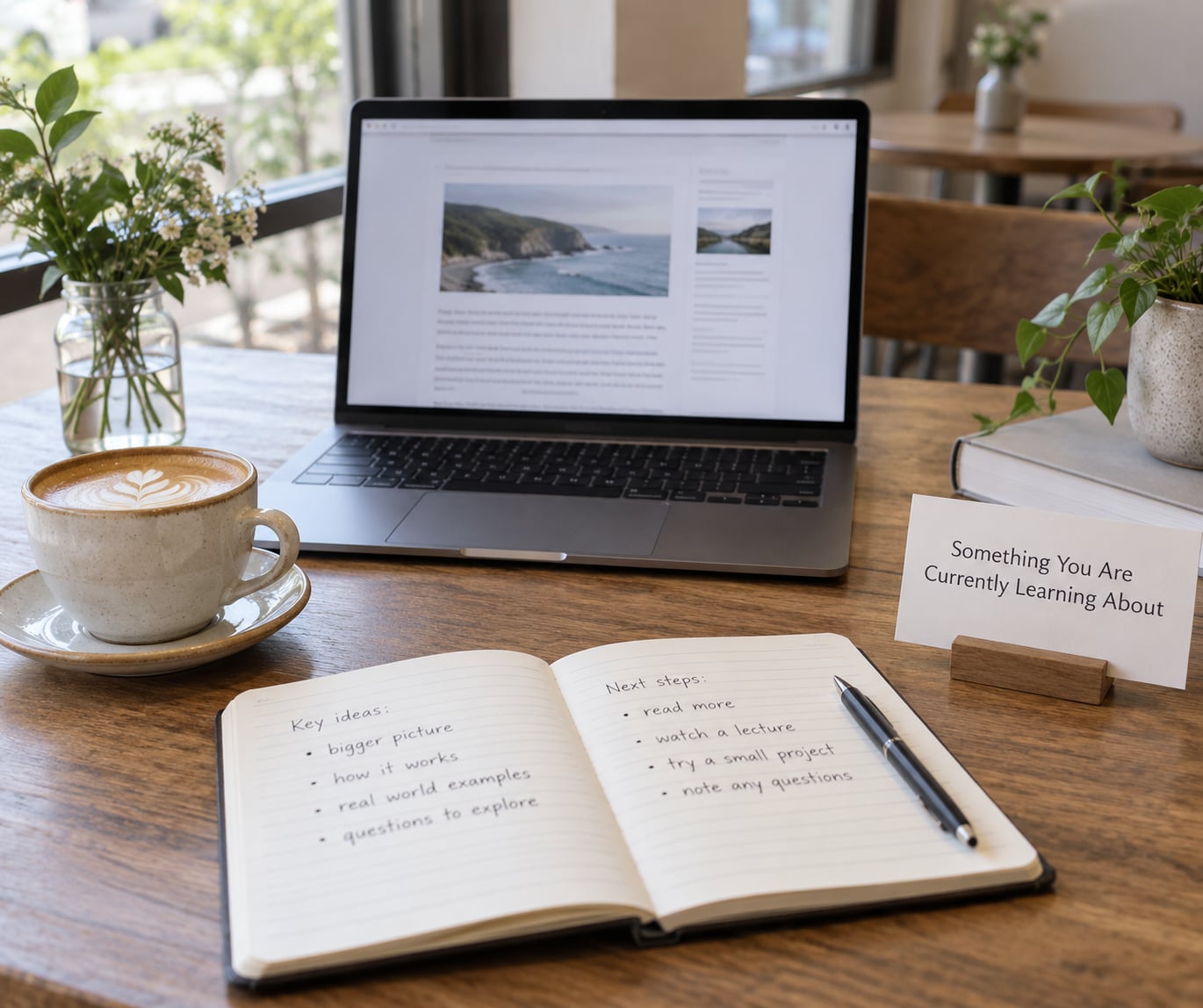
Ask what someone is reading about that has nothing to do with work. People have rabbit holes right now, usually ones they have mentioned twice in passing and never explained.
Specificity is what saves this question. Instead of what are you interested in, which gets a shrug and a list of three nouns, try what have you been reading about lately that nobody asked you to. The subject is already chosen for you, so the work is just getting them started.
Good answers land in unexpected places: an argument about urban planning, the history of a specific sandwich, why some people cannot whistle, an investigation into a scam they almost fell for.
8. A Small Tradition You Enjoy
Rituals sound small, and that is exactly why they work. A question about Sunday cooking or a weekly call with a friend reveals attachment and routine without asking anything heavy.
Try is there something small you do every week without fail. The answer is usually a walk before work, a Saturday market, a game night that has run for years, or calling one specific person.
Listen for what they protect. The tradition they refuse to give up on a busy week tells you more than a full autobiography would.
9. Turning This Into First Date Conversation Topics That Are Not Boring
You do not need a memorised list. You need a mechanic. Here is the one I use.
- Answer it yourself first. If you ask what they did last weekend and you have nothing to offer, the exchange turns transactional. Give your own answer in one sentence before asking yours.
- Add context. A short line about why it mattered to you turns a question into a shared moment: I have been trying to cook more this year, so I have been bad at it in an entertaining way.
- Make a small observation. Something specific about what they said, about their profile, or about the room. Observations signal that you are listening rather than waiting for your turn.
- Ask one follow-up that starts with what, how, or why. What was the bit you enjoyed most? How did you end up there? Why that one over everything else?
That fourth step is the whole skill. A first date topic lasts about ninety seconds. A follow-up question is what turns it into five minutes of actual talk.
One more thing shy people get wrong: silence is fine for three or four seconds. It feels like ten to you and like two to them. Most of what feels like awkward silence on a date is just one person thinking about how to answer well.
10. A Travel Photo or Place You Would Love to See
Photos are a reliable opener because they hand the conversation a third object. Both people end up looking at a screen instead of performing eye contact, which lowers the pressure for the first minute.
Ask what is the photo on your phone you would show a stranger, then describe where it is. Half the fun is guessing the location from a bad photo.
For the forward-looking version, ask where they would go with two weeks and no responsibilities. The imaginary version loosens people up more than the real one, because nobody has to defend their past choices.
11. Something That Makes You Laugh
Asking whether someone has a sense of humour gets a yes from everyone and tells you nothing. Asking what actually gets a laugh out of you gets a specific answer every time.
Examples of a good answer: a friend who cannot whistle, an uncle who narrates everything, the dog who reacts to a specific word, or a movie scene that has never stopped being funny.
Play your own answer badly on purpose. Self-deprecation is the cheapest way to make someone else feel safe being silly, and it gives them permission to laugh rather than politely waiting.
12. A Decision You Are Thinking About
Midway through a date, when the coffee has done its work, a decision question goes deeper without becoming an interview. Moving somewhere, leaving a job, going back to study, getting a dog, or starting something that costs money are all fair game.
The mistake is asking for advice. What do you think I should do turns the conversation to you and puts them in the role of consultant. Ask instead what is making it a hard decision, which gets the values underneath the choice.
Keep your own decision at the same level of detail. Trading a real dilemma for a vague answer is how these conversations die politely.
13. A Comfort Song or Nostalgic Memory
Music is a low-pressure emotional thread. Nobody has to defend a song choice, and yet people get unexpectedly sincere about it.
Ask what song takes them straight back to one specific summer, or which song has followed them around for years without explanation. A concert they attended, a road trip, a song a parent played in the car, a song from a bad year that still helps.
Follow with what it was about the summer, not about the song. The song is the door; the memory is the room you actually wanted to be in.
14. A Favorite Way to Spend a Free Evening

Vague questions about free time get vague answers. Give the situation a clock in it and you get something you can compare.
It is ten o’clock on a weeknight and you have nothing to do. What happens? Some people will describe cooking, others a long run, others two hours of gaming, others a film they have already seen four times.
That answer is also compatibility data. If you are the person who calls people at ten to talk and they describe a silent apartment, that is worth knowing now rather than in six months.
15. A Belief, Preference, or Strong Opinion
Strong opinions are fun because they show how someone thinks, not just what they like. The key is disagreeing without competing, which is a skill of its own.
Ask what is a hill you will die on that most people find boring. Truncated coffee, the correct way to load a dishwasher, whether a film is overrated, pineapple on anything, the correct order for ranking fast food.
When you disagree, make it playful and state your case as a preference rather than a verdict: okay, I see it, but I am a vinegar person and I will not be moved. Nobody wins, and the conversation keeps its shape.
That said, not every disagreement is safe on a first date. Save real convictions about how the world works until you know the person.
16. What You Are Looking Forward To Next
End on forward motion. A date that closes on what is coming feels optimistic and gives both people a natural reason to keep talking.
Ask what is the thing you are most looking forward to right now. A trip booked, a course starting, a new puppy, a sibling arriving, a move in spring, or simply a season ending.
Then add one real detail: how did that come about. Forward-looking people talk more freely than people asked to explain their failures, and this is usually the longest answer of the evening.
Frequently Asked Questions
How do I not make a first date awkward?
Awkwardness usually comes from trying to fill every second rather than from silence itself. Arrive with two or three topics, not a script, and give your own answer before asking yours so questions feel like an exchange. Pay attention to whether they are giving you two sentences or one, and match their length. A three second pause feels long to you and short to them.
How do you keep a conversation going on a first date when it stalls?
Name the thing in front of you rather than reaching for a saved question. Ask about the drink they chose, the song playing, the walk you are taking, or what they noticed on the way in. Then move back to a thread from earlier with a follow-up that starts with what, how or why. Stalls usually mean the current topic is spent, not that you have run out of things to say.
What are some deep questions I can ask someone on a first date?
Try questions about experience rather than plans: what shaped you more than you expected, what is a decision you are sitting with right now, what is a small tradition you would never give up, or what is something you believe that most people disagree with. Deep does not mean heavy. Add context to your own answer first, and steer away from trauma, exes and anything involving money.
What is the 3-3-3 rule for dating?
The 3-3-3 rule is an informal rule of thumb, not a well established finding. It suggests giving a relationship about three months to reach a level of regular contact, three months to meet the friends and family, and three months to decide about a long term commitment. Popular online, it is widely ignored in practice and nobody on a first date will be impressed if you quote it.
How do I answer questions about myself without sounding rehearsed?
Answer in short blocks and stop before you have said everything. A two sentence answer followed by a question back reads as confident; a four minute monologue reads as rehearsed. If you notice yourself listing achievements, add one honest detail that nobody would put on a profile, such as what you are bad at or what has been hard this year. Specific beats polished every time.
What should I avoid talking about on a first date?
Avoid ex talk, complaints about your life, politics, religion, salary and family drama. In most cases these questions have no good answer on a first date, because a complaint tells the other person how you handle difficulty and an ex story turns you into the topic. If politics comes up, keep it light and do not lecture. If you do not want to answer something, saying that is fine.
How to Keep First Date Conversation Flowing
Pick two or three topics from the table above before you leave the house. Not all sixteen, not a printed list you read off your phone.
Then ask one specific follow-up question on the first topic you try. That single habit separates first date conversation topics that are not boring from a list of things to talk about, because it turns an answer into a conversation. Share something personal before you ask, match their length, and leave a pause alone rather than rushing to fill it.
One last thing. People online complain constantly that the same first dates produce the same four conversations about work, sport, shows and where you live. That happens because nobody brings anything specific. One question tied to something real that happened this week is enough to break the pattern.