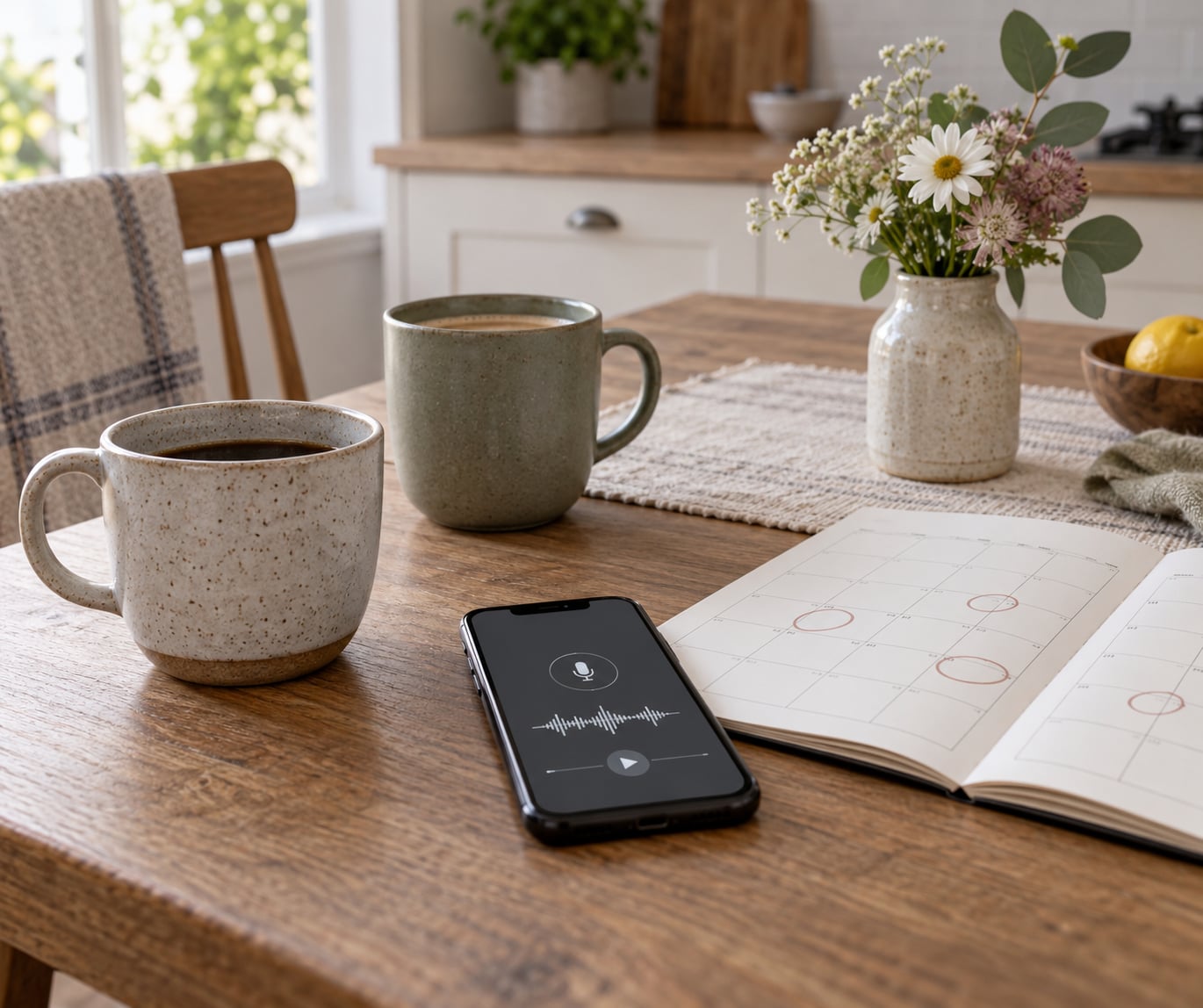
Learning how to maintain friendships while in a relationship comes down to three things: put friend time on the calendar before the month fills up, tell your partner what those plans are, and keep showing up even when the format changes. A relationship grows louder when it is the only voice in your head, and friendships do not compete with it. They are what keeps you a whole person.
Most people worry about two things at once: that they are losing their friends, and that they are somehow betraying their partner by keeping them. Both worries are common. Neither one is usually a sign you are doing something wrong.
Table of Contents→
- What You Need Before You Start
- Step-by-Step: How to Maintain Friendships While in a Relationship
- Cadence Cheat Sheet: How Often to Keep Each Kind of Friendship Warm
- Common Mistakes and the Fix for Each One
- Disappearing Without Notice
- Comparing Your Partner to Your Friends
- Overexplaining Boundaries
- Ignoring Conflict Between Your Friend and Your Partner
- Treating Every Friend the Same
- Pulling Friends Into Arguments With Your Partner
- Skipping the Hard Conversations With Friends Who Went Quiet
- Losing Your Own Hobbies and Identity
- Waiting Until Something Is Wrong to Check In
- Feeling Guilty for Every Cancellation
- Forcing Every Outing to Include Your Partner
- Reading a Friend’s New Distance as Personal Rejection
- Quick Maintenance Checklist
- Frequently Asked Questions
- How often should I see my friends while in a relationship?
- Is it bad if my friendships become less frequent after getting into a relationship?
- How do I maintain friendships when my partner does not want me to go out?
- How can I stay in touch with friends who live far away?
- What should I do if my friend does not like my partner?
- Where to Start This Week
What You Need Before You Start
You do not need a special calendar app or a grand plan. You need four things, and the first one is the hardest.
- Honest communication. Both with your partner and with the friends you want to keep close. Silence is what turns a slow drift into a breakup.
- A schedule that fits your actual life. Not the one you had at twenty-two with a group of six and nothing on your plate.
- Respect for other people’s time. A friend who gets cancelled three times will stop asking. So will a partner who gets ambushed by a last-minute plan.
- Willingness to let the format change. A friendship that started as every Friday at a bar can survive as a Sunday phone call and an annual birthday dinner.
If you only do one thing from that list, do the first one. Almost every problem in this article traces back to a conversation nobody had.
Step-by-Step: How to Maintain Friendships While in a Relationship
Here is the process in the order that works. It takes about ten minutes of setup and then a normal amount of effort afterward.
Check In With Yourself About Your Current Friendships
Sort your friends into three piles: the ones you would call at 2am, the ones you enjoy but see rarely, and the ones you keep answering out of politeness. Most people are surprised by how few land in the first pile, and how much relief the third pile brings when they let it go.
Then pick your realistic capacity, not your ideal capacity. Two evenings a month with people you love is a friendship. Six, during a busy season, is not. Decide what you can genuinely give for the next six months.
Talk Openly About Changing Schedules
The conversation most people dread is the one that prevents the argument. Say it early and say it plainly: work has been heavy this quarter, so Wednesday hangouts may become biweekly until spring, and you would rather name that now than keep cancelling.
Partners hear the specifics and relax. What triggers anxiety is a partner discovering a cancelled plan and imagining the worst. Transparency about a calendar is not a confession.
Make Time for Friends in Different Ways
Friendship is contact plus attention, and attention comes in more than one shape. A twenty-minute voice message on a commute counts. Cooking dinner together counts more than a restaurant where everyone is on their phone.
Some formats worth keeping: a standing call with the same friend every Sunday evening, a shared activity you both do anyway like a running club or a fantasy league, and a real visit you plan a few times a year. Birthdays, weddings, and bad news still count as reasons to show up, and they are the moments people remember.
Set Healthy Boundaries With Friends and Partners
Boundaries work in both directions. With a friend, it looks like: I love seeing you, I am not available Friday, and please stop texting me about your partner’s latest fight at midnight. With a partner, it looks like: I tell you where I am going and roughly when I will be back, and I do not need to negotiate the details each time.
You are allowed to be unreachable on a Tuesday. A partner who treats your friendships as a violation of the relationship is telling you something about control, not about friendship, and that is worth naming out loud rather than managing quietly.
Keep Plans Flexible When Life Gets Busy
Here is the fix for the pattern people complain about most: plans keep getting cancelled, so nobody bothers to make them. Propose two dates instead of one, with a fallback attached. “Thursday at seven, or if that falls apart, Sunday afternoon, either one works.”
Shorter counts. Twenty minutes of real conversation beats three hours of everyone half-present, and it is far easier to protect on a hard week. When a trip, a deadline, or a sick kid eats the month, send the message anyway: busy, still here, thinking of you.
Notice When a Friendship Is No Longer Reciprocal
Check the direction of the effort. You are the one who always suggests plans, you are the one who drives, you are the one who remembers the birthday, and they respond in three-word texts three days late. That is a friendship that has run out of fuel, and no amount of trying harder fixes a one-sided tank.
Sometimes one honest conversation is worth it. Say that you miss the two of you, that the distance feels odd, and ask whether they want to fix it. If the answer is vague, take the quiet as the answer and invest your weekends elsewhere. Being a good friend means being available. It does not mean being unpaid support staff forever.
Let Friendships Change Without Guilt
Some friendships expand, some contract, and some end. People move, get married, have children, and fall away without anyone doing anything wrong. Holding every friendship at its original intensity is not loyalty. It is a schedule nobody can keep.
Grieve what ended without turning the loss into a verdict about yourself. Keep the ones that still feed you, be honest about why the others faded, and stop treating a quiet group chat like a verdict on your likability. People drift for a hundred reasons, and a slow fade is usually about arithmetic, not affection.
Cadence Cheat Sheet: How Often to Keep Each Kind of Friendship Warm
Numbers take the guilt out of scheduling. You are not failing anyone by having a lighter calendar than you did at twenty-five.
- Best friends, same city: a real hangout every one to two weeks, and a text most days in between. A ten-minute message is enough on an ordinary day.
- Friend group: one meet-up a month, plus a group chat that stays alive. Rotate who picks the place so the same host does not burn out.
- Other couples: a double date every four to six weeks, and one evening of just your own each month so the four of you do not become a unit.
- Long-distance friends: a scheduled call every two weeks at a fixed time, plus something shared in parallel, like a show you both watch or a recipe you cook on the same Sunday.
- Opposite-gender friends: the same cadence as anyone else, with two specifics: your partner knows who they are and has met them, and you do not use the friendship to hide things or to complain about your partner on loop.
One more number helps. Try to reply to a genuine message within a day, even if the reply is short. Long silence is what people read as rejection.
Common Mistakes and the Fix for Each One
Disappearing Without Notice
The most common mistake is going quiet and hoping someone notices. Fix: send a short note before the gap, not after it. “Work has swallowed June, I have not disappeared, I miss you, and here are three dates I am free.”
Comparing Your Partner to Your Friends
Friends do cheap, easy, no-stakes fun. Partners do the hard stuff. Comparing the two is measuring a beach trip against a renovation. Fix: stop ranking and start scheduling, and let your partner be the person you call at 2am without an audience.
Overexplaining Boundaries
A ten-line justification for why you cannot come out reads like a defense in court. Fix: one clear sentence. “I love you and I am not up for it this week, can we do the other Saturday?” No essay, no apology tour.
Ignoring Conflict Between Your Friend and Your Partner
If your partner and your friend do not get along, do not pretend it is not happening. Fix: name it, pick the side that is yours and defend that, and let the other relationship work itself out. A partner who is always right and a friend who is always wrong is not a healthy setup.
Treating Every Friend the Same
Three people get the same night, the same attention, and the same amount of patience. It shows. Fix: match the effort to what each friendship actually is, and be honest with yourself about the ones that take more than they give.
Pulling Friends Into Arguments With Your Partner
Complaining to the same friend about the same fight until you have a cheerleader with an opinion is triangulation, and it slowly poisons both relationships. Fix: talk to your partner about the fight, talk to a friend about something else, and keep one person who gets the full unfiltered version.
Skipping the Hard Conversations With Friends Who Went Quiet
Fix: one low-pressure message with no expectation attached. Say what actually happened, say you value the friendship, and leave the door open without demanding they walk through it. Many people answer warmly. Some do not, and that is the information you were looking for.
Losing Your Own Hobbies and Identity
The quiet version of this mistake is dropping every hobby because your partner is tired, then realising you have nothing to talk about but the relationship. Fix: keep one thing that is only yours, and one group that does not include your partner.
Waiting Until Something Is Wrong to Check In
Fix: contact friends on ordinary weeks, not only in a crisis. Most people find out about a breakup or a diagnosis from a mutual contact months later, and that is what strains friendships, not the busy weeks.
Feeling Guilty for Every Cancellation
Guilt makes you avoid the next plan, which creates another cancellation, which creates more guilt. Fix: reschedule immediately when you cancel, and accept that a season of low contact is not a broken friendship.
Forcing Every Outing to Include Your Partner
Merging everything leads to friend groups that only want to see you as half of a couple. Fix: keep at least one friend you see solo, and let the group invitations stand on their own.
Reading a Friend’s New Distance as Personal Rejection
Fix: look at the whole pattern before you decide. A friend whose new baby took over their evenings, whose move consumed a month, or whose job travel tripled is usually exhausted, not rejecting you. Ask once, plainly, then let their answer set the pace.
Quick Maintenance Checklist
Before the month ends, run this short list.
- Does each close friend have a date on the calendar, or just good intentions?
- Does your partner know where you are going and roughly when you will be back?
- Has any plan been cancelled twice without a replacement date attached?
- Is there one person in your life who is not your partner and not a relative?
- Did you tell one friend something true about how your life changed this year?
- Is one friendship currently taking far more from you than it gives back?
Frequently Asked Questions
How often should I see my friends while in a relationship?
Aim for one real hangout every one to two weeks with your closest friends, one meet-up a month with a friend group, and a scheduled call every two weeks for anyone far away. A twenty-minute call or a long text counts on a heavy week. What matters most is that the contact is regular and you are actually present in it, not that you hit a number.
Is it bad if my friendships become less frequent after getting into a relationship?
Less frequent is completely normal and not a sign you are doing something wrong. A relationship takes real time, and most people go from weekly contact to monthly for a while. The thing to watch is silence rather than reduction: friendships drift when invitations stop entirely. Keep a rhythm you can actually hold and nobody is counting the gaps.
How do I maintain friendships when my partner does not want me to go out?
Start by separating concern from control. Ask what the partner is actually worried about, then share the specifics of your plans, including when you will be home. If the answer is reassurance, the conversation can go a long way. If the answer is permission, that is a bigger issue worth naming directly, and worth talking through with a counselor if it does not shift.
How can I stay in touch with friends who live far away?
Put a recurring call in the calendar at a fixed time, and do something in parallel rather than only talking, like watching the same show or cooking the same recipe on the same day. Trade a few voice messages during the week. Long-distance friendships usually survive on rituals and fail when they depend on whoever happens to be bored that evening.
What should I do if my friend does not like my partner?
Do not pick a side and do not force the introduction. Explain honestly that you value the friendship, invite your partner to something low-pressure once, and let time do some of the work. If your friend is openly unkind about your partner, that is a boundary you get to set. You can keep the person without accepting how they treat the person you love.
Where to Start This Week
Open your calendar, pick the two friends who would actually be hurt to hear nothing from you for another month, and put a date on both. Then tell your partner what you just did and when you will be back. That is the whole method: a plan, an honest sentence, and the same thing again next week. 2026 is a perfectly good year to start.