To ask someone out from a dating app, wait until you have a real back-and-forth conversation, then send one specific, low-pressure invite: a named place, a day, a time, and an easy way to say no. Keep it under 30 words and let them answer on their own schedule.
That is the whole method. Most asks fail not because the person is uninterested but because the message is vague, arrives too late, or arrives wrapped in four paragraphs of nervous explanation. Strip all of that back and the decision becomes simple for both of you.
This guide is for anyone on Hinge, Bumble, Tinder or Badoo who has had good conversations that never turned into anything. It works whether you have exchanged twenty messages or two hundred.
Updated for October 2026.
Table of Contents→
- What You Need Before You Send the Invite
- Step-by-Step: How to Ask Someone Out From a Dating App
- Common Mistakes in the First Invitation
- Frequently Asked Questions
- How long should I chat on a dating app before asking someone out?
- Should I ask someone out in person or by message on a dating app?
- What if someone does not answer my dating-app invitation?
- How do I ask someone out again after we have already been on a date?
- What if I feel nervous about asking someone out?
- Conclusion
What You Need Before You Send the Invite
You need four things, and none of them cost money or require confidence you do not have yet.
- An anchor. One thing from your conversation you can tie the invite to: a coffee shop she named, a taco place, a walk by the river, a record store. Pulling the ask out of an existing topic is the single biggest predictor of a yes.
- A first date that is easy to plan. Under two hours, in a public place, with a walk built in or an easy exit. Coffee, a drink, a walk, a museum. If it needs a reservation, a car, or a plan B, it is a second date.
- A no you can survive. Decide now that a polite no ends the thread, and you will write something decent afterwards. People who have pre-decided this send much calmer invitations.
- A phone number exchange and a safety check before you meet. Move to text or a call once a date is on the calendar. Swap Instagram handles and do a quick video call if anything about the profile feels off.
When to Ask
Timing matters less than people think. The community line is within a few days, or roughly 10 to 15 messages in, while the chat still has energy. Conversations do not ripen; they just fade.
Ask sooner when they reply fast, ask questions back, send their own photos or voice notes, or bring up a plan themselves. Wait a little longer if you are still trading one-word replies or if they have gone quiet twice this week. One clear ask after a week of silence reads better than a week of silence followed by a perfect invitation.
Step-by-Step: How to Ask Someone Out From a Dating App
1. Build a real conversation before asking
Real conversation means you have both talked about something with substance and you have a reason to have spoken. Not a score, not a mutual photo, not twelve messages about dogs.
Signs of genuine engagement are simple: they ask you questions, they send something they thought you would like, they remember details from earlier, they correct a time they got wrong. If you are the only one carrying the thread, asking for a date is asking them to rescue it. Fix the conversation first, or let it go.
2. Choose a date that fits both of you
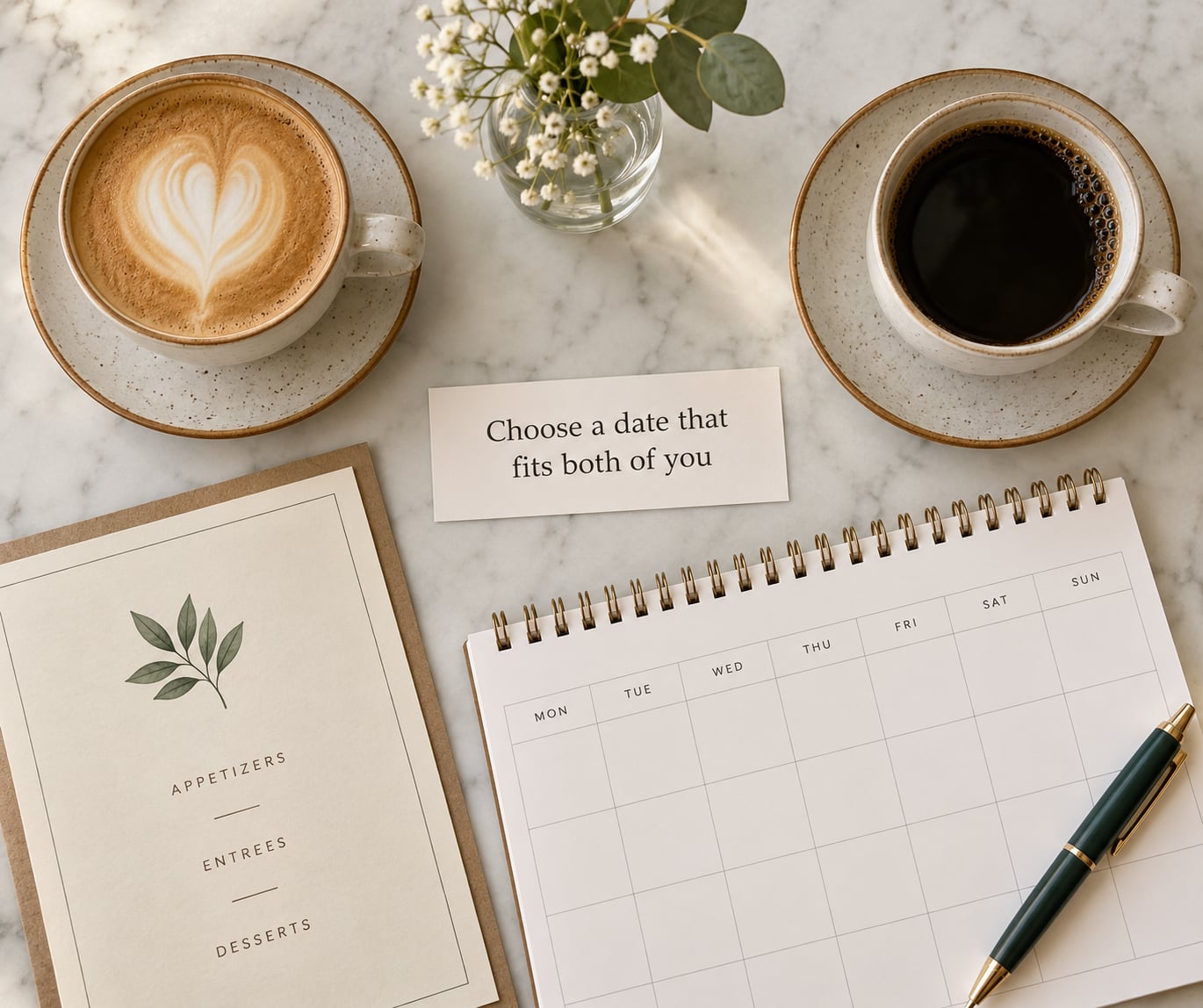
Pick the activity before you write the message, because the message should sound decided. Base it on something they have told you about: they said they love Italian food, so dinner at a mid-priced neighbourhood place at 7 on Thursday. They said weekends are packed, so Sunday morning coffee is smarter.
Think about how much talking the setting allows. A long walk gives you something to do if the nerves hit; a two-hour dinner forces conversation with a stranger for 120 minutes. For most first dates from apps, an activity beats a sit-down meal.
Keep it public, keep it short, and pick a spot with a walkable neighbourhood around it. If you would not send a friend to that place alone at night, pick another one.
3. Ask someone out on a dating app with a low-pressure invitation
An honest invitation beats a clever one every time. Vagueness is not charm; it is a question you are hoping they will answer for you.
Eight templates you can copy, change the bracketed parts, and send:
- Casual: “That taco place you mentioned looks good. Want to check it out Thursday at 7?”
- Warm: “I’ve enjoyed talking with you. Coffee Saturday morning, [place]? My treat.”
- Direct: “I like chatting with you and I’d like to meet in person. Free Thursday evening?”
- Callback to their story: “You said you’ve been trying to find a good ramen spot. Let me take you Sunday at 5.”
- Low-key daytime: “Coffee and a walk this weekend? Sunday 11 works best for me but I’m flexible.”
- Activity first: “There’s a great vintage market on Saturdays. Want to go together around 10?”
- Second-date energy: “I think we’re both funnier in person. Drinks Friday at 6, [bar]?”
- App-specific, short and plain: “Coffee Sunday? I’m free 2 to 5.”
Notice what is missing: no essay about how nervous you are, no apology for asking, no compliment about their looks delivered right before the ask, no list of three possible times that puts the scheduling work on them.
4. Make it easy for the other person to answer
An invitation is too demanding when it needs a decision, a location research project and a calendar check before it can be answered. If your message has five requirements, cut it down to one or two.
Offer a choice rather than a demand: “Thursday or Saturday both work for me.” That tells them you are busy, which reads as attractive, and it halves the work. If you genuinely can be flexible, say so in four words.
If they reply with a counter-offer, treat it as a yes being negotiated. Meet them halfway. If they reply with “maybe” or “I can’t this week,” name one alternative time, once.
5. Respond calmly and confirm the details
An enthusiastic yes deserves a reply the same day. Be warm, brief, and logistical: confirm the day, the time, the place, and how you will get there.
Send something like: “Thursday it is, 7pm at [place]. I’ll be at the corner table in a grey coat. Want me to grab a table, or meet you at the door?” Ten words each, and both of you know what is happening.
Then move the logistics out of the app. Exchange numbers, keep each other posted on arrival, and tell someone where you are going. Every safety guide worth reading says the same three things: public place, share the location, never send money to someone you have not met.
6. Follow up once, then leave the ball in their court
This is where the anxiety lives, so let’s be blunt. If they have not replied 48 to 72 hours after a clear, low-pressure invite, send one short follow-up: “Hey, no pressure either way, just wanted to check in.”
That is it. One follow-up, no second follow-up, no “just checking in” three days later, no new conversation topic to force a reply. The double text is where people lose matches they could have had.
If the follow-up goes unanswered, that is the answer. Unmatch and go back to the app. Forums like r/dating_advice say this constantly and they are right: someone who will not commit to a coffee after a clear ask was never going to commit to more.
Common Mistakes in the First Invitation
Almost every bad ask is one of six mistakes, and all six have quick fixes.
Asking before there is anything to ask about. You matched yesterday and the conversation was four lines about airports. Nobody says yes to a stranger, only to someone they have a reason to meet.
Vague invitations. “We should hang out sometime” transfers all the work and invites no reply. A day, a time and a named place are not pushy; they are helpful.
Apologising for asking. “Sorry if this is weird, I just really don’t want to come on too strong.” It signals doubt and gives them permission to pass. Ask the way you would invite a colleague for lunch.
Over-investing in one activity. Rooftop dinner with a three-course tasting menu on a first date creates pressure on both of you. Save it for date three.
Treating slow replies as personal rejection. Some people are busy, at work, or bad at phones. Judge what they do, not how fast they type.
Heavy intensity. Sending five messages of feeling before you have met is a lot to ask of a stranger. Warmth plus a plan is enough.
Fix the most common dating-app invitation problems
Before and after, so you can see the difference at a glance:
- Before: “hey so I’ve been thinking, would you maybe want to like hang out sometime, no worries if you’re busy!!” After: “Coffee Saturday at 10? [Place].”
- Before: “You’re gorgeous, I’m nervous but I really like you.” After: “I like talking with you. Drinks Friday at 6?”
- Before: “Sorry to bother you, I know I’m a lot.” After: “Want to meet Sunday for a walk? I’m free most afternoons.”
- Before: “You up?” After: “You’re up for tacos, right? Thursday at 7 or Saturday at 6?”
- Before: “I guess we should probably hang out at some point if you’re free and not busy.” After: “Saturday, [place], 11am. I’ll bring the coffee.”
Final tips before you send the invite
- Reread the last three messages you sent. If they were vague or apologetic, fix your tone before adding the ask.
- Cut your draft to 30 words. Short messages get read and answered.
- Do not overthink compatibility. You cannot chemistry-test through text, and nobody has ever met someone and thought they should have kept chatting longer.
- Send it while the conversation is still warm, not three days after the last message.
- Send it to someone you would be glad to have coffee with even if nothing romantic happened. That framing alone removes most of the fear.
Frequently Asked Questions
How long should I chat on a dating app before asking someone out?
A few days, or roughly 10 to 15 exchanged messages, while the conversation still has momentum. You are looking for signs of engagement rather than a magic number: they reply quickly, ask you questions back, and send things unprompted. Longer chats rarely improve on that. If you have those signals, ask now.
Should I ask someone out in person or by message on a dating app?
By message, every time. If you have only ever spoken in person, an in-person ask is fine. But text gives people a private, low-pressure way to answer without performing confidence in front of you. You will also have the invitation in writing, which makes confirming time and place much easier.
What if someone does not answer my dating-app invitation?
Send one short follow-up after 48 to 72 hours, such as u0022hey, no pressure either way, just wanted to check in.u0022 If that goes unanswered, stop. No second follow-up, no new topic to force a reply. Silence after a clear, easy-to-answer invite is its own answer, and moving on protects your time and your dignity.
How do I ask someone out again after we have already been on a date?
Ask within a day or two while the date is still warm, and reference something specific that happened. Something like u0022that taco place you liked, Thursday?u0022 works because it anchors the ask in a shared memory. Waiting three weeks signals low interest, and vague openers like u0022we should hang again sometimeu0022 get ignored.
What if I feel nervous about asking someone out?
Expect it and write the message anyway. Nerves fade the moment you hit send, and they are much cheaper than the weeks of pen-pal chatting you avoid by asking. Lower the stakes by choosing a short public coffee so nothing feels like a big declaration, and remember that a no costs you one message, not your dignity.
Conclusion
Start here: pick the person where the conversation has real energy, choose one specific easy date, and send one brief invitation without demanding an answer tonight. Clarity beats cleverness, every single time. The worst outcome of asking is a polite no, and the best outcome is the coffee you would have thought about for three more weeks.