How to suggest a first date without being awkward comes down to three things: name a specific low-key plan, ask it as a real question, and give the other person an easy way to say no. That is the whole trick. Vagueness is what creates the awkwardness, not the asking.
Most people spend days rewriting one text and never send it. The version they are embarrassed about would have been fine, and the version they eventually send is usually more nervous-sounding than the first draft. Updated for 2026, this guide covers the moment to ask, the wording that works, and what to say when the answer is yes, maybe, or nothing at all.
If you are new to dating apps, or it has been a few years since you have done this, the nervousness is normal. It is not a sign that you are bad at this. It is a sign that you care about the outcome, and most people feel exactly the same way before asking.
Table of Contents→
- What You Need
- Step-by-Step
- Common Mistakes
- Frequently Asked Questions
- Should I suggest a first date by text or in person?
- How long should I wait after matching with someone before asking them out?
- What if someone does not answer my first-date invitation?
- Is it awkward to suggest a specific place for a first date?
- How do I follow up after someone suggests a different day?
- What should I say if I am nervous about asking someone out?
- Conclusion
What You Need
You need very little. Four things, and three of them are things you already have in your head.
- Enough context. A reason to ask that comes from something you have actually talked about, not a standing invitation to hang out you met two hours ago.
- One specific idea. A place or activity that takes 60 to 90 minutes, works in daylight or early evening, and costs little if you split it.
- A time frame that is real. A day, plus a window like after work or Saturday afternoon. Not “sometime soon”.
- A relaxed way to handle the answer. One short sentence that makes saying yes or no equally easy.
Before you send anything, run this checklist. It takes about a minute and catches most of the messages that go wrong.
- Does the invitation name a day, or at least a window?
- Is it a question, ending in a question mark, rather than a maybe?
- Is the activity something you would happily do on a Tuesday?
- Is there an obvious way to decline without anyone being weird about it?
- Have you sent it, or are you still on draft nine?
Step-by-Step
How to suggest a first date without being awkward: start with context
Wait for a moment that already exists. The best invitations ride on something that has just happened in the conversation: they mentioned a coffee shop near their office, a podcast you both like, a dance class they keep talking about skipping, or a weekend trip they are dreading alone.
That context does two jobs. It shows you were listening, and it gives you an answer to the question every asker secretly has, which is why now. It also stops the invitation landing in the middle of an unrelated conversation, where it reads like a topic change nobody asked for.
A useful test: could you name the thing in your conversation that this date follows from? If you cannot, keep talking for another day or two. There is no rush, and most people are not counting the hours.
Choose one specific first-date idea
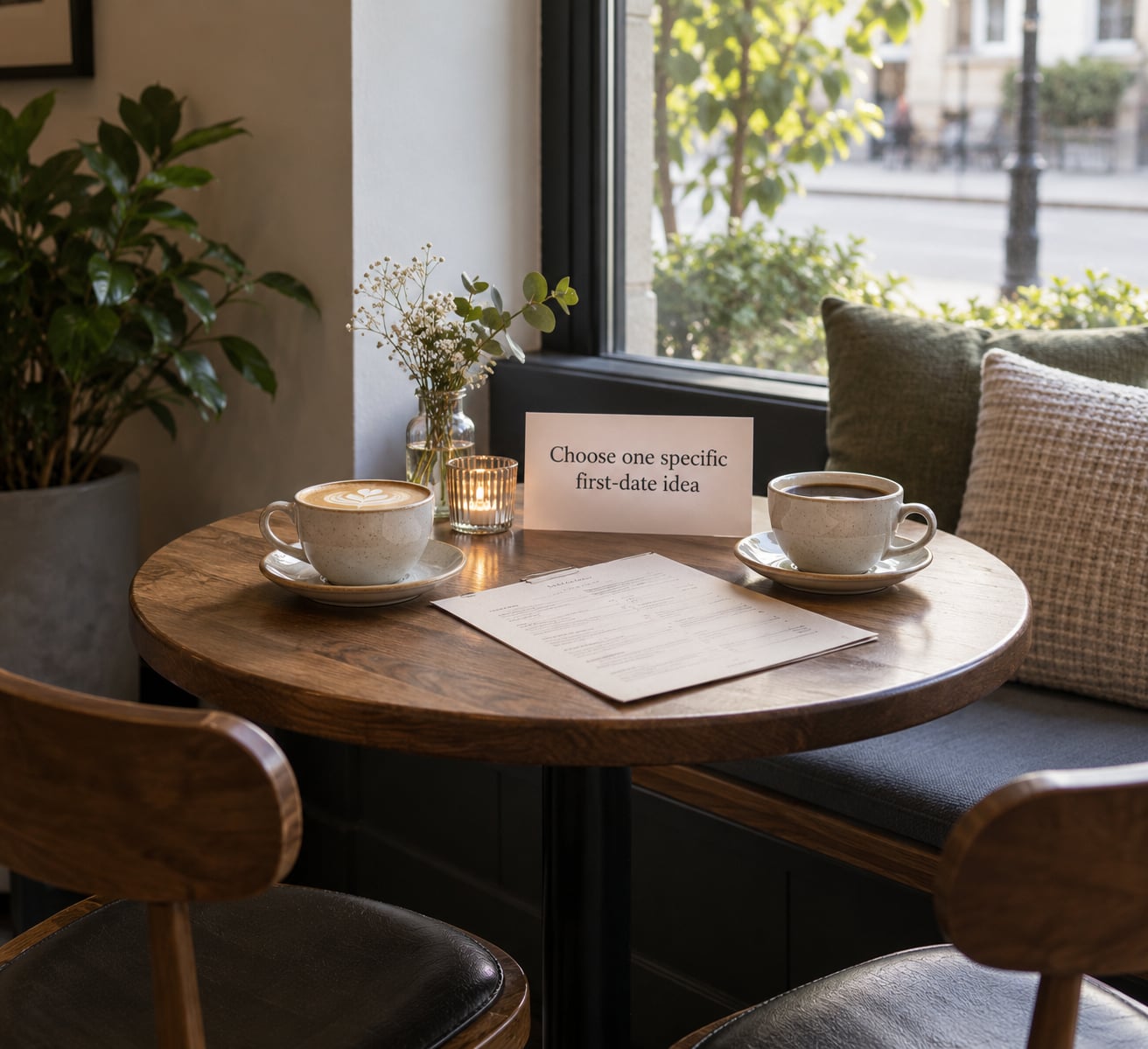
Pick something simple, public, easy to talk during, and easy to leave. Coffee, a walk through a park, one drink, or a casual meal where the food arrives fast. A first date should be about ninety minutes, not three hours and a commitment to the entire evening.
Offer two concrete slots rather than one, or one slot with a choice attached. “Thursday after work or Saturday afternoon” gives someone something to say yes to. “Sometime this week” gives them homework.
Two templates that already work:
“I’ve really enjoyed our chats. Want to grab a coffee Thursday after work, or Saturday afternoon?”
“There’s a ramen place near me I keep meaning to try. Free this week?”
The second one is a good trick when you feel exposed. It sounds like you are doing something you want to do anyway, and the invitation is an add-on rather than a declaration.
Use relaxed, direct wording
Write it the way you would say it out loud to a friend. Shorter is better, and confident is not the same as formal. Sentences like “Would it perhaps be possible to consider meeting sometime, if you aren’t opposed?” sound like a legal notice.
Compare these two:
Vague: “hey so we should hang out sometime, maybe grab a drink or something”
Clear: “I’ve had a good time chatting with you. Fancy a coffee Saturday at 11? No pressure if you’re busy.”
The second one is not more intense. It is more respectful, because it gives a real answer to a real question. The vague version transfers all the work, and the other person is left guessing whether they are being invited or just complimented.
Adding one specific, honest compliment helps more than a compliment could ever do on its own. Mentioning that they are funny, or that they told a story about their brother that you have been thinking about, reads as genuine rather than rehearsed.
Make the invitation easy to answer
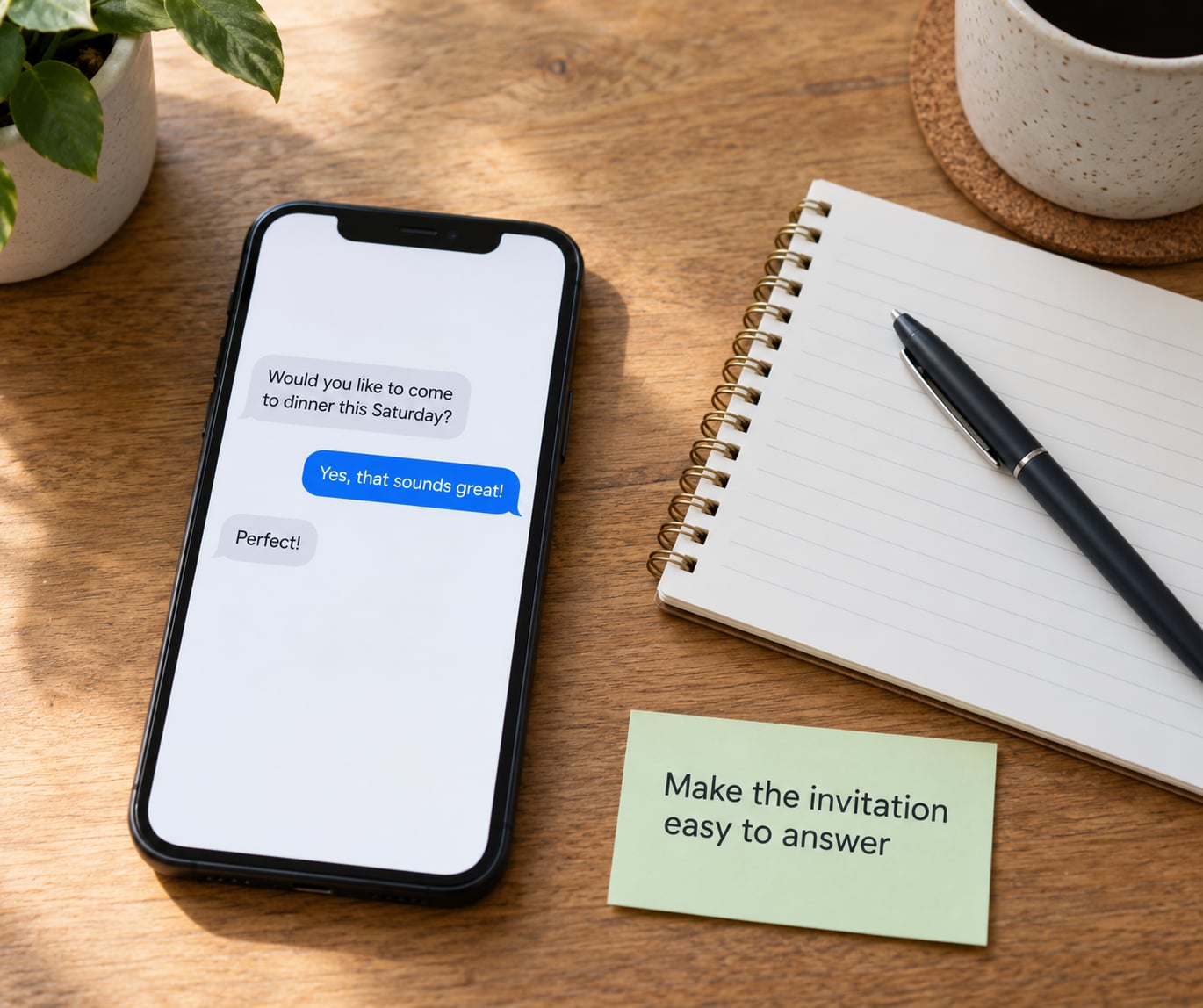
Low-pressure does not mean apologetic. It means your invitation already contains an easy exit, so nobody has to construct one for you.
Three phrases that do most of the work:
- “No pressure if you’re busy.”
- “Totally fine if this isn’t your thing.”
- “Happy to be friends if that’s more where you are.”
Do not stack them. One is generous. Three start to sound like you have already decided you are going to be rejected, and that reads as low confidence rather than respect.
Then stop texting. The silence after you send an invitation feels unbearable from your side and is completely invisible from theirs. Most people need a day or two because they have a life, not because they are composing a careful rejection.
Respond gracefully either way
Prepare for four replies, and your nerves will drop considerably, because you will already know what each one means.
They say yes. Confirm the plan in one message, name the place, and stop negotiating. “Saturday at 11, the coffee place on the corner. See you then.” Over-coordinating a confirmed plan is its own kind of awkwardness.
They say maybe. A maybe is not a no, but it is not a yes either. Reply with something light and leave the ball where it is. “Sounds good, no rush either way.” If nothing happens after that, treat it as a no.
They suggest another day. Say yes quickly and stop asking why. “That works better, let’s lock it in.” Some people simply have a calendar they could not control when you asked.
They say no, or go quiet. A clear no is a gift, because you can stop holding your breath. “No worries at all, thanks for telling me.” Then leave it. You can follow up once, and only once, after about a week: “Still up for a coffee this week?” If there is no reply to that, that is the answer.
A single follow-up is confident. Three is pressure. Silence after one follow-up is not a puzzle to solve, it is a decision that has already been made.
Common Mistakes
Asking without a plan. “We should hang out sometime” sounds like interest, but it hands the other person all of the work, and most will not do it. Fix: name one activity and one time.
Using overly formal language. Long, careful messages read as anxious because the care is visible. Fix: write it in a single breath, then send it before you can soften it into mush.
Sending too many options. A list of five activities is a research project, not an invitation. Fix: offer two slots, or one activity with a choice of time.
Appearing overly invested. Three paragraphs about how much you have been looking forward to this, before they have agreed to anything, sets an unbalanced tone. Fix: match the message to the stage. Two or three sentences is plenty for a first ask.
Treating a delayed reply as rejection. People work, commute, have children, and put their phone down. Fix: wait a full day before you read anything into it, and follow up once.
Overexplaining the no-pressure part. “I know this is a lot and you don’t have to feel pressured and honestly I’m nervous too” is four disclaimers in a row. Fix: one short line. Confidence here is short, not apologetic.
Frequently Asked Questions
Should I suggest a first date by text or in person?
Text is the better default for a first ask, especially with someone you met on an app, because it gives them time to think and reply without pressure in the moment. Ask in person only when there is already a natural pause in a real conversation and you can ask once, plainly, and then let the silence exist without filling it.
How long should I wait after matching with someone before asking them out?
Ask when you have had a real exchange, not a count of days. A handful of conversations over two or three days is plenty, and asking sooner is fine if the interest is obvious. What matters is that the invitation refers to something you have actually talked about, because context does more for you than timing ever will.
What if someone does not answer my first-date invitation?
Give it at least two full days, then send one short follow-up such as still up for a coffee this week. No reply to that is a no, and treating it as one is the healthiest thing you can do. Chasing further usually produces the same silence with more of your own on the line.
Is it awkward to suggest a specific place for a first date?
Not at all. Suggesting a place is a courtesy, because it saves a decision nobody wants to make alone. Offer a venue and an alternative, or name the kind of place you have in mind, such as somewhere quiet with coffee, and let them pick the actual spot. Specific is warm, not pushy.
How do I follow up after someone suggests a different day?
Accept the new day without comment and confirm it plainly. Avoid asking why the original date did not work, because it puts them in the position of explaining something you do not need explained. A simple that works better, let’s lock it in, reads as easygoing and keeps the plan moving.
What should I say if I am nervous about asking someone out?
Say it plainly and add one honest sentence about the nerves, such as it has been a while since I have done this. That line is far more disarming than pretending you are relaxed, and people consistently find directness reassuring rather than weak. Confidence here just means being clear, not pretending nothing is at stake.
Conclusion
To suggest a first date without being awkward, be clear about the plan, relaxed about the answer, and brief about everything else. The nervousness you feel is about wanting it to work, and nobody sensible holds that against you.
Pick one low-pressure activity you would enjoy anyway, mention it in the conversation at the next natural opening, and ask for a specific time. Send it before you can improve it further.