To break up with someone you only dated a few weeks, say it plainly, say it soon, and leave no opening for debate. A short, honest sentence beats a long explanation every time, and it costs you nothing in kindness.
A few weeks of dating can still hurt, especially when the spark went out fast or the person was genuinely nice and you have nothing to complain about. That combination is the hard part, not the wording. What you owe someone here is clarity and respect, not a perfect reason.
This guide walks through the whole thing: choosing your channel, writing the message, staying firm when they push back, and closing the connection afterward. Most of it takes about fifteen minutes to do and saves weeks of second-guessing.
Table of Contents→
- What You Need Before You Send Anything
- How to Break Up With Someone You Only Dated a Few Weeks: Step by Step
- Common Mistakes and What to Do Instead
- Frequently Asked Questions
- Should I break up in person after only a few weeks?
- What if I am not sure I want to break up right now?
- What should I say if they ask why after only dating a few weeks?
- Can we stay friends after I end the relationship?
- What if they keep messaging me after I say it is over?
- How long should I wait before dating again?
- Start With One Clear, Respectful Message
What You Need Before You Send Anything
Three things make this easier: a private and safe place to talk, a clear decision on how direct you want to be, and the one or two real reasons you are ending it.
Safety first. If you suspect stalking, controlling behavior, or any threat of violence, do not meet alone and do not soften the ending hoping to manage their reaction. Send a short written message, then block, and contact a domestic violence support line or the National Domestic Violence Hotline at 800-799-7233 (text START to 88788).
Otherwise, pick a neutral public place, a daytime conversation that does not run late, or a clear written message. Privacy matters less than safety, but it matters: you do not owe anyone an explanation of your weekend, your living situation, or your other plans.
Then write your reason down in one sentence. Just one. If you are making a list, you are probably looking for permission rather than writing a breakup.
How to Break Up With Someone You Only Dated a Few Weeks: Step by Step
1. Decide Whether You Want a Conversation or a Message
After one date, stopping the conversation is normal and nobody is owed a formal ending. After two or three dates over a few weeks, a short honest conversation or a written message is the respectful default.
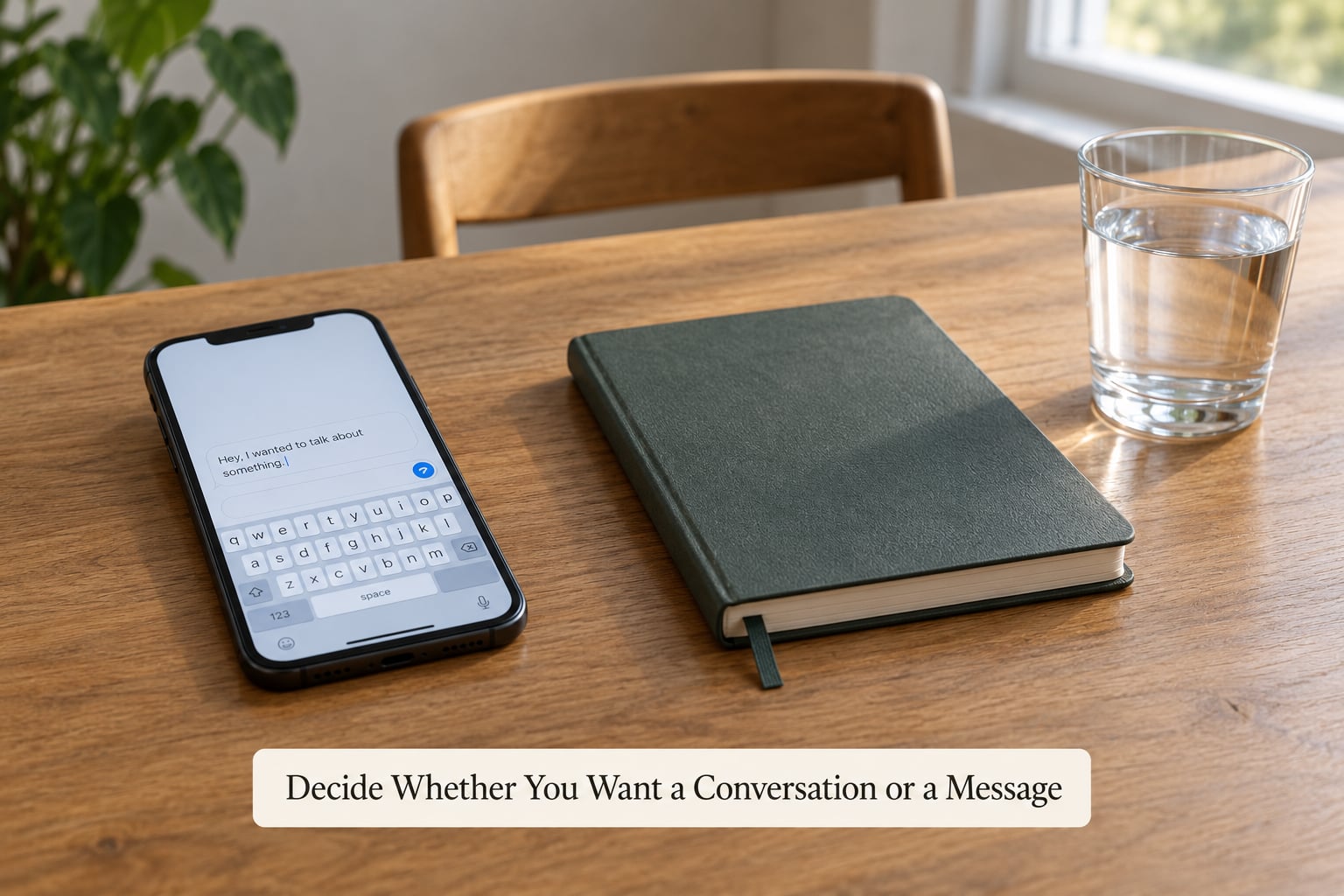
Talk in person when there is a shared public place and you suspect they will want to talk back. Text when the connection was mostly digital, when you live far apart, or when meeting would put you in the awkward position of being the person who left.
A phone call sits between the two. Use it when the two of you already talked on the phone a lot and you are comfortable hearing their voice one last time. What you should not do is spend a week posting less, replying later, and hoping they get the hint. That fading-out approach leaves them doing the emotional work you avoided.
2. Choose a Kind, Direct Reason
The honest reason is usually short: I lost interest, I do not see it working, or I do not want a relationship right now. Those are complete answers.
You can offer a reason without delivering a diagnosis of their personality. Avoid the two common traps. The first is the insult list, which reads as a rejection letter and gives them five things to argue with. The second is inventing a flaw that is not there, like saying you fell for someone else when you did not.
If you genuinely do not know why, you are allowed to say so. Something like “I am not feeling the connection I was hoping for, and I would rather be honest about that than string you along” is truthful and complete.
3. Write or Say the Breakup Clearly
Good breakup wording follows the same three-part shape in person, on the phone, or in a text: one line of appreciation, one clear sentence ending it, one line closing the door.
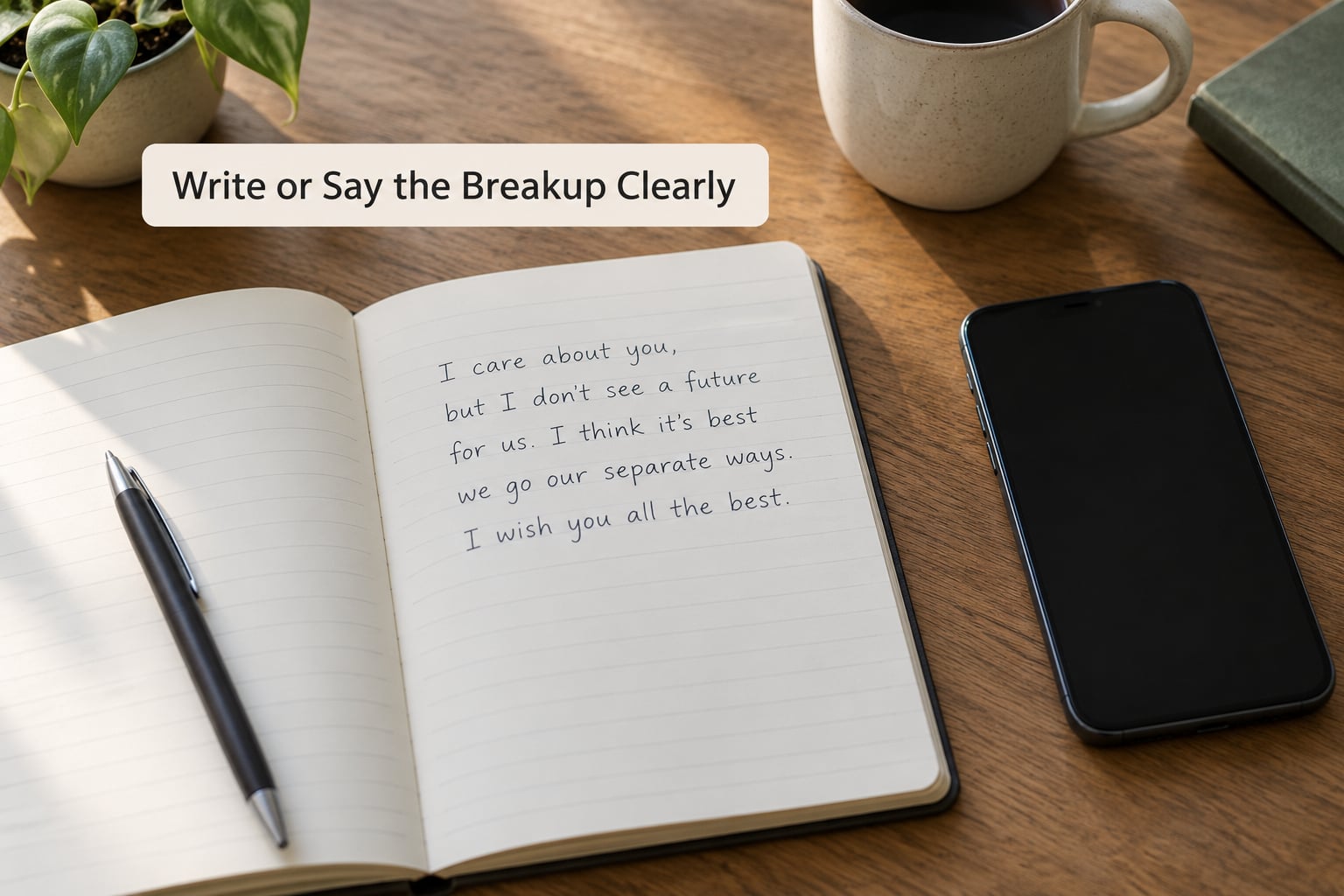
In person: “I have had a good time getting to know you, and I want to be honest rather than let this drift. I do not think I am the right person for you. I am going to stop replying here, and I wish you well.”
Over text: “Hey, I want to say something straightforward instead of letting things fade. I have really enjoyed meeting you, but I do not see this going anywhere romantic. I am going to step back, and I do not think we should be in touch. Take care of yourself.”
Over the phone: “I called because I think you deserve to hear it from me. I am not feeling the connection I hoped for and I am going to end things here. You did nothing wrong.”
Read it out loud once before you send it. Anything that sounds like a debate opening gets cut.
4. Send It Without Waiting for the Perfect Moment
Timing matters less than you think. What matters is that you do not wait for a convenient excuse that will never arrive, and you do not use silence as the message.
A good window is when you are calm and they are likely to be awake, not after a fight, a work call, or 1am. Sending at a normal hour on a normal day is enough. Then put your phone down and resist watching for a typing bubble for the next hour.
If you chose in person, keep it short. Ten sentences is plenty. Longer explanations dilute the decision and give them openings.
5. Handle Their Response Without Reversing Your Decision
Reactions vary, and none of them are an invitation to reopen the question. Prepare for three common ones.
Sadness and tears are the most common. Acknowledge the feeling without changing the answer: “I know this is disappointing, and I am sorry. I am still not able to do this.”
Questions come next, often several in a row, and each one is an opening you do not have to take. “Can you tell me what I did wrong?” gets the same answer as before. You can say you are not able to talk it through, and mean it kindly rather than angrily.
Negotiation is the hardest to sit through. Requests like “give me one more chance” or “let me fix it” are not obligations. One short line closes it: “I appreciate that you care, but my decision will not change.” Then stop replying.
If a reaction turns threatening, do not explain yourself further. End the conversation, block, save any messages, and report where the platform allows it.
6. Close the Connection and Protect Yourself
Going quiet after the conversation is not cruelty. It is the part where you let your words land instead of filling the space with revisions.
On a dating app, unmatching removes them from your matches without a notification storm. Blocking is stronger and is the right call if they asked for no contact or if the messages were hurtful. If the two of you matched on several apps, each one needs its own unmatch.
Delete the conversation thread if rereading it keeps you stuck. Mute the group chat. Take down anything posted while you were together, and return the small stuff, the hoodie, the charger, the keys you were holding. A short exchange at a front desk or a porch pickup usually works better than a reunion.
Ask one friend or family member to check in with you over the next two weeks. That single request does more for a rough few days than an hour of advice from a stranger.
Common Mistakes and What to Do Instead
Ghosting without a word leaves them with an unfinished story and often haunts the person who vanished more than the person who was dropped. If you have been on multiple dates, send two sentences. Silence after one date is fine.
A vague reason like “things are just complicated” invites them to solve a problem you never described. State the decision plainly, and keep the reason short if you give one.
Offering friendship in the same breath as the breakup usually lands badly. Decide whether you genuinely want a platonic friendship with someone you rejected, and if not, do not offer it to soften the ending.
Inventing future plans keeps a door open you have already closed. No “we should still hang out as friends,” no “maybe in a few months,” no leaving your dating profile open as a signal.
Over-explaining is the most common mistake and the easiest to fix. Three sentences beat three paragraphs. Every extra sentence is another thing to negotiate.
Replying out of guilt, at 2am, out of pity rather than want, restarts the whole cycle and lands you in the same place a month from now.
Frequently Asked Questions
Should I break up in person after only a few weeks?
After two or three dates, meeting in person is the more respectful option when a neutral public place is easy to arrange. It gives them a real answer instead of a screen. After a single date, a clear written message is perfectly acceptable and nobody is owed a formal ending. What matters most is that you actually say it, rather than hoping they notice you have gone quiet.
What if I am not sure I want to break up right now?
Then do not send the message yet. The most common regret afterward is breaking up during a bad week and wishing you had waited. Give it one honest look: is your hesitation about them, or about something outside the relationship like a bad month at work? If the answer is outside, wait two weeks and decide again with a clear head.
What should I say if they ask why after only dating a few weeks?
Give the same answer once, briefly, then stop. Something like, I am not feeling the connection I hoped for, and I would rather be honest than let this drift, is complete and does not need a supporting argument. If they push further, say you are not able to talk it through. You are not obligated to justify a decision you have already made.
Can we stay friends after I end the relationship?
Only if you actually want a platonic friendship, not to soften the ending or because you feel guilty. Friends often cannot hold it, at least not right away, and every message reopens the wound for both of you. If you want to stay in touch, say nothing about friendship when you break up and let ordinary contact happen naturally later, if it does.
What if they keep messaging me after I say it is over?
Answer once, briefly, and clearly: I am going to stop replying here, and I would ask you to do the same. Then unmatch or block, and save any messages that are threatening or harassing in case you need them later. Repeated contact after someone has asked for space is a boundary problem, not a debate, and you are allowed to stop being available.
How long should I wait before dating again?
There is no correct number, and the popular time-based rules are not well supported. A few weeks of feeling solid is usually enough; some people need a couple of months. Tell the difference by asking whether you are genuinely curious about someone new, or whether you are trying to stop thinking about the last person. If it is the second one, wait.
Start With One Clear, Respectful Message
If you take one thing from this, make it the first line: say the decision, keep the reason to a single sentence, and do not leave a door open. Everything else, the channel, the timing, the app settings afterward, is secondary.
You will feel guilty for a few days either way. Guilt that arrives from kindness is manageable; guilt that arrives from having been cruel is the one that lingers. Keep it short, keep it honest, and keep yourself safe.