Yes, and you should. If you have decided you do not want a second date, saying so within a day or two, in two or three plain sentences, is the kindest option available to you. Learning how to let someone down kindly after a date is mostly about removing two things: the excuse and the delay.
If the thought of that conversation has you spiraling, that is ordinary. Almost everyone who ends things early feels guilty, and the guilt usually comes from imagining how you would feel on the receiving end, not from any real wrongdoing on your part.
Three rules cover nearly every situation. Say it soon, say it honestly, and keep it short. Everything below is built on those three.
Table of Contents→
- What You Need Before You Write the Message
- How to Let Someone Down Kindly After a Date: Step by Step
- 1. Decide Whether You Are Not Interested or Simply Unsure
- 2. Send the Message Soon and Privately
- 3. Use How to Let Someone Down Kindly After a Date Without a Soft Excuse
- 4. Keep the Message Brief, Honest, and Respectful
- 5. Leave the Door Open Without Creating False Hope
- 6. Respond Calmly If They Ask Questions
- Common Mistakes and What to Do Instead
- Frequently Asked Questions
- How soon should I message someone after deciding I do not want a second date?
- Should I explain why I am not interested after a first date?
- How can I let someone down kindly without giving false hope?
- Is it better to reject someone by text, phone call, or in person?
- What if the other person asks me to explain my decision?
- Conclusion
What You Need Before You Write the Message
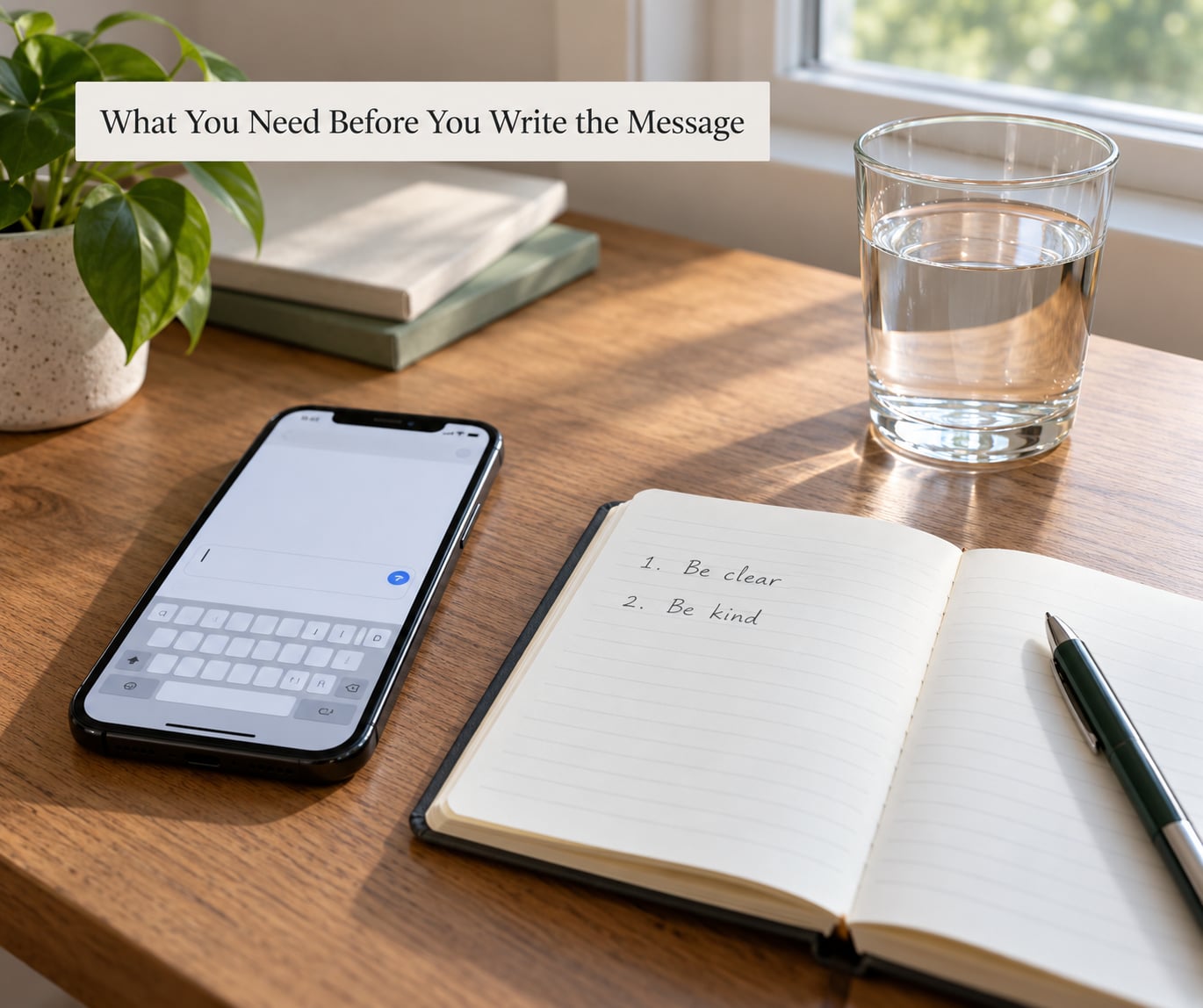
Before you open the app, get three things straight.
A settled decision. Not “I suppose I could be talked into it,” but an actual answer. If you would be relieved if they asked you to try again in three weeks, you have not decided yet.
A private channel. Somewhere only the two of you can see. Not a public story, not a group chat, and not in front of other people at a party.
Three sentences, not three pages. Draft it in your notes, read it out loud, and cut anything that exists to soften, justify, or apologize. If a sentence would still make sense if the other person never read it, it is probably filler.
Pick a time when you are not rushing out of a door, and when they are not about to message you. Sending something at midnight usually reads more like avoidance than kindness.
How to Let Someone Down Kindly After a Date: Step by Step
1. Decide Whether You Are Not Interested or Simply Unsure
Say it in your head plainly: I am not interested in a second date. Not “we did not click,” not “the timing is bad.” Blunt is not the same as mean, and that distinction is where most of the difficulty lives.
If the honest answer is that you are unattracted to them, the default scripts will not fit. You do not need chemistry to explain a decision, and pretending a spark is missing when one exists only confuses things. Some people also know consistently that they do not experience attraction the way most partners do; the wording in step 3 works for that too, without inviting a debate about your orientation.
Give yourself one honest test: is there anything specific they could change? If the answer is a personality trait you are hoping they will outgrow, that is not uncertainty, that is hope. If it is something concrete like a schedule, distance, or a dealbreaker you did not mention before, say so plainly and once.
2. Send the Message Soon and Privately
Within 24 to 48 hours of the date, before they message you asking about a second one, is the sweet spot. Waiting a week does not soften anything. It just extends the period in which they are hoping.
Rejection hurts more when it is unexpected, so a prompt message is gentler than a considered one that arrives on day nine. People in dating forums describe the same thing over and over: they sent a short message the next day, braced for a blow-up, and were met with a gracious reply.
Some readers say silence after one date is fine now, and there is no universal rule. A short message still costs you about thirty seconds, and it leaves the other person with real information instead of a hole they fill in themselves.
3. Use How to Let Someone Down Kindly After a Date Without a Soft Excuse
Three parts work every time: thank them, say clearly that you are not interested in taking things further, and wish them well. No explanations unless they ask.
I had a good time and I liked meeting you, but I do not feel a romantic connection and I do not want to take things further. I wish you all the best.
Change the words until it sounds like you. A message you would never naturally say will read as rehearsed, and people sense that instantly.
4. Keep the Message Brief, Honest, and Respectful
Use I-statements so the message stays about your own feelings. “I did not feel a connection” cannot be argued with, and there is nothing in it for them to correct.
Resist over-honesty too. Saying you did not find them physically attractive, or commenting on their job or their age, adds humiliation without adding honesty. One honest reason and a close door is the whole job.
Do not apologize repeatedly. An apology tells the other person you feel you did something wrong, and it invites them to argue you out of it. You did not do anything wrong; the two of you simply are not a match.
5. Leave the Door Open Without Creating False Hope
Ending with “the door is always open” feels generous and usually lands as a maybe. Readers looking for a way to keep a door open without implying they might walk through it should end on something warm but complete: “I really enjoyed meeting you” or “I hope you find someone great.”
Offer friendship only if you would genuinely be glad to see them in a group setting with no romantic expectation. People in these situations often say it as a softening tactic, and the other person reads the softening correctly.
6. Respond Calmly If They Ask Questions
Questions are normal. They usually want to understand, not negotiate. Short answers do most of the work.
“What did I do wrong?” Nothing. There is no flaw to fix, and saying so is more useful than inventing one. “We didn’t have a connection, and I can’t change that” works.
“Can we try again sometime?” You are allowed to change your mind, but doing it now costs more than it helps. “I appreciate that, but no, I don’t want to take this further” holds.
“Are you seeing someone else?” Answer honestly if it is true. If it is not, say you are not pursuing anything right now and leave it there.
If a response turns angry, guilt-laden, or persistent, you do not owe a longer conversation. “I don’t think this is productive for either of us” followed by no reply ends it. If the messages keep coming, block.
On dates with people you met through an app, unmatching is the practical close. Tell them first, then unmatch. Going quiet without saying anything leaves them staring at a message you already saw, which is the version of this most people describe as ghosting.
Common Mistakes and What to Do Instead
Disappearing without a word. It saves you thirty seconds and leaves them guessing for days. A two-line message takes the same time and ends the story cleanly.
Inventing a reason. “I am just really busy” invites a workable suggestion, and a fabricated boyfriend surfaces three months later. Say the true thing instead.
Explaining for four paragraphs. Every extra reason creates another thing to argue with. One sentence about your own feelings is enough.
Asking them to give you time to think. A week of uncertainty is worse than a clean no. Decide, then write.
Insulting them to make yourself feel better. Comments about their looks, weight, age, or the date they chose do not soften the message. They just make it something they have to recover from.
Softening until it stops meaning no. Wording like “I would love to keep the options open” leaves the work undone. The other person leaves the conversation still hoping, which is the one outcome to avoid.
Piling on apologetics. Sorry, sorry, I am so sorry, I hate doing this. It reads as a request for absolution, not as a respectful message.
One more that is not on the list but trips people up: treating gendered expectations as someone else’s problem. Women are more often described as harsh for saying no and men as careless for saying it too fast. The script does not change. The amount of blowback you get might.
Frequently Asked Questions
How soon should I message someone after deciding I do not want a second date?
Within 24 to 48 hours, and before they ask you about another date. Speed is what makes it kind, because it stops them building hope on a decision you have already made. A message that arrives a week late cannot soften anything; it only extends the waiting. If they message you first, reply with your decision rather than pretending you are still thinking.
Should I explain why I am not interested after a first date?
One short line about your own feelings is plenty, and you only owe more if they ask. Reasons invite negotiation, and a long list of complaints reads as a verdict on them rather than a preference of yours. Phrase it as I did not feel a connection rather than anything about their appearance, personality, or life stage.
How can I let someone down kindly without giving false hope?
End on something warm but complete, like I really enjoyed meeting you or I hope you find someone great. Avoid open-ended lines such as the door is always open or let us see how things go, because people hear those as a maybe and keep waiting. If you would be happy to see them later as a friend, say so only if you mean it absolutely.
Is it better to reject someone by text, phone call, or in person?
After one or two dates, a text or a call is right. There is nothing built up to unwind, and a message lets them respond in private without performing a reaction for you. Once you have been together for months, do it in person, because the relationship deserves more than a screen. Always choose a channel that keeps the conversation private to the two of you.
What if the other person asks me to explain my decision?
Answer briefly and do not soften. Nothing went wrong, so there is no flaw to name, and you do not need to produce one. Try: I appreciate you asking, but I did not feel a connection and I do not want to take this further. If they keep pushing, say the conversation is not productive and stop replying. A short answer repeated clearly is kinder than a long debate.
Conclusion
Start with the only part that is actually hard: decide clearly. Not interested means not interested, and once that is settled the rest is three sentences and a send button.
Then write something honest and short. Thank them, say you do not want to take things further, wish them well, and send it within a day or two. Respectful beats vague every time, because vague leaves them doing the emotional work you were trying to spare them.
Early dates are supposed to end sometimes. Saying so plainly is not cruelty, and it is usually the version of this conversation both people are relieved to have had.