Most people send the first post-date text the same evening or the next morning, and that is the right default. If you are wondering how long to wait to text after a first date, the honest answer is that the timing matters far less than what you write and whether the reply comes back. Waiting several days to look relaxed now reads as disinterest, not as cool confidence.
I have watched friends agonise over this for years, and the pattern is consistent. People who wait a full three days usually lose a date that was going somewhere. People who send one clear, warm message that night or the following morning usually get a reply.
This guide breaks the timing down by how the date actually went, what to write in each situation, and what to do when nothing comes back.
Table of Contents→
- How Long to Wait to Text After a First Date: Quick Guide
- What Time of Day Should You Send the First Text?
- Should You Wait for Them to Text First?
- What Should You Text After a First Date?
- What If You Are Still on the Date and Want to Text?
- How to Follow Up If You Do Not Hear Back
- How to Respond If They Text Quickly
- How to Respond If They Respond Casually
- Common Follow-Up Mistakes to Avoid
- A Simple First-Date Follow-Up Checklist
- Frequently Asked Questions
- Conclusion
How Long to Wait to Text After a First Date: Quick Guide
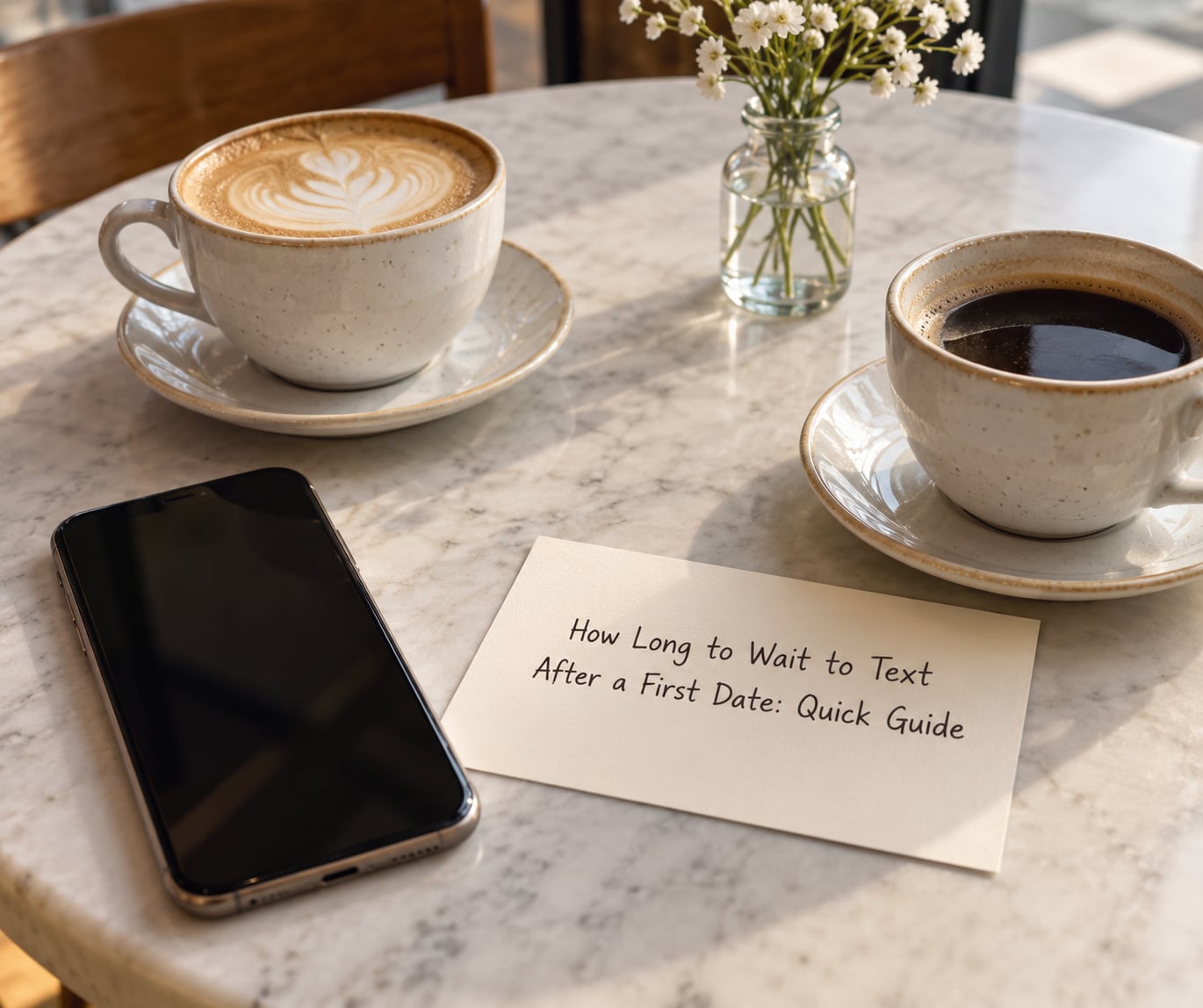
Send it the same night if the date ended before 10pm and you both left wanting more. Send it the next morning if the date ran late or you both seemed tired. Wait 24 to 48 hours only when you genuinely felt unsure about how it went.
| How the date went | When to send | What the message should do |
|---|---|---|
| Great, both of you relaxed and talkative | Same night, within an hour or two of parting | Reference one specific moment and keep it light |
| Good but a little formal or short | Next morning, mid-morning to midday | Warm thanks plus one easy question |
| Fine, polite, hard to read | Within 24 hours | Leave an opening and see if they take it |
| Ended later than 10pm | Next morning, no earlier than about 9am | Short and low-effort, no heavy topics |
| You are not interested | Within 24 hours, before you meet again | Kind and brief, no explanation needed |
The common mistake is treating this as a test of willpower. It is not a waiting game where whoever texts first shows less value. Timing is only a signal of how you are feeling, and a message sent at a reasonable hour reads as normal behaviour.
On dating apps, expect faster contact rather than slower. When a match already likes you and you have already agreed to meet, a next-morning message is ordinary rather than eager. Dates set up through friends work the same way.
What Time of Day Should You Send the First Text?
Send the message when you are actually home, settled and able to type properly. After 10pm is where the rules get silly, because a message that lands at midnight reads as more intense than the same words at breakfast.
How Long to Wait to Text After a First Date
Same evening for an early finish and a strong conversation. Next morning after a long or late date. Twenty-four to 48 hours when either of you seemed unsure.
A short window is good. Walk out, get home, have a glass of water, then write. That is normally 30 to 90 minutes, which is enough to sound settled without sounding like you were waiting by the door.
Your own time zone matters too. If you are travelling or finishing a shift, the message can wait until you are somewhere with a signal and a free hand. Interest is not measured in minutes.
Dates That End Late
This is the edge case most advice ignores. When a date finishes after 11pm, the next morning is the better choice, not a message at 1am. A late-night message adds pressure to a good evening, and plenty of people check their phone in the morning with a stack of messages already waiting.
Something like a quick good morning message about the night before works well. No emotional processing, no review of the date, no asking whether they got home safely at midnight.
Should You Wait for Them to Text First?
Do not wait out of principle. Wait only if the other person is clearly already texting you, in which case you are not waiting at all, you are replying.
Traditional advice said the man should go first, and that a woman who texts first is chasing. Those rules came from a period when texting was rare and mostly practical. Now the person who texts first after a date is usually the person who is more interested, which is worth knowing about yourself either way.
People on dating forums describe it plainly: whoever wants to see the person again should be the one who says so. That said, women in those threads mention the anxiety of texting first far more often than men do, and men more often say they appreciate it. The imbalance is real enough to be worth naming.
If you are not sure whether the date was mutual, sending one clear message is the cheapest way to find out. The information you get is worth more than the ambiguity you avoid.
What Should You Text After a First Date?
Reference one specific thing from the date, keep your tone the same as it was in person, and make it easy for them to answer. That is the whole formula.
For a good date, thanks plus a callback:
“Really enjoyed talking about your trip to Lisbon. Did you get to see the tiled station you were going on about?”
For a fun or funny date, share the bit you both laughed about:
“Still thinking about that waiter calling your dog a wolf. Thanks again, it made my week.”
For a date worth discussing, ask the open question:
“You mentioned you were weighing a move. I have been thinking about it since, so what is pulling you toward it?”
Keep most messages to one or two sentences. A paragraph after a first date reads like an interview application. One question at the end gives them something easy to answer, which is what makes replies come.
A “got home safe” message, either direction, is universally appreciated. It costs nothing and it shows basic manners.
What If You Are Still on the Date and Want to Text?
Put the phone away. Texting someone sitting across from you is the clearest signal that the person across the table is not your priority, no matter what the message says.
It happens when you are waiting on a reply from an earlier conversation, or when you suddenly remember something you meant to send. In both cases the fix is simple: send it after, or forget it. Nothing important is lost by a delay of a few hours.
If you genuinely need to check something, say so out loud. “Sorry, my sister’s flight just landed, let me check she got in.” That is honest, and it takes ten seconds.
How to Follow Up If You Do Not Hear Back
Wait 24 to 48 hours after your first message, then send one follow-up. One is plenty. Two reads as pressure, three reads as confusion.
If you are still chewing it over the next morning, the blunt version of how long to wait to text after a first date is that the question stops mattering once you pass a day. A second day is a decision about your own interest, not a clever move.
Keep the follow-up light and give them an easy out:
“Hey, I got a bit buried at work. Still up for something this week if you are?”
After that second message, the silence is an answer. Do not invest more energy into decoding it. People who are interested have a phone, they know how to use it, and a plan is easy to propose.
Soft ghosting deserves its own name. When someone replies with one word, never asks a question back and never suggests meeting, they are keeping the door open without walking through it. Match their effort, keep it to a line, and stop volunteering.
How to Respond If They Text Quickly
A fast, warm reply usually means interest, so enjoy it without immediately booking three weeks of your calendar. People who are genuinely keen tend to keep replying well past the first message.
Reply at your own pace and length. If they sent three lines, send three lines back. If they send a voice note, you do not have to match the format.
Ask one forward-looking question rather than arranging the second date instantly. It keeps the conversation going and gives you something to work with if the reply is enthusiastic.
“Really glad you texted, I had fun too. Are you around the weekend?”
Let the second date happen within the next week or so. Forum threads on dating advice repeatedly report that dates booked too far out lose momentum, while the first message keeps its energy only if the meeting follows soon.
How to Respond If They Respond Casually
Check effort, consistency and willingness to make plans, not message length alone. Some people type short messages all day. A one-word reply to a warm message is different.
Match the energy without withdrawing. If they give you three words, give them three words and keep your tone warm. Going cold or sarcastic in return usually ends the conversation without revealing anything useful.
“Glad you got home okay. That taco place was even better than I expected.”
Then watch what happens. If the next reply is longer, you were reading a busy person. If it stays flat for several exchanges, you have your answer and can stop replying entirely.
Common Follow-Up Mistakes to Avoid
Sending a long message straight after the date. Two or three paragraphs reads as nervous. Keep it to a line or two.
Replaying every awkward silence. You noticed the gap at the table. They had other things on their mind. Mentioning it makes you look more invested than they were.
Writing a formal thank-you note for a coffee date. Reserved for weddings, funerals and a dinner that was genuinely significant.
Treating a delayed reply as rejection. Busy week, bad reception, kids, shift work. People read messages in clusters, not continuously.
Playing the three-day rule. The old advice is outdated. Recent work on post-date texting found a U-shaped pattern, where both immediate and long-delayed messages scored worse on relationship intentions than a next-day text. Waiting three days lands on the wrong side of that curve.
Double texting to prove a point. A second message is fine as a nudge. A third is a conversation with yourself.
Asking for a review. Never ask whether someone liked the date. Make the invitation and let their answer reveal the interest.
A Simple First-Date Follow-Up Checklist
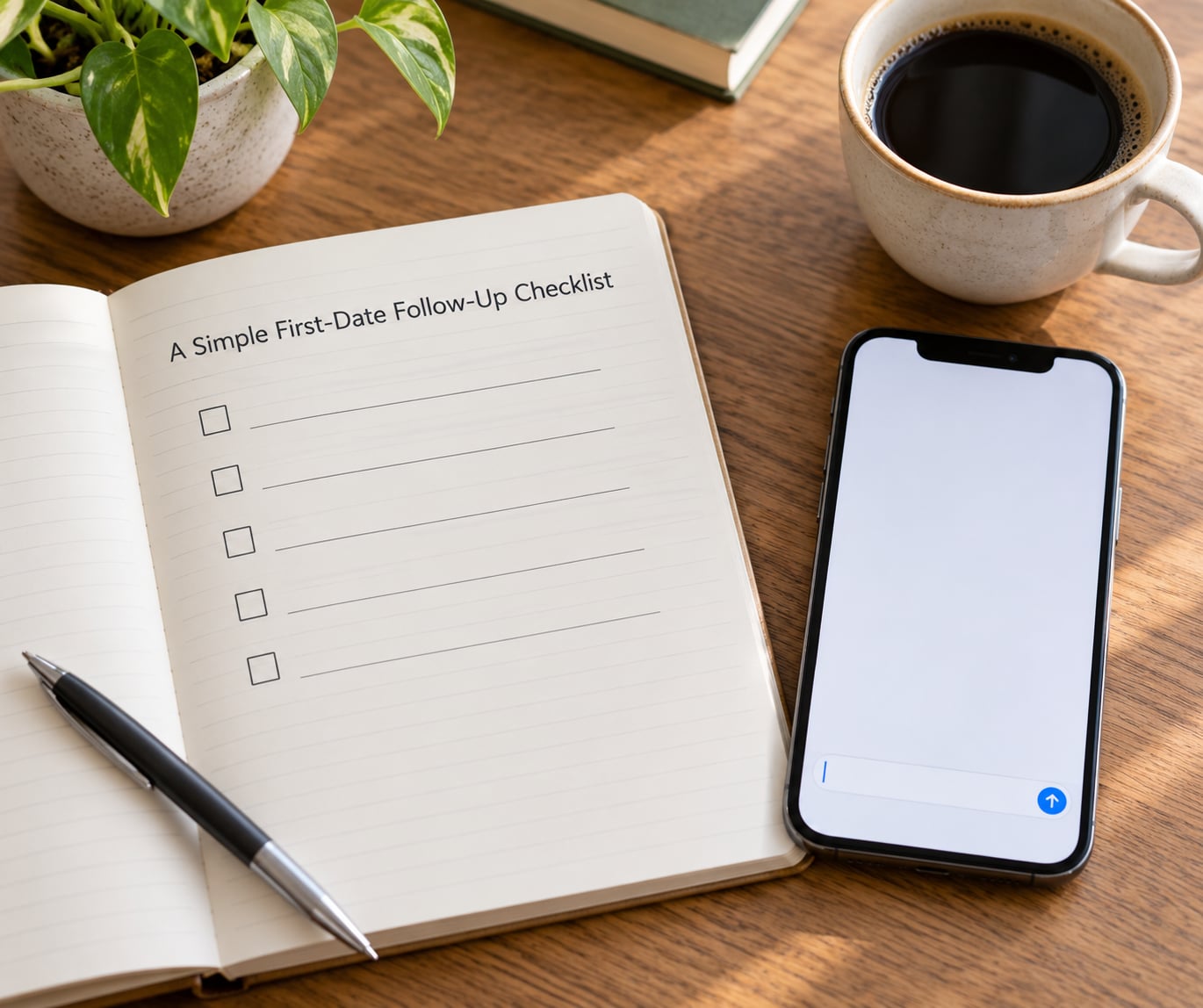
Before you send, five quick checks cover almost everything.
- Does it reference something specific that actually happened?
- Does the tone match how the date felt, not how nervous you are?
- Is there one easy question or invitation at the end?
- Is it free of emotional pressure, apologies or explanations?
- Am I genuinely willing to receive a short reply?
If the answer to the last one is no, you are not ready to send. That reaction is anxiety talking, and waiting will not fix it.
Timing is one variable. Message quality, calm tone and a clear next step do the real work.
Frequently Asked Questions
Should I text after a first date the same night?
Yes, if the date ended before 10pm and you both seemed relaxed. Wait an hour or two after getting home so the message sounds settled rather than hurried. Mention one specific moment from the date and ask an easy question. If the date ran late, wait until the next morning instead.
Is it too late to text after a first date the next day?
No, next day is one of the best windows. Recent research on post-date texting found that a next-morning message produced the strongest relationship intentions, better than an immediate text or a delayed one. What matters is that the message references the date and invites a reply. Silence for a day does not sink anything.
How long should I wait to text after a first date if we had a great time?
The same evening or the following morning works best. A great date creates momentum, and letting several days pass lets that momentum cool. Send one warm message referencing something you both laughed about or talked about at length, then let the other person respond before you plan a second date in detail.
Should I double-text if they do not text me first?
There is no rule about who moves first. If you want to see them again, send the message. Waiting for someone who has not texted you tends to end quietly rather than creating tension. After your first message, wait 24 to 48 hours before one follow-up. If that goes unanswered, stop and move on.
What if they reply but do not suggest another date?
That usually means interest is low rather than absent. Reply once, warmly and briefly, and try one clear invitation yourself. If they still do not engage, treat that as the answer. Continuing a conversation with someone who never proposes anything wastes time and quietly trains you to accept less than you want.
Conclusion
Send one specific, low-pressure message the same evening or the following morning. Reference something real from the date, keep it to a couple of sentences, and let their reply set the pace. If nothing comes back after one follow-up 24 to 48 hours later, the timing was never the problem.