
Knowing how to introduce your partner to your friends comes down to three things: agree as a couple that it is time, give your friends a casual heads-up first, then run one low-stakes meetup of about two hours. Most couples wait somewhere between six weeks and three months into an official relationship. There is no magic number, but rushing it usually causes more problems than waiting.
I have watched this go badly in both directions. A friend planned a surprise dinner for eight people and his girlfriend spent the whole evening quietly doing the dishes. Another friend spent four months delaying because he kept waiting to feel more certain than anyone ever feels at that stage.
The aim is not to produce one big friendly group. It is simply to give everyone one easy evening where nobody is blindsided, and to let the awkwardness happen on a small scale while you are still in a position to help.
Table of Contents→
- What You Need
- Step-by-Step: How to Introduce Your Partner to Your Friends
- Check That You and Your Partner Are Ready
- Choose a Setting That Makes Conversation Easier
- Prepare Your Friends Without Creating Pressure
- How to Introduce Your Partner to Your Friends the First Time
- Keep the First Get-Together Comfortable
- Notice Signs That People Are Connecting or Uncomfortable
- Debrief and Follow Up Without Ruminating
- Common Mistakes
- Frequently Asked Questions
- What if I am nervous about introducing my partner to my friends?
- How long should I give my friends and partner to get to know each other?
- Should I tell my friends what my partner is like before meeting them?
- What if my friends ask my partner personal questions?
- What if my friends do not warm up to my partner immediately?
- How should I handle different friend groups meeting my partner?
- Conclusion
What You Need
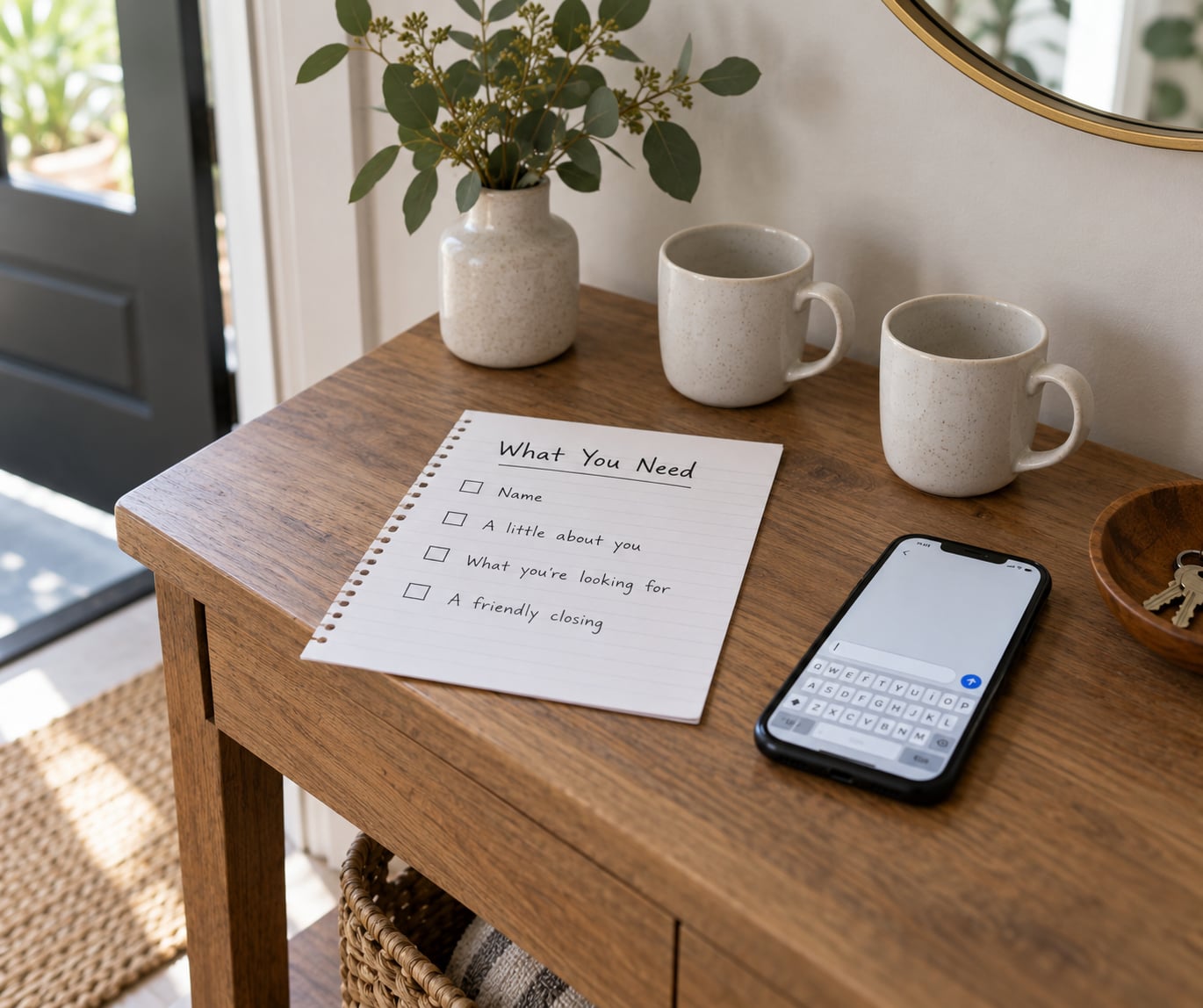
Before you send a single message, six things need to be settled. Gathering them first turns an anxious evening into an ordinary one.
- A shared yes from both of you. One person cannot carry the whole introduction. If either of you is bracing for it, push the date.
- A time limit. Two hours is plenty for a first meeting. Knowing the end is coming takes pressure off everybody.
- A heads-up for your friends. A short group chat message, or three individual ones for closer friends, so nobody feels ambushed.
- A small setting. Somewhere with some structure, like a walk, a game, or a meal at a table with seats you control.
- Two or three conversation prompts. Neutral topics that are not relationship history or work stress.
- A plan for afterwards. Fifteen minutes alone with your partner the next day, before either of you debriefs with friends.
Notice what is not on that list. You do not need matching outfits, a long speech, or every single friend in attendance. You need preparation, not performance.
Step-by-Step: How to Introduce Your Partner to Your Friends
Check That You and Your Partner Are Ready
Readiness is less about a milestone and more about three quiet checks. Are you exclusive? Have you met a few times outside the context of the two of you? Does your partner want this, or are they agreeing because you asked?
That third question deserves real time. Many people say yes to an introduction to keep a partner happy, then spend the evening performing and resenting it. Ask directly, and accept a no without negotiation. You can meet friends later.
Before you invite anyone, settle the practical details. What name do they use? What pronouns? Are there topics off limits, including old relationship history, money, or a shared work conflict? What support do they want from you on the night, and what do they definitely not want you doing?
Choose a Setting That Makes Conversation Easier
Setting does more work than almost anything else, because it decides whether your partner has to work for it. Silence is much harder to survive sitting across a table than walking a loop of park.
- A walk or an easy walk-and-talk is the safest first option. Movement fills gaps, and nobody is staring at anybody.
- Coffee with one or two friends is the lowest-stakes version. Ninety minutes is plenty, and you can extend it if it is going well.
- A small dinner with three or four people works once a one-on-one has gone fine. Seating matters here, so plan who sits next to whom.
- A group activity like bowling, mini golf, a cookout, or a walk with a dog removes the pressure to keep talking. It is the format most often reported as working.
- The full friend group is a reward, not a starting point. Save it for meeting three or four.
Two rules help. Keep the first meeting to one to two hours, and pick somewhere your partner has some familiarity with, even if it is only the neighbourhood.
Prepare Your Friends Without Creating Pressure
A heads-up does two jobs. It stops the ambush that makes people defensive, and it tells your friends how to behave without you having to police them.
Keep it short and warm. Here are three you can send as they are.
Casual version: Hey all, quick one. I’ve been seeing someone for a few months and we’d love to grab dinner with a few of you on Thursday. Nothing formal, just food and an easy evening. Free around 7?
Warmer version: Small heads-up: my boyfriend Sam is coming to Saturday’s dinner. He’s the one I keep mentioning from the pub quiz. Be nice to him and he’ll bring the good crisps.
Closer friends, one to one: I want to introduce you to Dan. We’ve been together about three months and he’s good. Want to do something low-key on Tuesday, or would you rather meet everyone at once?
Tell friends the name, anything they can look up that gives them an easy in, and one simple boundary. That last part matters more than most people expect.
Say what you do not want to happen. Something like please keep the questions about work out of it tonight, or please do not interrogate him about his ex, works better than hoping. Also skip the labels that land badly, such as telling everyone he is your boyfriend when he has not said so himself, or describing him as intense before he has spoken.
How to Introduce Your Partner to Your Friends the First Time
The first ninety seconds set the tone. Keep it plain and make it clear who is who, using names and pronouns rather than nicknames nobody outside the group will catch.
- Casual: This is Alex. Alex, this is Priya and Marcus.
- Warm: Everyone, I want you to meet Alex properly. Alex, these are the people who have heard far too much about you already.
- Formal, for a mixed group: Let me do the introductions round the table. On my left is Alex, and then we have Sam, Ruth, Jo and Dan.
Then do the thing people forget: turn to your partner and name one true, harmless thing about yourself that your friends do not know. It gives the group something to work with and takes the pressure off your partner to fill the air.
Have two or three prompts ready and drop them early rather than rescuing the conversation later. What got you into the thing you do, the worst holiday anyone has had, what everyone is currently reading or watching. Skip anything about exes, dating history, or who is paying for what.
Keep the First Get-Together Comfortable
Your job during the meetup is translator and traffic controller, not guest. Stay close enough to your partner that they can reach you, but keep moving around the room so attention is not stuck on them.
Pace the conversation rather than forcing it. Bring one new person into the group every ten minutes or so. If a topic runs long, jump in and redirect; your friends can read that as you being sociable, which is a better read than your partner feeling like a spotlight is on.
Watch for questions that go too deep. If somebody asks about salary, living arrangements, or why you do not live together, help your partner out in the same breath with a light redirect: she is freelance, it is a whole thing, tell me about your kitchen renovation instead.
Notice Signs That People Are Connecting or Uncomfortable
You can read the room faster than either side can, because you know what normal looks like for both groups. Positive signs are small: someone asks your partner a follow-up question, two people end up in a side conversation, your partner laughs at something that is not a formality, someone suggests a second meeting unprompted.
Warning signs are quieter. Answers stay one word long. Everyone talks to you and around your partner. Your partner goes quiet and stiff rather than talkative. A friend who normally says whatever they think suddenly stays polite, which usually means they are managing something.
Respond in small ways. Pull your partner into the group rather than pushing them: Marcus, you have to tell her about the paddle incident. Bring your friend over: have you met Alex, they spent three months building a table out of a door.
If it is genuinely going wrong, cut it short with a reason rather than a defeat: I have an early start tomorrow, so we are calling it here. Nobody minds.
Debrief and Follow Up Without Ruminating
Talk to your partner first, the next day, and only about their experience. The single most common complaint is not a rude question. It is coming home to hear about three people who were unkind, when the partner only remembers two awkward silences.
Separate what happened from what you are imagining. You are the only one who knows everyone at once, so your friend who said nothing might have been tired rather than hostile.
If something landed badly, address it with the specific person, calmly, rather than arguing with the group about tone. Then decide one concrete next step, such as a repeat coffee with the friend your partner liked least, so the second meeting is easier than the first.
One honest line to hold on to: your partner being polite to your friends is enough. Plenty of healthy couples never merge past the first dinner, and that is not a sign anything is wrong.
Common Mistakes
Surprising your partner. Announcing the plan as a fait accompli feels like being presented for inspection. Fix: no invitations go out until both of you agree.
Forcing everyone to meet at once. A group of nine gives a new person no chance to speak. Fix: start with one person and build up.
Over-preparing your friends. A lecture about being welcoming adds pressure and usually comes across as though you expect a problem. Fix: one heads-up and one request.
Giving conflicting labels. You tell one friend he is your boyfriend and another he is someone you are seeing. Fix: use the words you have actually agreed on with your partner.
Dominating the evening. If you are translating for both sides the whole time, nobody is talking to anybody. Fix: ten minutes of your own conversation with your friends, then go back.
Ignoring discomfort. Pushing through an awkward stretch for another hour helps nobody. Fix: leave early with a reason and regroup.
Treating one dinner as a verdict. People very often warm up by the second or third meeting. Fix: judge your partner on how they treat people over months, not how they handle one stiff hour with strangers.
Letting your own friendships disappear. This is the mistake that causes the actual damage, not the introduction itself. Fix: keep one or two standing plans that are yours alone, and do not cancel them every time your partner wants a weekend.
Frequently Asked Questions
What if I am nervous about introducing my partner to my friends?
Nervousness is normal and usually about the same thing on both sides: not knowing how it will go. Say it out loud before the day rather than pretending it is fine. Pick a one-to-one coffee first rather than a group, tell a friend you trust the truth about your nerves, and remind yourself that you are allowed to leave early. The nerves fade once people are actually talking.
How long should I give my friends and partner to get to know each other?
Treat the first meeting as a formality and plan two more before you judge anything. Warm-up usually shows up at the second or third get-together, when people have stopped being polite and start being normal. Do not schedule the second one too soon, and leave a few weeks in between. What matters is not how quickly they become close, but whether your partner is consistently polite and your friends are not actively hostile.
Should I tell my friends what my partner is like before meeting them?
Give one or two useful facts, not a character summary. Their name, how you met, and one interest they can ask about are plenty. Describing them as intense, quiet or difficult before they have spoken sets up a test rather than an introduction. If your friends already know them, keep it short so you are not building up an expectation that has to be met.
What if my friends ask my partner personal questions?
Answer first where you can, and redirect lightly: we can tell that story another time. A quick word with friends beforehand about salary, exes and living arrangements saves your partner a lot of it. If a question is genuinely intrusive, deal with the friend afterwards rather than in front of everyone. Your partner will remember who helped and who did not, so the follow-up matters more than the moment.
What if my friends do not warm up to my partner immediately?
Give it time, because it very often happens later. Do not explain your partner’s personality for them or argue on their behalf in the group chat, since that reads as a defence. Check in privately with your partner first, then with the friend who said something pointed. Some friendships never form and that is acceptable. What is not acceptable is a friend who is openly hostile, and that is worth a direct conversation.
How should I handle different friend groups meeting my partner?
Split them by intensity rather than treating them as one audience. Close friends who have heard every story can go first, since there is less to explain. Wider groups get a simpler introduction, usually through an activity. Do not expect your partner to perform charm at three gatherings in one month, and do not try to run several groups as a single event. One connection at a time is easier to protect.
Conclusion
Start with a conversation rather than an invitation. Sit down with your partner, ask whether they want this and what they would want to happen, and agree on a format you can both live with.
Then prepare only the details that make the first hour easy: a casual heads-up to friends, a short time limit, somewhere with a bit of structure, and two conversation prompts. Everything else can wait until the second meeting.
It is completely normal for your partner to be nervous and for your friends to take a second dinner to warm up. What you are building is not one merged group. It is a partner who feels supported in your life, and friendships that survive the relationship.