Dating as a bisexual person mostly means dating in two cultures at once. Figuring out how to date as a bisexual person comes down to a few unglamorous things: decide what you actually want, say clearly who you are, and set boundaries on pace, safety and exclusivity before you get emotionally invested.
None of that takes a weekend. An hour of honest thinking plus a profile that sounds like you will save you months of bad first dates. This guide walks through the whole sequence, in order, for bisexual, pansexual, fluid, bi-curious and questioning adults.
Table of Contents→
- What You Need
- How to Date as a Bisexual Person: Step-by-Step
- 1. Clarify What You Want to Explore
- 2. Choose a Welcoming Dating Platform
- 3. Build an Honest, Appealing Profile
- 4. Start Conversations That Lead Somewhere
- 5. Talk About Identity, Attraction, and Intentions
- 6. Plan Dates Around Comfort and Connection
- 7. Set Boundaries and Notice Compatibility
- Common Mistakes
- Frequently Asked Questions
- Do I have to say I am bisexual on my dating profile?
- Can a bisexual person date someone of any gender?
- How should I handle being in a relationship with a monogamous partner?
- What if someone fetishizes me because I am bisexual?
- How can I tell if someone respects my bisexual identity?
- Are there dating apps made specifically for bisexual people?
What You Need
Four things are worth settling before you download anything. Skipping them is why so many bi daters end up six weeks deep in a conversation that was never going to work.
Clarity on what you want. A long-term relationship, something casual, new friends, or a first date with a gender you have not tried. These attract very different people.
A platform that actually has bi people on it. Not every app indexes orientation well, and some are notorious for treating bi users as a hookup preference rather than a whole person.
A privacy level you can live with. Some readers are fully out and proud of it. Others are not out to family, work or family-of-origin and need a profile that doesn’t out them. Decide which one you are today, not under pressure.
A sense of how much you want to disclose. You do not owe anyone your orientation before a first coffee. You also do not have to hide it forever and hope nobody notices.
How to Date as a Bisexual Person: Step-by-Step
Here is the order that works. Clarity first, then platform, then profile, then conversation, then dates, then boundaries. Readers on Reddit and bi+ community forums converge on the same thing: the hard part is almost never finding a date, it is filtering out people who were never going to respect you.
1. Clarify What You Want to Explore
Write down your non-negotiables before you write a single line of profile copy. Mine would be: someone who drinks, no smokers, comfortable with bi people existing in public, and looking for something real.
Then get specific about which genders you are open to meeting. “Open to everyone” is honest for some people and a way of avoiding a hard question for others. Bisexual attraction does not have to be a neat 50/50 split, and nobody gets to demand it as proof. Pick the genders that genuinely interest you right now, and be honest that it can shift.
If you have not dated a particular gender before, name that to yourself. People who call this fear of exploration find it shrinks fast the moment they say it out loud, usually to a friend rather than a date.
2. Choose a Welcoming Dating Platform
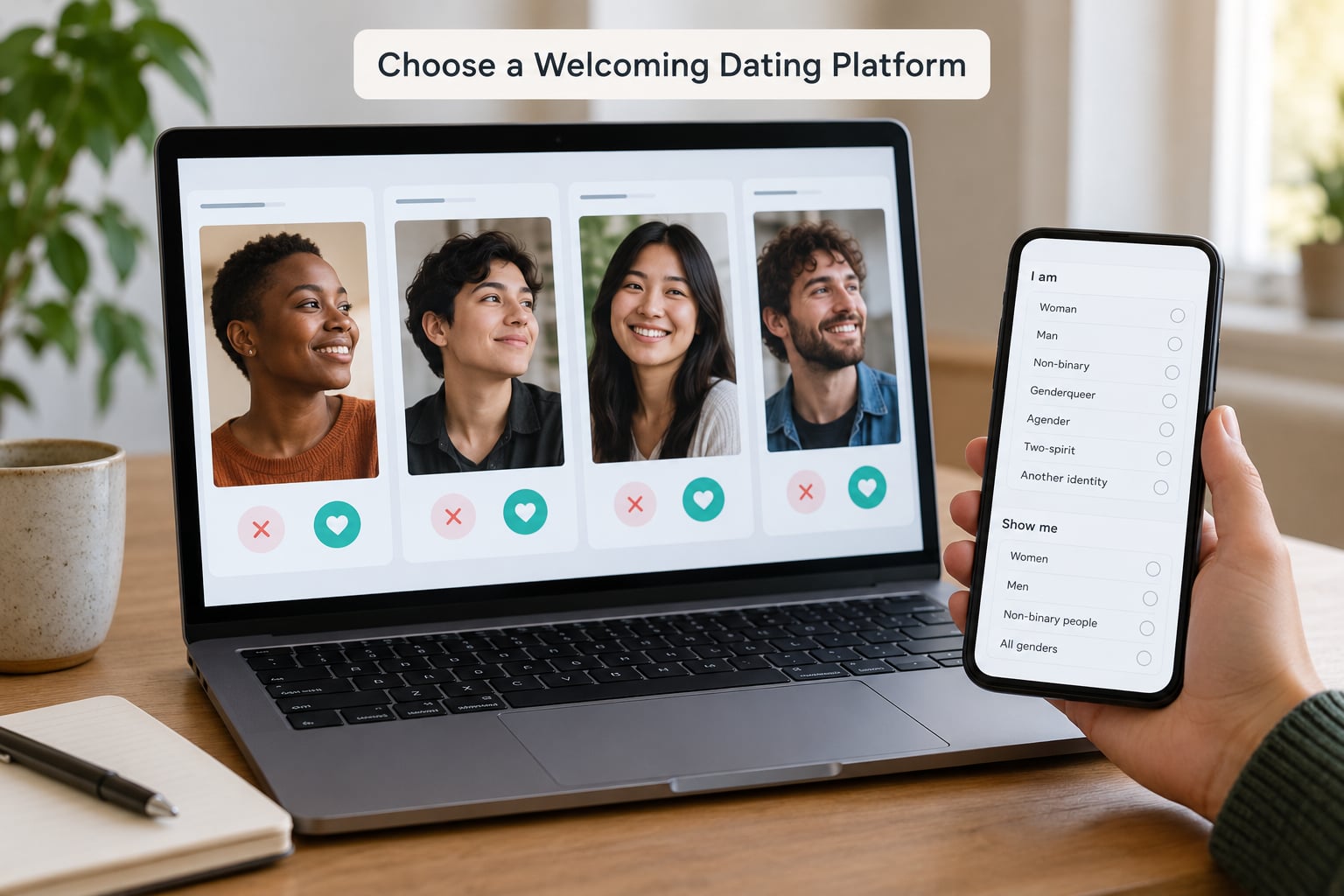
Bisexual-friendly platforms are worth choosing deliberately. The general differences: some let you filter by orientation and by the genders you want to see, some skew heavily toward hookups, some lean community-first, and some are quiet enough that your profile only reaches people who already searched for you.
Features vary by app and change often, so check the current settings yourself rather than trusting a list from last year. What to actually look for:
- Separate filters for your own orientation and for the genders you want to meet.
- Controls over who sees your profile, plus incognito or hidden-mode settings if you are not fully out.
- Report and block tools that are easy to find and that staff actually act on.
- Community spaces, local events or interest groups, since dating apps are thin on genuine community.
Platforms like HER, Feeld, Taimi, OkCupid and Lex come up repeatedly in bi+ community recommendations, and the mainstream swipe apps still work for plenty of people. The point is not the brand name. The point is that you set your filters deliberately instead of swiping blind.
3. Build an Honest, Appealing Profile
Every bi person asks the same question: should I put bisexual on my profile? The honest answer is that there are good reasons either way, and the decision is yours.
Reasons to list it: you filter out people who would never be okay with it before you invest time, you attract matches who already know the queer dating world, and you set the expectation before the first message. Reasons to keep it private: safety, family who might find the profile, or simply not wanting your orientation to be the first thing read.
Whatever you choose, write like a specific human. Mention the thing you do on a Tuesday, the show you keep rewatching, the trip you are saving for. Specifics beat adjectives every time.
4. Start Conversations That Lead Somewhere
Most openers die because they describe a photo. Ask something with a real answer attached instead.
Weak: “Nice picture.”
Better: “Your dog is clearly the one running your household. How did that happen?”
Better still if you are not dating dogs: “You have clearly done some research on that museum. What is next on the list?”
Share something about yourself in the same message, even something small. It gives the other person an opening and makes it easy to reply. Then look at the ratio: if you have written four messages and they have written one word back, that is your answer.
5. Talk About Identity, Attraction, and Intentions
There is no universal right moment to come out as bisexual to someone you like. The advice that shows up most often in community discussions is that the pressure to disclose early is itself invalidating, so pick the moment that is safe and comfortable for you.
Two framings help. The disclosure framing makes it a confession. The invitation framing does not: “I want you to know me properly, and one of the things about me is that I am bisexual.” Same information, completely different reception.
Give them room to react. Some people need a day. Silence on a Tuesday is not a verdict.
Then ask the questions that actually predict compatibility. What are you looking for? What does an open relationship mean to you, or are you strictly monogamous? Has anyone ever treated you as a phase? Being bisexual is not a statement about fidelity, and a partner who thinks it is has already told you what you need to know.
If you are dating someone and want to understand the reality from their side, our guide on dating safely as a bi person covers the practical side of meeting up.
6. Plan Dates Around Comfort and Connection
For a first date, pick somewhere public, busy and easy to leave. A café, a bookshop with seating, a walk along a busy street with a coffee stop at the end. This is not distrust; it is just good practice, and most people are completely relaxed about it.
Balance conversation with something to do. A long unstructured meal with a near-stranger is a lot of pressure. Something with movement built in gives both of you something to react to, which is what makes conversation easier.
Say the practical thing out loud before you go. Noise level, lighting, step-free access, how long you can comfortably sit, whether you are fine with alcohol or would rather not. Nobody can accommodate a need you never mentioned.
Also: dating your first same-gender partner, or your first partner of any new gender, is allowed to feel awkward. You are learning a new script, not failing at dating.
7. Set Boundaries and Notice Compatibility
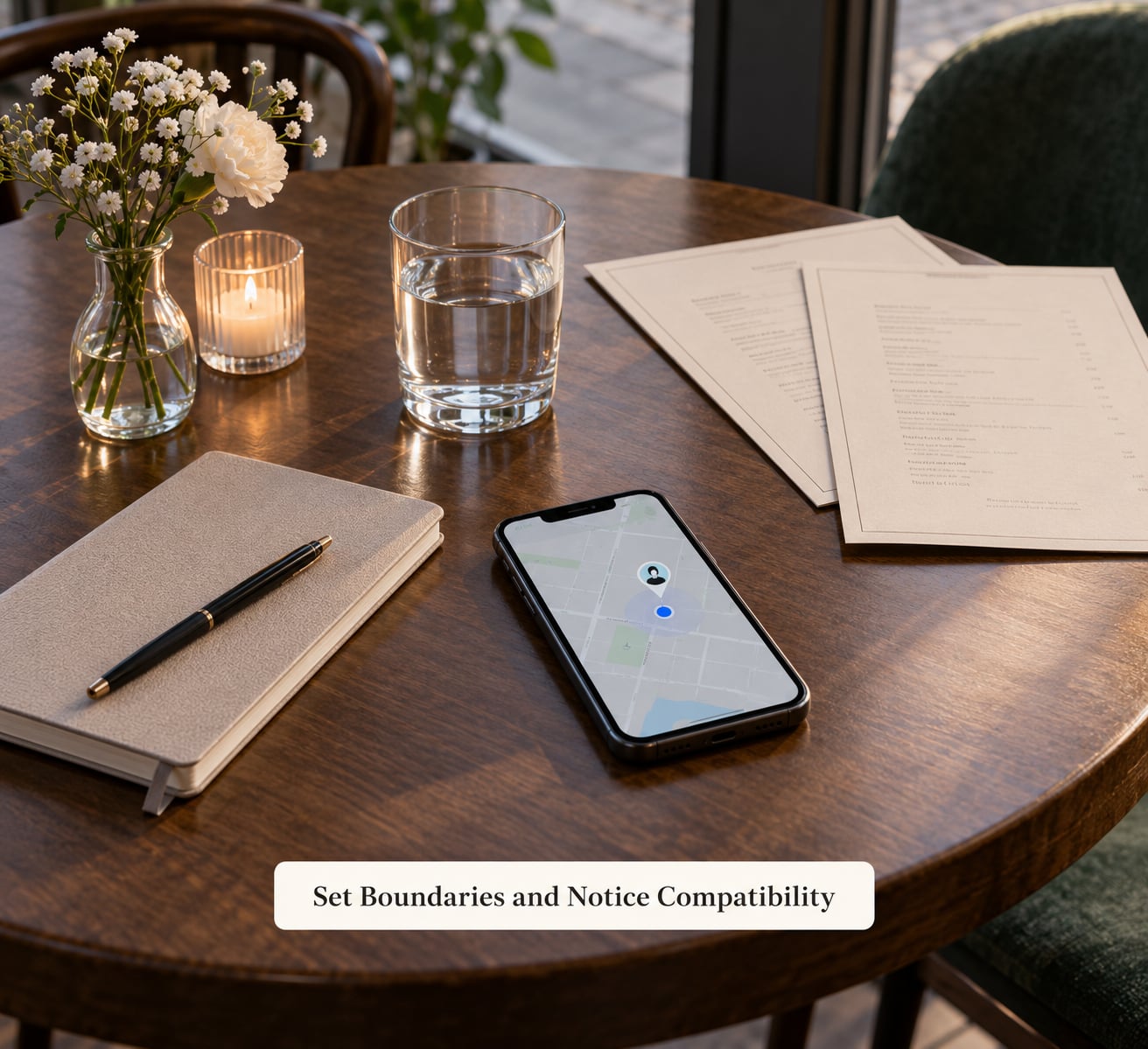
Compatibility here means someone who treats your bisexuality as ordinary. Watch how they react to it, not what they promise in a good text.
Early red flags: your orientation becomes a punchline or a party trick; they treat you as a novelty for a couples night; they want proof you are attracted to both genders before they will believe you; they ask whether you are “really” bi; they cannot sit with a pause after you disclose.
Tell one person where you are going and share a live location with someone you trust. Pew Research figures on online dating among LGB adults routinely record high rates of unsolicited explicit images and of people continuing to message after a clear no, which is worth knowing before you assume a bad reaction is uncommon.
If you are married or partnered and dating separately, have the hard conversation before anything physical happens: what counts as cheating, are condoms and testing expectations shared, who tells whom. Plenty of bisexual relationships are happily and strictly monogamous, and plenty are openly non-monogamous. What does not work is deciding later.
Couples looking for a third person are a separate case, and worth its own article. The word you want early is unicorn, and the thing you want established early is that a third person has their own boundaries and desires.
Common Mistakes
Treating your orientation as a problem to manage. The fix: say it in one flat sentence, no apology attached, then let the other person’s reaction tell you about them.
Waiting for a perfect script. There isn’t one. The fix is a rough structure: something you can say today in your own voice.
Assuming someone is unavailable because they are partnered. Many coupled people are openly looking. The fix: be clear about what you are looking for, and drop it if they are not.
Confusing attraction with a fixed label. You do not owe anyone a permanent answer about your orientation. Say that you are bi now, and that labels are yours to update.
Overthinking the boundaries. The fix: write your non-negotiables on a note, put them in your bio or say them once, then stop rehearsing.
Ignoring safety signals because you like them. The fix is boring and effective: tell a friend, share a location, meet in public, keep your own way home.
A few confidence habits do more than advice. Have two or three friends who know what you are looking for and will actually check in on you. Go to something queer occasionally so dating does not become your entire social life. Keep one hobby that has nothing to do with romance.
Frequently Asked Questions
Do I have to say I am bisexual on my dating profile?
No. Your orientation is your information and you decide when to share it. Plenty of bi people list it on the profile to filter out unsuitable matches, while others keep it private for safety or because they are not out elsewhere. Whichever you pick, saying it clearly and early in conversation usually saves more energy than hiding it, because you avoid investing time in people who were never going to be comfortable with it.
Can a bisexual person date someone of any gender?
Yes. Bisexual attraction is not a promise about behaviour, and it does not require an equal pull toward more than one gender. Whether you date men, women, non-binary people, or a mix, and whether you are monogamous or not, is a separate set of decisions you get to make. What matters is that the people you are dating know what you want and are okay with it.
How should I handle being in a relationship with a monogamous partner?
Tell them your identity early, before you have acted on it, and let their reaction set the tone. Being bisexual does not mean you want to date other people, and many strictly monogamous bi relationships work well. If you do want to explore, agree in advance what counts as cheating, what the safer-sex expectations are, and who tells whom. Deciding those things afterwards is what causes the damage.
What if someone fetishizes me because I am bisexual?
Say it early and plainly: I am not interested in being someone’s fantasy. Fetishization often shows up as constant threesome invitations, being treated as an experience for a couple, or partners who want proof you are attracted to every gender. Any of those are reasons to end things. You are a person dating, not an open invitation, and you set the terms.
How can I tell if someone respects my bisexual identity?
Watch what happens after you disclose, not what they promise before. Respect looks like curiosity without interrogation, no jokes about your orientation, comfort with you having friends and plans of your own, and treating your relationships with other genders as ordinary. Someone who needs you to perform, prove or defend your bisexuality is telling you how they will handle it later.
Are there dating apps made specifically for bisexual people?
Several apps index orientation properly and let you filter by both your own identity and the genders you want to meet. Popular options in bi+ communities include HER, Feeld, Taimi, OkCupid and Lex, and the mainstream swipe apps still work for plenty of people. Features and policies change often, so check the current filters yourself and always set your identity and privacy settings deliberately.
Start with one thing tonight: write down what you actually want from dating and the genders you are genuinely open to meeting. Everything else, the profile, the filters, the first conversation, gets easier once that page is finished. Learning how to date as a bisexual person is mostly learning to say what you want before someone else guesses.