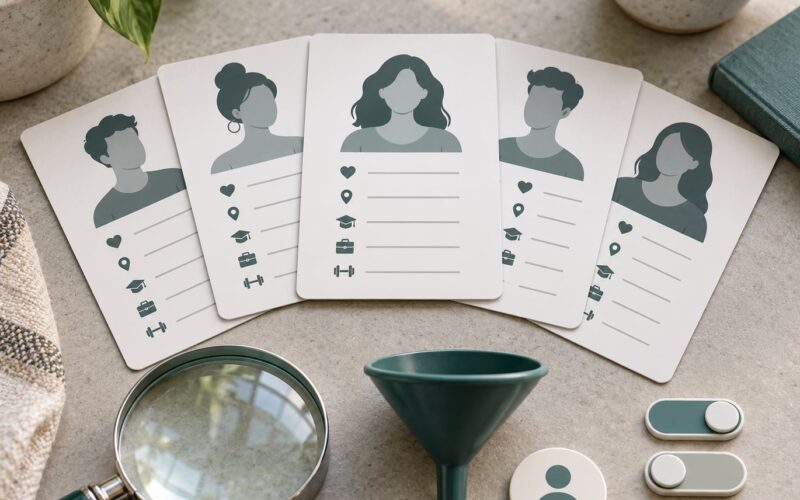
Dating in the LGBTQ+ community for the first time is mostly a learning loop: choose a platform, write a profile that says what you actually mean, message like a human, then meet safely. These lgbtq dating tips for beginners focus on the four things that decide whether early dating feels good or awful — honest self-presentation, clear intent, low-pressure first meetings, and a few safety habits that take ten minutes to set up.
Every section here applies to more than one community. Gay men, lesbians, bi and pan people, trans and non-binary folks each have their own unwritten rules, and the scenes do not read the same in a big city as they do in a small town or online. Take what fits and leave the rest.
Updated for October 2026.
Table of Contents→
- LGBTQ Dating Tips for Beginners at a Glance
- 1. Choose the Right Apps and Platforms
- 2. Build an Honest and Appealing Profile
- 3. Set Clear Intentions Before You Match
- 4. Make Your Identity Boundaries Clear
- 5. Start with Thoughtful, Specific Messages
- 6. Talk About Safety and Screening
- 7. Keep Early Conversations Two-Way
- 8. Ask About Consent, Comfort, and Labels
- 9. Plan a Comfortable First Date
- 10. Handle Rejection, Ghosting, and Bad Dates Well
- Frequently Asked Questions
- Should I Put My Sexual Orientation or Gender Identity on My Dating Profile?
- How Do I Know If an LGBTQ Dating App Is Safe?
- What Should I Talk About on a First Date?
- How Do I Tell Someone I Like Without Coming on Too Strong?
- How Do I Deal with Rejection or Being Ghosted?
- When Should LGBTQ Couples Talk About Intimacy?
- Conclusion
LGBTQ Dating Tips for Beginners at a Glance
| Tip | What to do | Why it matters |
|---|---|---|
| 1. Pick platforms deliberately | Compare identity options, filters, safety tools and moderation before you commit | The pool is smaller and more concentrated, so a bad fit costs you real matches |
| 2. Write an honest profile | Clear face photo, three lines of bio, one line on what you want | Specific profiles get replies; vague ones get scrolled past |
| 3. State your intentions | Say whether you want something casual, open-ended or real | Mixed expectations waste weeks before anyone admits the mismatch |
| 4. Draw identity boundaries early | Be clear about orientation, gender identity and relationship structure | It prevents the two worst first-date conversations |
| 5. Message with specifics | Reference something from their profile and ask one easy question | Generic openers get unread, and you learn nothing |
| 6. Screen before you meet | Verify photos, pick public places, tell a friend, share your location | Catfishing and ambushes are rare but real |
| 7. Keep it two-way | Share as much as you ask, and watch for one-sided interest | Interviews build resentment; reciprocity builds trust |
| 8. Ask about comfort and labels | Pronouns, meanings of labels, physical boundaries, pace | Assumptions here are where trans and non-binary daters get hurt |
| 9. Plan a short first date | Coffee or a quick drink, daytime, own transport, easy exit | Short dates cost less and feel far less like a high-stakes audition |
| 10. Handle rejection cleanly | Send a short honest text, never ghost, keep going | It protects your self-worth and makes you easier to date |
1. Choose the Right Apps and Platforms
Beginners usually download four apps in one evening and then wonder why every conversation feels the same. Pick two, use them properly, and judge them on the things you can actually check: who the app shows you, what you can filter, and what happens when something goes wrong.
Look for how the app handles identity options — who is shown for whom, whether you can state your own orientation and gender identity, and whether trans and non-binary people get real filters instead of a single checkbox. Then look at filters for what you are seeking, distance, and age.
Check the safety side too. Photo verification, reporting and blocking tools, and the ability to hide or restrict who sees your profile all matter more than a shiny interface. The widely used options — Hinge, Bumble, Tinder, OkCupid, Feeld, Grindr and Scruff — differ a lot in what they optimise for, so read what each one says about its community rather than trusting a ranking list.
On cost, decide what you will genuinely use before you subscribe to anything. Pay for a feature you use daily, not for one you opened twice, and set a calendar reminder so the renewal is not a surprise.
2. Build an Honest and Appealing Profile
Your profile is a filter, not a sales pitch. People want enough to work out whether you are actually available to them, which is why vague bios do badly while specific ones do well.
How to state your sexual orientation or gender identity without over-disclosing
State your identity plainly, because on most apps it is a filter field and people are searching on it. Keep it factual: your orientation, your gender identity, and your pronouns if you want them used. You do not owe anyone your childhood, your family situation or your diagnosis history on a profile.
Give people a reason to reply. A four-line bio with one line about you, one about what you do with your week, and one about what you want here beats five lines about your personality in the abstract.
How to apply LGBTQ dating tips for beginners to your own profile
Use photos that a stranger can read: one clear photo of your face in good light, one full-body shot, one that shows a hobby or a place you love. Skip photos where you are tiny, sunglasses-heavy, or surrounded by six other people.
On privacy, do not publish your workplace, your home number or your full legal name. Plenty of people date happily for years without knowing their partner’s employer.
3. Set Clear Intentions Before You Match
Three honest labels cover almost everything: I am here for something casual, I am open to something real, or I am mainly looking for friends and connections. Write yours in the profile and repeat it in your first few messages.
Unclear intent is the single biggest time-waster in queer dating. Two people who both wanted something serious will take weeks to find out, and two people who wanted different things can waste a whole month before either admits it. Saying it early costs you nothing and protects your weekends.
What the 3-3-3 and 7-7-7 rules actually mean
You will see these framed online as relationship health checks — roughly, how a partnership should feel at three months, three years and three decades, and a 7-7-7 version that mixes time together, sex, and independence. Definitions vary from post to post, so treat them as prompts for a conversation with your partner rather than as a scoring system.
One thing both framings agree on: talk about what you expect rather than assuming it. That is a beginner-friendly habit on any timeline.
4. Make Your Identity Boundaries Clear
Before you match, decide what is genuinely non-negotiable for you — who you are open to dating, whether you are seeking monogamy, openness or a poly arrangement, and how much disclosure about your own life you want at this stage.
Say it in your own words and expect the same back. Nobody owes you their entire coming-out story on a second message, and you do not owe anyone yours. What matters is honesty about what you can offer.
Two habits protect people here. Use the name and pronouns someone gave you, every time, including correcting yourself quickly when you slip. And never push someone to explain or justify their identity, transition timeline, or boundaries — curiosity asked gently is welcome; interrogation is not.
5. Start with Thoughtful, Specific Messages
The best opener is short, references something real from their profile, and ends with a question they can answer in one line. Instead of hey, try: your photo at the mural is great — is that the east side trail loop? I have been looking for a weekend walk that is not too far.
The second half of that message matters more than it looks. Add something about yourself before you ask, so the reply is not an interview form.
Community practice on r/nycgaybros is a useful nudge for beginners: move from match to meeting within three to five messages rather than trading texts for three weeks. Long text chains build a fantasy version of a person that usually collapses in person.
6. Talk About Safety and Screening
Most people you will meet are fine. The point is not paranoia, it is having a short routine so caution is not a mood you have to find on the day.
- Run a reverse-image search on profile photos before you get attached to a face.
- Ask for a short video call or another live photo if something feels off. A refused request is information.
- Meet in a public, staffed place and never at a private home for a first meeting.
- Tell a trusted person where you are going, with the venue name and the time you expect to finish.
- Share your live location with that person for the duration of the date.
- Arrange your own transport and your own way home, and keep your phone charged.
- Do not share your address, workplace or banking details early on.
- Report, block and screenshot harassment rather than arguing with it.
Drink within your own limits and keep water in sight. If you are dating in recovery, tell your date sober in advance so nobody is surprised by your choice of venue.
7. Keep Early Conversations Two-Way
Balance is the test. If you are doing all the writing, all the planning and all the questions, interest is usually thin — and the same imbalance shows up on the first date.
Watch for evasive behaviour: never agrees to a specific time, deflects every plan into a vague maybe, asks only for photos, or keeps conversations at a surface where you never learn anything. Each one is easy to excuse once and hard to excuse twice.
The fix is not a clever reply. It is a short, warm message and then attention. Someone interested in you will notice that you stopped chasing.
8. Ask About Consent, Comfort, and Labels
Ask which pronouns someone uses early, and use them. If you misgender someone, correct yourself briefly and move on without a long apology spiral.
Labels are personal shorthand, not a shared dictionary. Bisexual, pan, queer, demisexual and non-binary mean different things to different people, so ask what a label means to them rather than assuming. Community codes like lavender, which some lesbians use to signal money, cannabis culture or a manicure aesthetic, are the same idea: private shorthand only works if you know the local version.
On physical boundaries, agree on pace before anything happens rather than during. Physical affection, kissing and anything further are all separate yeses, and any of them can stop at any time without explanation.
Pick venues with accessible restrooms, seating that is not a back booth, and staff who are not going to make a scene. A quick check of a venue’s bathroom situation tells you more about how a night will go than any profile.
9. Plan a Comfortable First Date
Coffee or a quick drink is the community default, and the reasoning behind it is practical: it is short, it fits into an existing routine, conversation is easy, and ending it early costs nobody anything. Dinner, a long event and anything with a two-hour running time make a first meeting much heavier than it needs to be.
Set a realistic time limit — about an hour — and treat it as a plan rather than a test. Meet in the afternoon or early evening so there is a natural end. Split the cost or each buy your own round, so the date never becomes a question about who owes whom.
Send a simple check-in text to the person who knows where you are: I am at the coffee place on Fifth, back around nine. It feels awkward the first time and then it becomes the habit that keeps you comfortable.
For people who want quieter or easier dates, a walk, a museum with a bench halfway through, or a market works well. Anything that lets you move, pause or leave early suits different bodies, budgets and energy levels.
10. Handle Rejection, Ghosting, and Bad Dates Well
Two sentences do most of the work in beginner dating. When you are not feeling it: I did not feel a connection this time, but I enjoyed meeting you. When you need to leave: I am going to head out now — it was really nice to meet you. No explanation is required, and people who circulate the first one widely say most replies are kind.
If a date ends badly, send that message anyway. Ghosting feels wrong, and the fear of feeling wrong is exactly why beginners do it. A short honest text keeps your reputation clean and keeps the door open for a real connection later.
For unwanted messages, a direct redirect works: I am not available for this, so I will not be replying. Then block and report. Do not argue, and do not teach someone why they are wrong.
Treat silence as data rather than a verdict. Some people are married, recovering, relocating or simply bad at replying, and none of that is about your face. Put your energy into the people who answer.
Frequently Asked Questions
Should I Put My Sexual Orientation or Gender Identity on My Dating Profile?
Yes, on most apps it is both a filter field and a courtesy, so people searching for someone like you can actually find you. Keep it factual: orientation, gender identity and pronouns if you want them used. You do not need to share your coming-out story, your family or any health information to be honest about who you are.
How Do I Know If an LGBTQ Dating App Is Safe?
Look for the practical controls rather than a marketing claim: photo verification, working report and block tools, an option to hide or restrict your profile, and a moderation policy you can read. Take a screenshot of any harassment before you report it. Safety also comes from your own habits, including meeting in public and telling a friend where you will be.
What Should I Talk About on a First Date?
Start with what is in front of you: where you are, how you found the place, what you have been doing lately. Then ask open questions about their week, their work, what they are good at and what they are bad at. Skip anything that feels like an interview, and skip politics or identity disclosures until you know the person a little.
How Do I Tell Someone I Like Without Coming on Too Strong?
Keep it light and specific rather than emotional. Suggest a second date instead of declaring feelings: I had a good time, want to do this again next week? One clear message, no follow-up chasing, and no apology for asking. If they are interested they will usually answer quickly; if they are not, that is the answer you needed.
How Do I Deal with Rejection or Being Ghosted?
Send one short message — I did not feel a connection this time, but I enjoyed meeting you — and then let it go. Ghosting says more about the other person’s communication skills than your value. Most people you match with will not become anything, so treat dating as a numbers game with clear rules and keep your profile active.
When Should LGBTQ Couples Talk About Intimacy?
As soon as you both want to, and before anything physical happens. Say what you are comfortable with, what boundaries you have, and what you are working through in your health or recovery. There is no correct date for the conversation. What matters is that both people are choosing it freely and can change their mind at any point.
Conclusion
If you only do one thing this week, pick one platform, write a profile that says plainly who you are and what you are looking for, then treat every early date as mutual safety rather than a performance. Compatibility and calm beat impressing anybody, and the rest of these ten tips fill in the details as you go.