
If you are figuring out what to do when they cancel a date last minute, the answer depends on three things: whether the reason is real, whether they came to you early, and whether they carried the rebooking. Reply warm and brief, make one specific counter-offer, then judge what they do next. That takes about ten minutes and one evening of your week.
A last-minute cancellation is a message that arrives on the day of the date, usually within a few hours of when you were supposed to meet. Sometimes it comes with a genuine emergency and a concrete new time. Sometimes it is “something came up” and nothing else. Both arrive in the same thread, which is why the reply feels so hard to get right.
The getting-it-right part matters more than people expect. Your response to a cancellation tells the other person far more about you than a week of easy small talk does, and it sets what the next month looks like. Get it calm and clear, and you have information. Get it angry or desperate, and you have trained them.
Table of Contents→
- What You Need Before Responding
- Step-by-Step: What to Do When They Cancel a Date Last Minute
- Common Mistakes
- Quick Tips for Handling a Last-Minute Date Cancellation
- Frequently Asked Questions
- Should I ask why they canceled a date at the last minute?
- Can I reschedule a date after someone cancels it?
- How soon should I reply to a last-minute cancellation?
- Is a last-minute date cancellation always a red flag?
- Should I stop texting if someone cancels our second date?
- What is the 3-3-3 rule for dating?
- Conclusion
What You Need Before Responding
Before you type anything, give it ten quiet minutes. The urge to reply in under a minute is almost always about your own discomfort, not about their message.
Three things help. First, the full message, read twice — people who cancel badly often contradict themselves three sentences later. Second, your own recent track record with this person, because the pattern matters more than the incident.
Third, a one-sentence answer to this question: what would make tonight feel okay? Not what is fair, or what they deserve. What would you need — a firm new date by Sunday, a phone call instead, or simply the knowledge that you can move on? Decide that before you open the reply box.
Step-by-Step: What to Do When They Cancel a Date Last Minute
1. Pause and Take in the Cancellation
Read the message all the way through, then check the timestamp. Was it sent at 9am about a 7pm date, or at 5:40pm about a 7pm date? Timing tells you whether they told you as soon as they knew, which matters more than the excuse itself.
Notice how you feel before you decide what you think. Annoyed at the disruption is normal and fine. Spiralling into “they saw my photo and met someone better” within four minutes is your own anxiety filling a blank, not evidence about them.
One honest permission: you are allowed to be annoyed. You dressed up, you may have paid for parking or a drink, and your evening just opened up. Forums full of people in your exact spot keep landing on the same point — calm is the norm, not a favour you are granting them.
2. Check the Reason
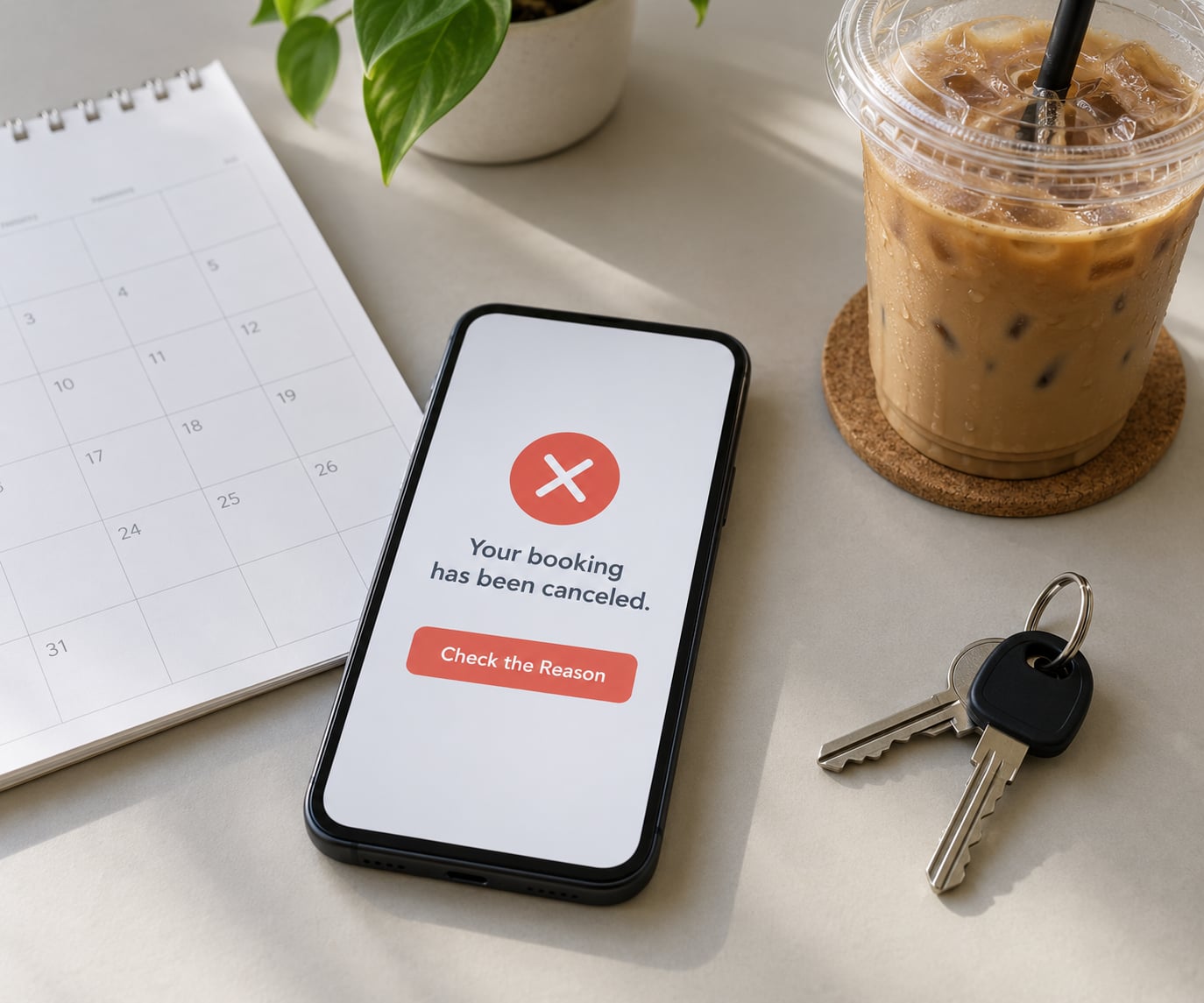
Sort the reason into one of four buckets, because each one deserves a different reply.
- Specific and verifiable: a sick parent, a work emergency that had no warning, a flight that moved. Usually a real reason. Notice whether they sounded like a person, not like a press release.
- Honest but unsolvable: nerves about meeting, a rough week, they are not over someone. Rare in a text and worth taking at face value for now.
- Vague with no follow-up: “something came up,” “bad day,” “totally swamped,” and then silence. Not a lie, necessarily, just no information and no plan.
- Dismissive or shifting blame: cancelling an hour before, complaining that you pressured them, or asking you to still pay attention to them.
One imperfect explanation is not a verdict. What matters is what happens in the next 48 hours: does a specific new time arrive, or does the thread go quiet.
3. Decide What You Want Instead of Reacting Instantly
Pick one of four real outcomes before you write. Reschedule, once, at a time you actually suggested. Switch to a phone call if meeting in person clearly makes them nervous. Accept that this person may be unreliable and decide whether you enjoy that. Or step away and let them notice the gap.
There is a fifth outcome people rarely say out loud: relief. If the cancellation lands and you feel your shoulders drop, that is data too. You were not looking forward to it, and you have just been handed an evening off.
Whatever you choose, do not promise a decision while you are still angry. “I’ll think about it” reads as a punishment, and it hands the next move to them without telling you what you want.
4. Send a Calm Response and Set a Boundary
Keep it short, warm and specific. Here are the ones I would send, matched to the bucket from step two.
Real emergency, they told you early:
No problem, hope it sorts itself out. I’m free Thursday after 7 or Saturday afternoon if you want to move it.
Honest nerves:
Thanks for telling me, that takes some guts to say. We could do something low-key instead, or we can pick a new day when you’re up for it. Either is fine by me.
Vague, no plan attached:
Hope your evening sorts out. If you still want to do something, send me two times that work and I’ll pick one.
You are done offering:
I’m going to leave this one here. If you want to make plans, the ball’s with you.
That last one is not a punishment. It is a boundary, and it is the only reply that gets you real information, because it stops you from doing the rebooking work for someone who will never do it themselves.
5. Follow Their Response and Decide What Comes Next
Here is the test that settles it: after they cancelled, who did the work? If they came back with a named day, a named time and a named place, they are interested and a bit disorganized. If you are the one sending options, you are carrying a relationship alone.
Most people who share this situation agree on the 48 to 72 hour window. If no specific plan arrives inside that, they are not coming back, and you have your answer without ever asking the awkward question.
Then run the count. After the first cancellation, be warm and give one rebooking. After the second, expect them to carry it completely, and if they do not, that is your signal. After the third, stop. Two is a sensible ceiling, because a pattern is what makes cancellations a character note rather than bad luck.
The last question is the most useful one: does this person make it easier to meet them? Do they choose a place with a clear ending time, or somewhere vague that can run long? Do they text when they said they would? Effort, not labels, tells you whether to invest more of your evenings.
Common Mistakes
Over-explaining. Long paragraphs about how you were already on your way, how the outfit was chosen, how it cost you an evening. Nobody needs your case file. One line of acknowledgement is enough.
Interrogating. A rapid-fire “is everything okay, are you sure, what’s really going on” reads as pressure and often produces a worse, vaguer answer. Ask once, calmly, then let their follow-up do the work.
Insulting. Sarcasm lands well in a group chat and terribly in a dating thread. You have already decided what you think of them; you do not need to publish it.
Accepting vague plans. “Let me know when you’re free!” hands over all the work. Fix: “Send me two days that work and I’ll pick one.” Specificity is not rudeness, it is just how plans get made.
Performing being fine. “No worries!! any time works for me!!” teaches them that cancelling costs nothing. Warmth is fine. Unlimited availability is a different message.
Offering unlimited rebookings. Each free rebooking makes the next one easier for them to take. One rebooking, then you stop.
Quick Tips for Handling a Last-Minute Date Cancellation
- Reply with two options you actually have, not an open calendar.
- Back up the evening before you reply. A dinner with a friend changes the shape of the night.
- Do not diagnose motives. You rarely have the information, and the theory costs more than the answer.
- Judge the behavior, not the label. Someone can be deeply committed and still disorganized.
- Keep first meetings public and tell a friend where you are going and when you expect to be home.
- When you are the one cancelling, do it early and offer a specific alternative. That is the version that gets you a second chance.
Frequently Asked Questions
Should I ask why they canceled a date at the last minute?
Ask once, plainly, if you actually want the answer: hope everything is okay, just let me know. Then stop. A real reason usually arrives without interrogation, and a vague one usually stays vague no matter how many questions you ask. If they dodge it once, that tells you what you needed to know.
Can I reschedule a date after someone cancels it?
Yes, and you should offer it once rather than waiting to be invited. Offer two specific days that work for you and let them choose. If they cannot pick from two concrete options, that is useful information: rescheduling needs two people, not one.
How soon should I reply to a last-minute cancellation?
Within a few hours is plenty. Instant replies read as either panic or over-accommodation, and a same-day reply leaves you space to actually check your own calendar. Overnight is fine too, as long as you reply the next day rather than letting the silence stretch out.
Is a last-minute date cancellation always a red flag?
No. A first cancellation with a real reason and an early heads-up is genuinely common, especially when someone is nervous about meeting. The signal is not the cancellation itself but what follows it: a specific new time inside 48 to 72 hours, or silence and a pattern.
Should I stop texting if someone cancels our second date?
Stop texting first. Make one re-offer and leave the next move with them. If they do not come back with a concrete plan within a few days, letting the conversation go quiet is the clearest answer you can give, and it costs you nothing but an evening you were going to lose anyway.
What is the 3-3-3 rule for dating?
The 3-3-3 rule is not a dating rule. It comes from travel and means roughly three hours on foot, three hours by transit, or three hours of driving to reach a destination. Dating writers borrow it loosely, so if you have seen it applied to cancellations, treat that usage as a metaphor rather than a real standard.
Conclusion
What to do when they cancel a date last minute comes down to four moves: pause before you reply, read the reason and the pattern behind it, ask for one specific reschedule, and keep the right to decline when they do not deliver it. The single cancellation is not the information. What they do in the next three days is.