Knowing how to leave a bad date safely is not about finding a clever excuse. It is about deciding early that your comfort outranks someone else’s feelings, having a ride and a check-in ready before you arrive, and saying one short sentence out loud before you gather your things and go. Most bad dates end badly because people wait for permission to leave that was never coming.
This guide covers the practical side: what to prepare, when to walk out, what to say in the first ten seconds, and what to do if the other person objects or follows you. It works whether you met through a dating app or have been on a few dates already.
What You Need — Before the Date, Not During It
The exit is built in the hour before you leave the house. Once you are sitting across the table with a drink in front of you, improvising is much harder.
- A charged phone with data, not just Wi-Fi. Check the battery before you leave the house.
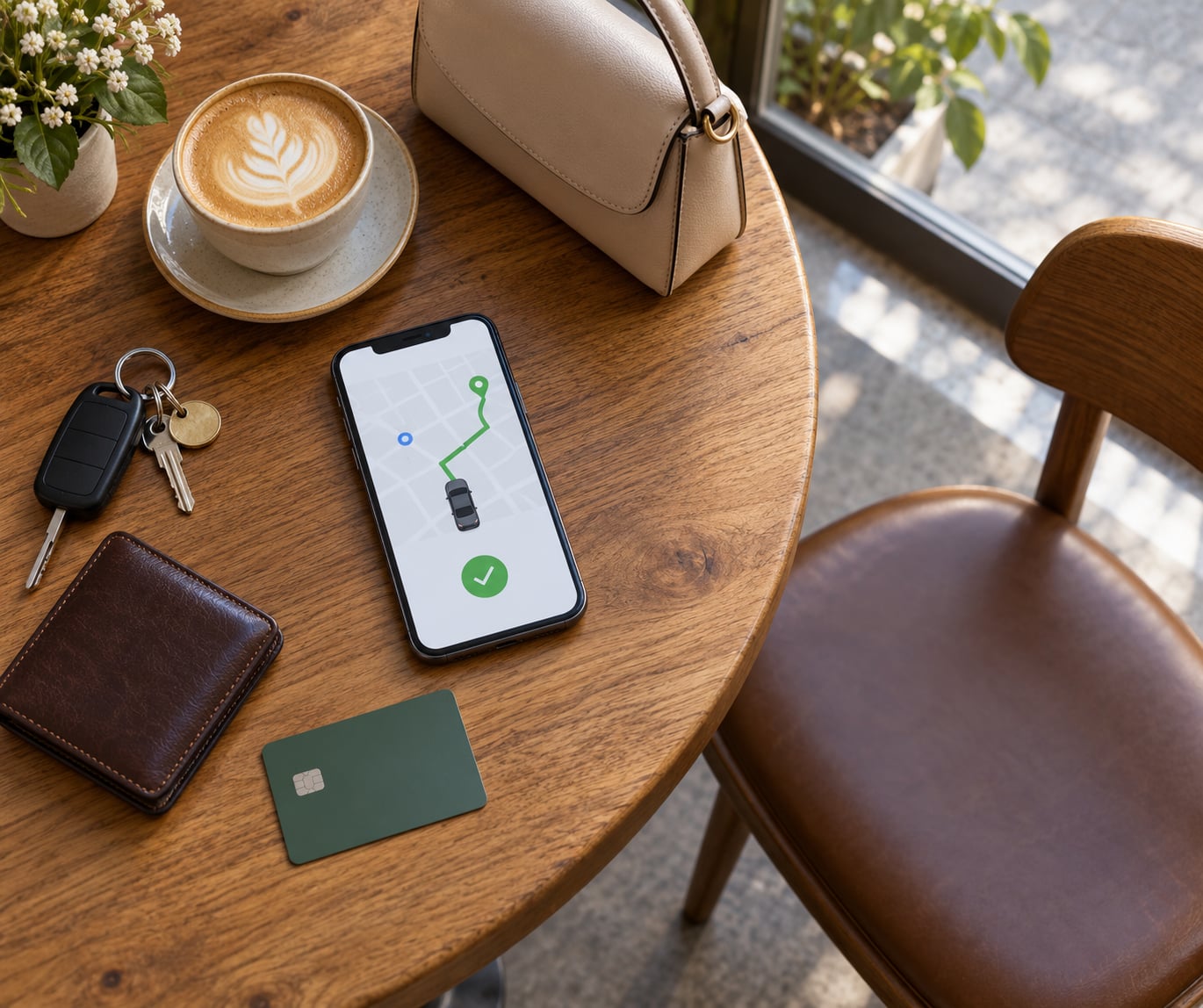
- Your own way home — a car of your own, a ride account with payment set up, a taxi app, or a friend who is awake and willing to come.
- One trusted person who knows the details: where you are, who you are meeting, what time you expect to leave, and how to reach you.
- A check-in time you agreed on in advance, such as a text at 9:15 that says something is wrong, or a missed call at 9:30 that means send someone.
- A code phrase — one word, such as “banana,” that tells your friend to call you right now and, if you don’t answer, to escalate it.
- A money plan — your card, cash for the ride home, and a split-the-bill agreement you can point to without an argument.
- Two boundaries stated to yourself out loud: what you will do, and what you will not do, no matter how the evening goes.
Live location sharing takes thirty seconds on both major phone platforms and is worth turning on for every first meeting. Send your friend the venue name too, not just the pin, so they can tell staff where to look.
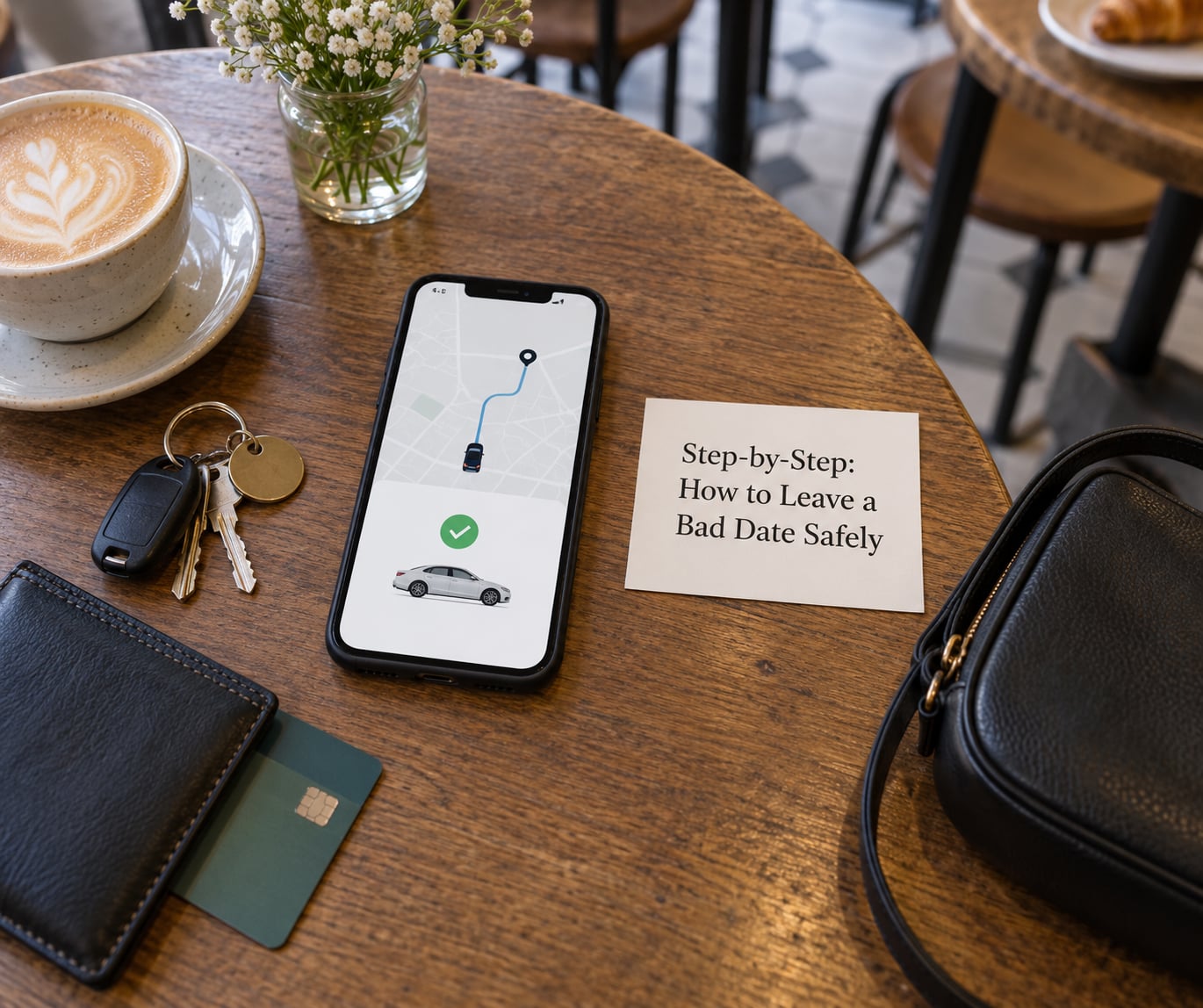
Step-by-Step: How to Leave a Bad Date Safely
1. Decide when you need to leave
Ordinary awkwardness is survivable. Boredom, mismatched conversation, an off vibe about a restaurant — those are reasons to finish the drink and head home. Safety concerns are a different category entirely.
Leave now, or leave quickly, if any of these show up:
- Pressure, guilt, or repeated pushing after you have said no.
- Touching you do not want, or a hand that stays after you moved away.
- Insults, sexual comments that get more explicit each round, or jokes about who you are.
- Isolation — suggestions to go somewhere quieter, farther, or “somewhere private” before the date has really started.
- Insisting on driving, on ordering for you, or on paying for everything in a way that creates a debt you owe.
- Any point where you have drunk enough that you would struggle to judge the situation clearly.
You do not need a committee to make this call. If your gut said something at minute five, that is the answer, and the rest of the evening is not evidence against it.
2. Contact a trusted person before leaving
Send the message before you stand up, not after you reach the street. Once you are walking, both hands and your attention are busy.
Fill this in and send it as you get up: “Leaving early from the date at [venue name]. Walking to the corner now, ride booked. I’ll text you when I’m home.” Two details matter: the venue, so they can ask staff where you are, and your transport, so they know whether to expect a call from a stranger’s car or not.
If you cannot type, call instead and let it ring once. Or trigger your agreed code phrase in a normal-looking text, something like “Can you call me right now?” A check-in plan only works when it is dull in advance and clear in the moment.
3. Tell the date you are leaving
Say it standing up, before you gather anything. Do not announce it in your head and then wait for a better opening.
- Honest and final: “I’m glad we met, but I don’t feel a connection and I’m heading out.”
- Vague but clear: “I have an early morning, so I should get going soon.”
- Urgent: “Something’s come up and I have to go now.”
- Boundary, said once: “I’m not comfortable with that, and I’m leaving.”
Then stop talking. Do not apologise three times, do not invent a long story, and do not sit back down. Short sentences, eye contact, movement toward the door.
4. Move toward a safe public place
Do not walk alone into a parking lot, an alley, or any spot away from other people. Redirect the exit instead: “I’m going to grab my things and say hi to the host on the way out” works at most restaurants.
At a bar, head for the bar top or the restroom corridor, then straight to the front door. If you are at someone’s home, keep your keys in your pocket, keep your shoes on, and make your way to a room with other people in it. If you are in a car, ask for the door to be unlocked before you go anywhere.
5. Arrange transportation and get home
Get a ride request in before you leave the building so it is waiting when you step outside. Prearranged friend, taxi or rideshare, and public transit all work; what matters is that you are not accepting a ride from someone who just upset you.
When someone offers to drive you home and you would rather not go alone with them, keep it simple: “I’m going to grab a ride, but thank you.” Sharing the plate of food you never wanted is not a fair trade for a ride.
Keep location sharing on until you are inside your own door. That final message — “Home” — is what your friend was waiting for.
6. Document or report the situation if needed
Screenshots of messages, times, and locations, taken while things are fresh, matter more than a memory written up three days later. Save them somewhere other than the app itself, in case you block and report.
If someone threatened you, followed you, or touched you without consent, that is not a bad date, it is a crime or a serious threat. Local authorities and dating platforms both handle reports, and reporting on the app does not require you to meet anyone again. If you are in immediate danger, call emergency services first.
Red flags that mean leave now
Some red flags are loud and some are quiet, but they are not equally urgent.
Loud ones: threats or intimidation, a refusal to let you leave, following you to the car or home, drugging or a drink you didn’t watch being poured, sexual escalation after a no.
Quiet ones: every question about your finances, your address, or who lives with you; checking their phone constantly while telling you you’re not like that; turning every conversation into an argument about your character; getting angry when you say you need to go to the bathroom; talking to you the way you’d talk to someone you’re trying to control.
One quiet flag is a story about someone else. A pattern of them is a decision.
Common Mistakes — And the Fix for Each
Staying out of politeness. This is the most common one, and it is the most expensive. If you have to count the minutes until you can reasonably leave, the answer arrived several minutes ago. Fix: decide before you arrive that a first date is one drink, and that leaving after one drink is not rude.
Leaving without a ride plan. Standing on a pavement at 11pm with no way home means you get back into the car with whoever offered. Fix: request the ride before you say goodbye, and keep your phone in your hand rather than in a bag you have to dig through.
Over-explaining. A long story gives a determined person something to argue with. Fix: one sentence, no details, no debate. The shorter the line, the less there is to negotiate.
Handing over your address, workplace, or the name of your school. You do not need it for a drink, and you cannot unshare it. Fix: keep logistics at the venue until you have met someone more than once.
Arguing in an isolated place. A parking lot or a quiet street is the worst possible place to say “stop following me.” Fix: move toward staff and people first, speak second, or say nothing at all and call emergency services from a populated place.
Feeling you have to prove the date was a mistake. Some people argue because they assume you’ll change your mind. Fix: do not re-litigate it. “I’m not able to continue this” closes a conversation without insulting anyone.
Letting alcohol make the decision. Two drinks make a bad situation feel manageable and slow your reaction to a warning sign. Fix: pace it, eat something, and set a hard number before you order. If you have already lost count, treat that as your cue to leave, not your cue to stay for one more.
Frequently Asked Questions
Is it rude to leave a date after 30 minutes?
No. Nobody signs a contract when they accept a date invitation. A drink, some conversation, and an honest thank-you is a complete date, and ending it there is normal rather than rude. What actually reads as rude is leaving without saying anything, or making the other person sit there wondering what they did wrong. Announce it, be warm about it, and go.
What do I say when I want to leave a date early?
Say one short sentence while standing up: I am glad we met, but I do not feel a connection and I am heading out. Variants that work equally well are I have an early morning, or something has come up and I have to go now. Skip the invented emergency story. Honesty is easier to deliver out loud and gives the other person nothing to argue with.
How do I handle the bill when I leave a date early?
Say it before the check arrives rather than at the door: let us split this. Offer your half plus a tip on your card or in cash, and keep it simple. If they have already paid for everything, you still do not owe them your evening, and money is not a reason to stay longer. Leaving fast with your half paid is a fair ending.
How do I get home safely if I do not want their ride?
Request a taxi or rideshare before you leave the table so it is waiting outside. If they offer anyway, decline warmly and briefly: thanks, but I am grabbing a ride. Keep live location sharing on with your friend until you are inside your own door, and do not get into a car with someone who has made you uncomfortable.
What if my date follows me or says the date is not over?
Go straight to somewhere with staff and other people. The front desk of the venue, a busy bar, a lit store. Do not confront them alone and do not explain yourself in a parking lot. Call emergency services if you are being threatened or followed, and give the address of where you are standing. After you are safe, tell your friend what happened and save any messages.
Should I offer to reschedule after a bad date?
Usually not. Offering another date invites the same evening with more expectations attached. If you want to leave the door open, keep it vague and low-pressure: I had a good time, but I am not feeling it. Most people who want to see you again will simply ask again, and if they do not, that is information too. Blocking and reporting is the right move when they made you unsafe.
Conclusion
Leaving a bad date is a safety decision, not a social failure, and it does not need permission from the person across the table. The whole thing gets easier when you build the exit before you go: a charged phone, your own ride home, one trusted person who knows where you are, and one sentence you are willing to say out loud.
If you do one thing before your next date, pick a ride you control, agree on a check-in time and a code phrase with a friend, and decide in advance that one drink is a complete date.