There is no magic number for how often you should text when dating someone new. Start around one or two messages a day, then let their effort set the pace — because what predicts interest is not volume, it’s whether they reply consistently and make plans.
That’s the honest answer, and it’s also the least satisfying one, because the question underneath it is usually “am I doing this right?” I’ve read a lot of advice on this topic, and almost all of it is either vague (“communicate authentically!”) or about as subtle as a raised eyebrow. So this guide does something more useful: gives you a starting rhythm, a stage-by-stage reference, and a way to tell the difference between someone who’s busy and someone who’s not that into it.
Table of Contents→
- How Often Should You Text When Dating Someone New?
- Match Their Energy, Not Just Their Reply Speed
- How Different Texting Styles Affect Early Dating
- When to Text, Call, or Wait
- Signs You Are Texting Too Much, or Too Little
- How to Adjust Without Sounding Anxious or Distant
- Frequently Asked Questions
- How often should I text after a first date?
- Should I wait a set time before replying to a text?
- Should you double-text when someone doesn’t reply?
- Is it bad to text every day in the first month of dating?
- What are the 72-hour rule, the 3-text rule and the 3-6-9 rule?
- What if I want to text more than they do?
- Start With Consistency, Not a Perfect Number
How Often Should You Text When Dating Someone New?
Match their energy. In the first week, send one or two thoughtful messages a day rather than a stream of check-ins, and let a steady person set the rhythm for you. If they reply with real content, ask questions of their own, and suggest plans, keep going at that pace. If they reply late and short for a week, you have your answer about volume, and no texting rule is going to change it.
Why does this work better than counting messages? Because frequency is interpreted as a signal of interest, and humans read signal constantly. Someone who texts you constantly and never follows through is telling you something. Someone who texts once a day and reliably turns up is telling you something else. Volume is cheap; consistency is not.
A Simple Starting Point for New Dating Conversations
One meaningful message early in the day and one more when there’s an actual reason to send it is a solid default. “Reason” can be small: something that reminded you of them, a photo worth sharing, a logistics question about Saturday.
What you’re avoiding is the empty check-in. “Good morning :)” with no follow-up requires a reply but gives a person nothing to reply with, and it lands as pressure dressed up as friendliness. A message that carries a small piece of you — a thought, an observation, a question — is easy to answer and easy to enjoy.
Reply when you see it. Not instantly, not after a staged four-hour wait. Delayed-reply games were built for a slower era of texting, and they mostly just make your own life worse while signalling to the other person that you’re performing.
Match Their Energy, Not Just Their Reply Speed
Reply speed is the worst possible metric, because it’s mostly a measure of what someone else is doing with their afternoon. Measure these instead: message length, whether they ask anything back, whether they send the first one sometimes, and whether they turn replies into actual plans.
A useful heuristic is the initiation ratio. Over any two-week stretch, count who starts the conversations. Roughly fifty-fifty means healthy reciprocity. If you start nearly every one, the balance is off, and no amount of charm in the content will fix a structural problem.
How Often Should You Text When Dating Someone New in the First Week?
Here’s the reference most people are actually looking for. Treat these as ranges for healthy early-dating communication, not quotas.
| Dating stage | Healthy frequency | Who usually initiates | What it looks like when it’s working |
|---|---|---|---|
| After the first date | One text later that same evening or the next morning | Whoever wants the second date | The message references something specific from the evening and proposes a time |
| Dates two and three | Several exchanges a day, more around planning | Alternating | You text because you want to, and the other person picks up threads too |
| First week together | Heavy by design, then tapering | Alternating | Long threads, easy banter, plans being made without begging |
| Weeks two to four | A few meaningful messages a day plus planning texts | Alternating | There’s room for silence without either person reading it as a verdict |
| Month two onward | Whatever the two of you settle into | Alternating | Daily contact as a default rather than a performance |
| Casual or undefined | Lower and more deliberate | Whoever is arranging the next meeting | Plans come first, chat supports them |
Community discussion tends to describe the same natural taper. In a long-running r/datingoverthirty thread on how often couples text, several users described very heavy daily texting in the first one or two weeks that settled into something calmer once the relationship became established. A LoveShack thread on the same question made the same observation about new relationships tapering as they settle.
That pattern is worth naming because it stops people treating week-one volume as the standard they have to maintain. Heavy early texting is a launch phase, not a permanent setting. If you are still texting at the same intensity in week six that you did in week one, something has gone stale — usually the relationship, sometimes just your habits.
MumsNet users offer a useful counterweight. A recurring point there is that a low-texting partner is not automatically ambivalent; some people genuinely prefer to set up the next date rather than chat in between, and one poster described a partner who would have been happy to confirm a date and then go quiet until the next one. That’s a style, not a verdict.
How Different Texting Styles Affect Early Dating
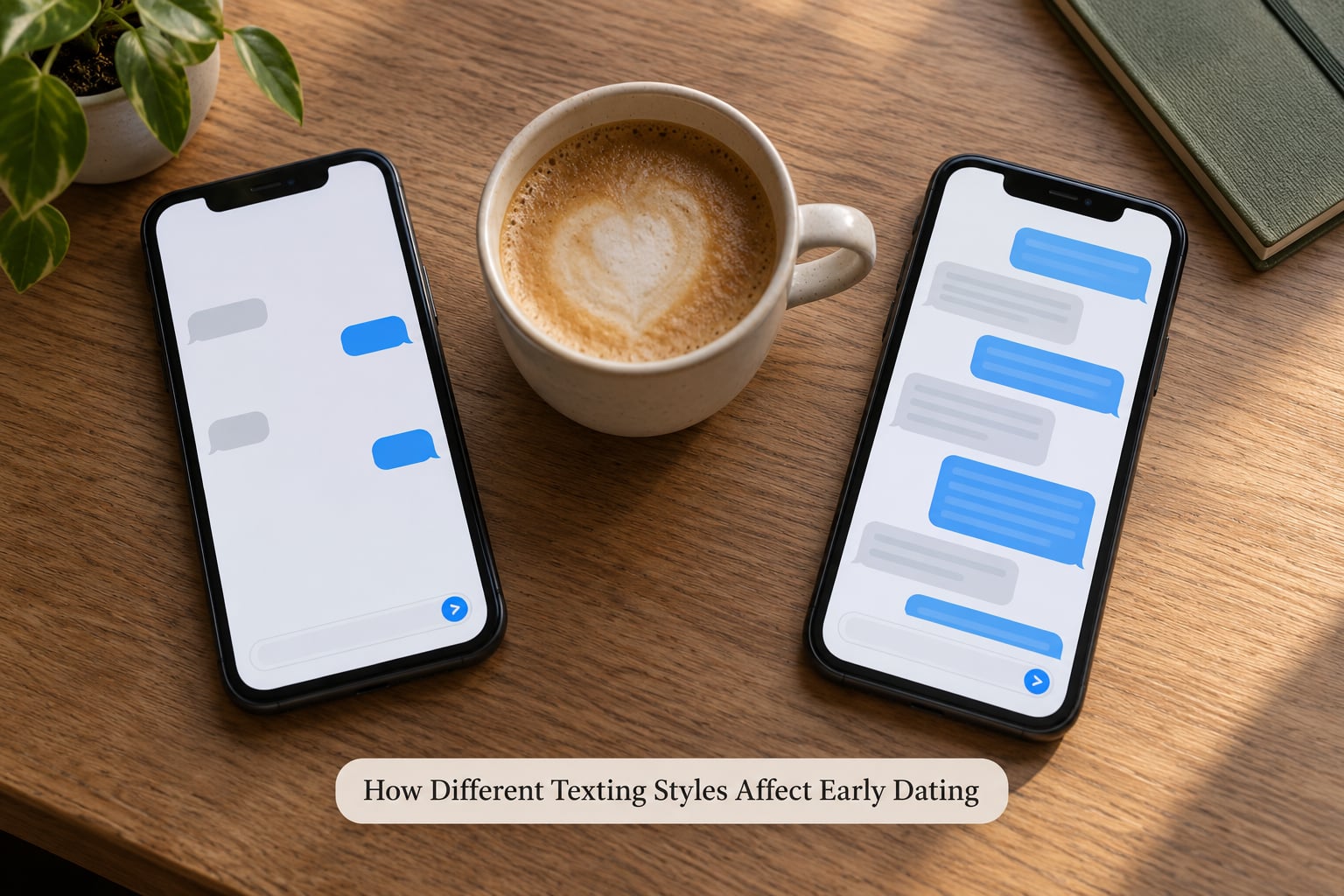
Fast texters and slow texters both exist in roughly equal numbers, and the mismatch between them is where most early-stage friction gets created. Neither side is wrong. The failure mode is each side assuming the other’s volume is a verdict on their appeal.
The fast texter’s typical mistake is adding messages to silence — a second and third text that are increasingly about securing a reply rather than saying anything. The slow texter’s typical mistake is going fully silent for reasons that are entirely ordinary, like a shift that swallowed the afternoon.
Both mistakes come from the same place: treating unread messages as a problem to be solved. A text that needs an answer will get one eventually. A text that doesn’t need one is just a small gift with no return address, and the fastest way to stop sending those is to send more of them.
What an inconsistent pattern actually signals
Three solid days of attention, then eight days of near-silence, then another burst — that pattern is worth taking seriously in a way a uniformly busy person isn’t. The bursts tend to appear around dates and then evaporate, which suggests the interest is real but limited to a specific format.
You’ll know the difference once you’ve been in person a few times. Busy people show up late to replies and promptly to plans. Avoidant-leaning people do the reverse: reliable on paper, vague in person. It’s one of the more useful checks available in the first month, and it costs nothing to run.
When to Text, Call, or Wait
Text for logistics and light connection. Call when there’s actually something to say and the subject would take ten texts to convey — a complicated week, a decision, something you actually want to hear their voice about. Then keep in-person dates in the mix, because texting is low-effort for both of you and it will happily substitute for the thing that tells you the most.
The trap people fall into is letting a relationship live almost entirely on a screen. It’s genuinely common — a good friend of mine described four months of daily conversation with someone they had met twice, and it took a mutual friend to point out what had happened. Nothing was wrong. The texting was warm and constant. There just wasn’t a relationship underneath it, only a channel.
A simple test: if you cancelled the last three planned dates and your contact level didn’t drop, you’re in a textuationship. The fix is unglamorous — book something.
As for waiting, wait for a reason and not for a duration. “I’ll reply in an hour so I don’t look eager” produces colder conversations than just replying.
Signs You Are Texting Too Much, or Too Little
Too much looks less like frequency and more like effort you’re carrying alone. These are the reliable tells:
- You’re the one starting nearly every conversation.
- Your messages are getting longer while theirs stay the same.
- You’re sending follow-ups to messages that didn’t need one.
- You’ve started manufacturing reasons to text — memes you don’t even find funny.
- You’re relieved when they’re busy, because busy means it’s not about you.
- You check their online status more than you check their messages.
That last one is the honest metric. Frequency is a symptom; attention is the real signal.
Too little is subtler. You’re sending the minimum viable text and reading it as “playing it cool.” If you never ask a question, never send anything unprompted, and treat every message like a transaction, most people conclude you aren’t that interested — which is usually the opposite of what you meant.
There’s a real version of playing it cool, and it isn’t about frequency at all. It’s about not being available at every moment. Send the message when you genuinely have something to say, not on a schedule.
How to Adjust Without Sounding Anxious or Distant
Slowing down doesn’t require an announcement. A small announcement is worse than the habit, because it makes the habit the story. Just space your messages out naturally by living your life between them.
When a conversation dies, revive it once with substance — something specific, ideally tied to them. Then let it go. One unanswered revival is information. Three is a campaign.
When you’re the slow one and you genuinely lost the thread, own it in half a sentence. “Sorry, this week got away from me — how was your interview?” costs you nothing and reads as honest rather than avoidant.
And the underrated move: ask. Somewhere in the first month, when things are going well, say you text a lot and work better in bursts, or that mornings are your jam, or ask what their rhythm is. Ask because you want to know, not as a test. People who ask that question usually like the answer more than you expect.
One practical script if you’re genuinely worried about crossing a line: “Just so I’m not terrible at this — I text constantly but I’m bad at games. If I ever get clingy, call me on it.” It’s disarming, it’s funny, and it hands the other person permission to be direct with you.
Frequently Asked Questions
How often should I text after a first date?
Send one message later that same evening or the next morning. Reference something specific from the date rather than commenting on how fun it was, and if you want another date, put a concrete suggestion in it. Waiting two or three days to play it cool is an old strategy that mostly just makes your own evening harder.
Should I wait a set time before replying to a text?
No. Reply when you actually see it. Staged delays were built for an era when an immediate reply meant you were sitting around waiting. They produce colder conversation, they make your day harder to live, and most people can tell. If you are genuinely busy, a short delay needs no explanation and none is expected.
Should you double-text when someone doesn’t reply?
Yes, once, if there is a real reason: new information, a question they would want to answer, or a plan that needs settling. One message with content is normal human behaviour. Two follow-ups to a silent thread usually reads as pressure, and three stops being about the conversation at all. If one good message gets nothing, let it go.
Is it bad to text every day in the first month of dating?
Not if it is mutual and the other person is participating with the same energy. Daily texting is genuinely common early on, and plenty of couples describe the first two weeks as intense before settling. The problem is never the daily part. It is who carries the conversation, whether replies have content, and whether either of you can go a day quiet without it turning into an event.
What are the 72-hour rule, the 3-text rule and the 3-6-9 rule?
They are old dating formulas, not rules with evidence behind them. The 72-hour rule says never text first, and never again until 72 hours after they last texted. The 3-text rule caps you at three messages without a reply. The 3-6-9 rule is a date frequency guideline. All three reward strategic silence, which is precisely what turns a normal exchange into something people end up anxious about.
What if I want to text more than they do?
Check the initiation ratio over two weeks rather than a single day. If you start nearly every conversation, scale your own initiations down to about half for a stretch and see whether they fill the space. Interest that is real tends to expand into available room. If the ratio doesn’t move at all after a couple of weeks, that is usually your answer, and it isn’t about your texting frequency.
Start With Consistency, Not a Perfect Number
If you’re still working out how often should you text when dating someone new, the next message matters more than the schedule you keep. Send one that has something in it, notice whether they meet you there, and let your own behaviour be the one thing you actually control this week. Frequency follows from that. It never replaces it.
Updated for 2026. This guide reflects published relationship-research summaries and community discussion rather than clinical guidance — if texting is causing real distress, talking to a therapist helps more than any rule on this page.