
Handling biphobia in dating comes down to three moves: name the behavior when it happens, hold a clear boundary about what you will accept, and check your own safety before you decide whether to stay. Most of the work is done before a date ever happens — in how you screen profiles, how you phrase your sexuality, and who you have on speed dial when something goes wrong.
This guide is for bisexual, pan, queer and heterosexual people navigating dating or a relationship where bisexuality gets treated as a phase, a joke, a problem, or an invitation. It works as a plan you run before, during and after a bad interaction. You can use it whether the biphobia comes from a date, a partner, an app, or a group chat.
Last updated: October 2026
Table of Contents→
- What You Need to Handle Biphobia in Dating
- Step-by-Step: How to Handle Biphobia in Dating
- Common Mistakes When Responding to Biphobia in Dating
- Frequently Asked Questions
- What should I do if my date makes a homophobic or biphobic joke?
- How can I tell the difference between biphobia and an uncomfortable misunderstanding?
- Should I explain my bisexual identity to someone who makes a biphobic comment?
- How should a partner respond after they say something biphobic?
- When is it appropriate to end a dating connection over biphobia?
- How can I support a friend who is dating someone who rejects their bisexuality?
- Conclusion
What You Need to Handle Biphobia in Dating
Most people walk into a difficult conversation with nothing but instinct, and instinct does badly under pressure. A few minutes of preparation changes how the whole thing lands.
A short written account. If someone is sending threatening messages, posting about you, or showing up uninvited, write down the date, time, platform and what was said while it is fresh. Screenshots help. Do not screenshot a threat and then argue about whether it was a threat.
One person who knows the whole situation. A friend, sibling or coworker who understands the context and has your number. Naming a person out loud makes follow-through easier when you are shaken.
Your own red lines, decided in advance. Decide now what ends a connection: a slur, a threat, outing you without consent, a pattern that survives one apology. Deciding while you are calm is much harder to argue with later.
A blocking and reporting routine. Every major dating app has block and report functions, and reporting an account for harassment is normal maintenance rather than an escalation. Know where the buttons sit before you need them at midnight.
A place to put the feelings. A therapist who works with LGBTQIA+ clients, a bi or queer peer group, or an online community where the people are actually bisexual. Community consensus across bi forums is consistent: therapy is the most repeated recommendation, for the person on the receiving end and for the person realizing they hold the prejudice.
Step-by-Step: How to Handle Biphobia in Dating
1. Stay Calm and Assess What Happened
Write the event down before you reply to it. Separate what was said from what you assume it meant. One clumsy question from someone nervous is a different category from a slur repeated after you asked them to stop.
Treat as serious: slurs and demeaning jokes, being told bisexuality is a phase, repeated questions about your body or your history, someone treating you as a threesome opportunity, pressure to prove your orientation, and anyone who knows your name, workplace or address.
Treat as minor but worth naming: a single awkward question asked once, a well-meant comment that did not land, a genuine misunderstanding of what bisexual means.
Give it a day if you can. Urgency is usually a signal from your nervous system, not from the situation.
2. Decide Whether to Address It Directly or Step Back
Four options, and they are not equally good in every case. Direct conversation suits a one-time comment, an otherwise respectful person, and situations where you want the relationship to survive. A short reply suits a mild comment from someone you barely know. Disengaging suits a repeat offender with no interest in your wellbeing. Leaving outright suits a threat, a slur, or an attempt to out you.
Three things push a situation up the scale: repetition, power imbalance, and intent. One misstep is a mistake. The tenth, after you asked for a change, is a position.
If you are closeted, or your safety depends on this staying quiet, add a fourth factor: does the other person control information about you? Someone who knows your family, workplace or social circle can turn a private disagreement into an outing.
3. Explain the Impact Without Arguing About Identity
You do not have to win a debate about whether bisexuality is real. Skip the proof and go straight to the effect and the ask. Keep it to three beats: name the specific behavior, say how it landed, state what you want instead.
Scripts worth stealing:
- “That joke was about bisexual people. I am a bisexual person, so it landed on me directly. Please don’t do that again.”
- “I’m dating one person. This relationship is the whole relationship, and the two of us don’t need to be erased.”
- “Being attracted to more than one gender isn’t a phase and it isn’t a hookup story. I’d rather talk about something else.”
- “I’m not a threesome proposal. That’s not what I’m here for.”
- “You don’t have to be attracted to everyone to date me. Nobody does.”
That last one is the single most useful reframe in the community, because it kills the “larger pool” argument in one sentence without any arguing about identity at all.
4. Set a Clear Boundary and Watch the Response
A boundary needs three parts: the behavior that stops, what you will do instead, and what happens if it continues. “I don’t like that joke” leaves the other person guessing. “If it comes up again I’m ending this conversation and then blocking the account” does not.
Then pay attention to what happens next, because the response tells you more than the comment did:
- Good: they get uncomfortable, take ownership without adding excuses, name what they were actually thinking, ask how they can do better, and the behavior stops.
- Neutral: they apologize politely and change nothing. Watch the next month before you invest more.
- Bad: they say you’re oversensitive, they bring up your own dating history, they ask why a joke bothers you, or they turn it into a question about whether they are “allowed” to joke.
- Worst: they threaten you, out you, or contact anyone who knows you.
An apology that arrives with conditions attached is not an apology. “I’m sorry you were triggered” is not an apology either.
5. Check Your Safety and Support System
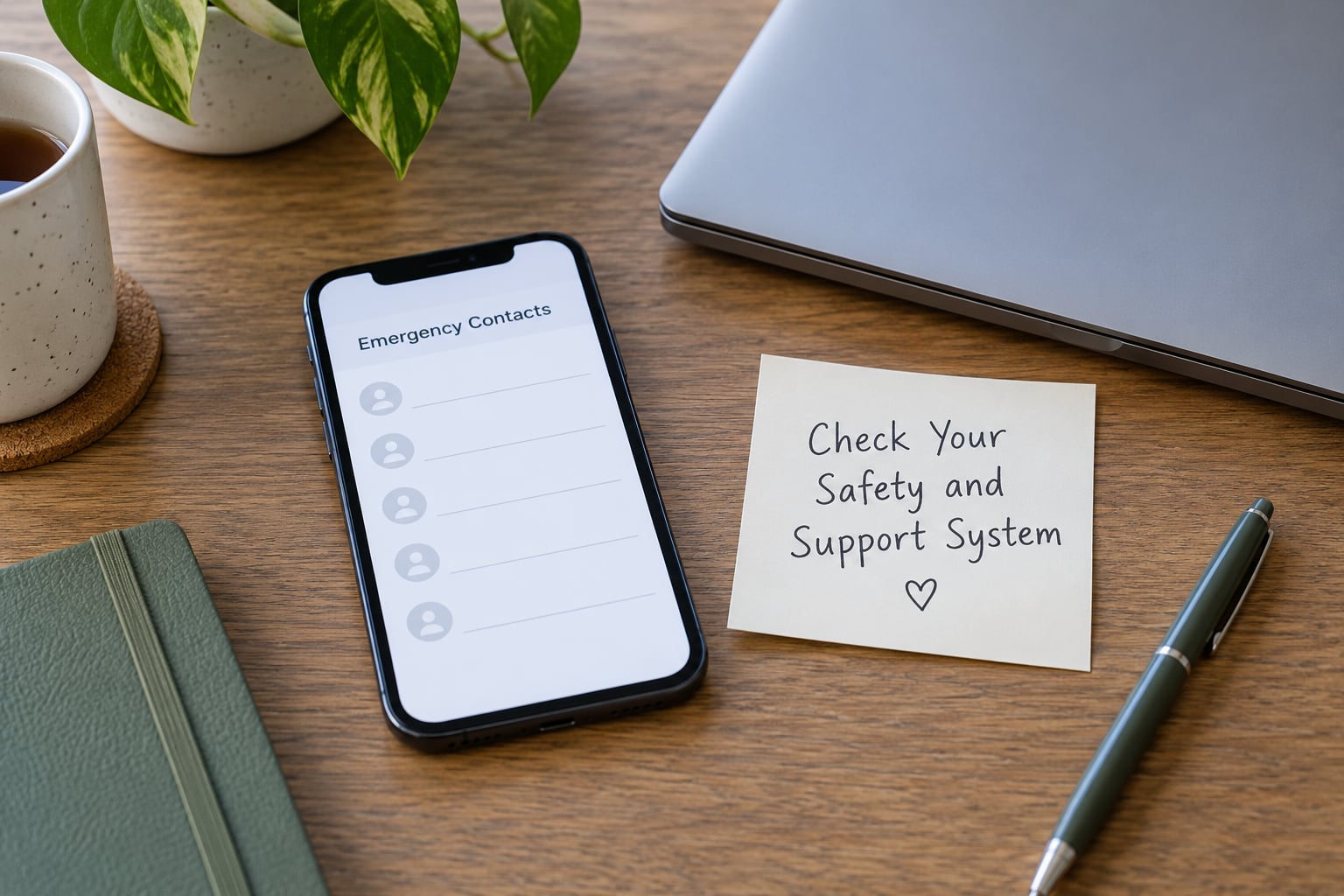
Emotional support and immediate danger need different responses. Feeling dismissed after a bad date is a support problem. Being followed, threatened, tracked, or outed without consent is a safety problem.
For the second category: tell a person today, save evidence somewhere outside your phone if you can, block and report across every app where the account exists, and check whether anything about your public profiles — your employer, school, address, gym, church — could be used to find you. Changing what you share publicly takes a few minutes and removes most of the risk.
Organizations worth having bookmarked before you need them: LGBTQIA+ helplines such as The Trevor Project, GLAAD, and Minus18 in Australia all publish trained-staff lines and online resources for young LGBTQIA+ people. A local bi+ community organization will often do more for a specific problem than a national service, because they already know the local scene.
If you are in immediate danger, contact your local emergency number first and tell a trusted person where you are. This guide is general information, not legal, medical or crisis advice, and local rules differ by country.
6. Decide Whether to Continue, Pause, or End the Connection
Make the call on evidence rather than on hope. Look at acknowledgment, whether the behavior actually changed, whether you still feel comfortable, and whether you feel safe.
Being lonely, being invested, or believing someone would change if they just tried harder are not reasons to continue. Those are reasons people stay in situations that have already ended.
Pause when the person responded well and wants time to learn: put a review point in your calendar, name the specific behavior to check, and go in with the boundary already written down. End it when the harm repeated, the apology was performative, you felt unsafe, or the conversation turned into a debate about whether you are allowed to be who you are.
Leaving without a dramatic goodbye is a complete sentence. Blocking, unmatching and not replying are all valid endings, and you do not owe anyone a debrief about your private life.
Common Mistakes When Responding to Biphobia in Dating
Debating whether biphobia is real. It is a documented prejudice pattern with a long research history, and you are not required to prove it while someone is being cruel to you. Fix: describe the behavior and the effect, skip the definition fight. Reflection tip: if the argument is really about whether your identity is allowed to exist, no amount of evidence will settle it.
Telling yourself it was just a joke. A joke is only a joke when everyone in the room can afford it. Being called someone’s punchline is not something you owe them a laugh for. Fix: judge the comment, not the intention. Reflection tip: notice how often “they were only joking” becomes your reason to stay quiet.
Overexplaining your own sexuality. Some people treat a longer defense as evidence they might be persuaded. Fix: two sentences, then a boundary. Reflection tip: you should not have to pass a test to be believed.
Threatening retaliation in the moment. Ultimatums delivered while angry tend to escalate rather than resolve, especially online. Fix: state the consequence calmly and carry it out quietly if needed. Reflection tip: your safety is worth more than winning that exchange.
Accepting one apology and resetting the clock. A single sorry does not address a pattern. Fix: watch the behavior for weeks, not the words for hours. Reflection tip: if you find yourself hoping to see the change, that hope is information.
Staying because leaving feels expensive. Time spent, money, mutual friends, a shared lease, a planned future — none of these are reasons to remain somewhere you are being diminished. Fix: price the exit honestly, including the worst case. Reflection tip: you have survived every hard exit before this one.
Treating your own discomfort as the problem. Wanting your sexuality taken seriously is not a lot to ask. Fix: name the harm as harm. Reflection tip: check whether you are looking for permission to be upset.
Frequently Asked Questions
What should I do if my date makes a homophobic or biphobic joke?
Name the joke, not their character: that comment was about bisexual people and it landed on me directly. Say plainly what you want next, usually please don’t make those jokes, and then watch what happens over the following weeks. One careless joke from someone otherwise respectful is often worth one clear conversation. A joke they repeat after you asked is a different situation entirely.
How can I tell the difference between biphobia and an uncomfortable misunderstanding?
Look at repetition, intent and cost. A misunderstanding usually shows up once, gets corrected when you explain it, and stops. Biphobia shows up again after you have asked, arrives with pressure to justify your orientation, or costs you something real, like being reduced to a threesome opportunity. Repetition after a clear request is the line that matters most.
Should I explain my bisexual identity to someone who makes a biphobic comment?
Only if you want to, and never as proof. Explaining your identity to someone who is questioning its reality puts you in a debate you did not agree to and cannot win by being articulate. Two sentences is plenty: who you are, how the comment landed, what you want instead. Then shift the conversation to whether they will respect that boundary.
How should a partner respond after they say something biphobic?
Skip the defense and go to ownership: name the specific thing you said, say how it affected you, apologize without attaching a condition, and ask what you can do differently. Then change the behavior, because repair is measured over months rather than in the apology itself. A partner who gets genuinely uncomfortable with their own reaction is usually worth the work.
When is it appropriate to end a dating connection over biphobia?
End it immediately for slurs, threats, attempts to out you, or physical intimidation. For repeated invalidation after a clear request, give yourself one honest window to see whether the behavior actually changes, and treat the absence of change as the answer. You are also allowed to leave because you are tired. Discomfort, disrespect and exhaustion are all sufficient reasons.
How can I support a friend who is dating someone who rejects their bisexuality?
Believe them first, without asking for evidence or suggesting they might be confused. Offer the practical help, like sitting with them while they block accounts, going with them to an event, or driving them somewhere safe. Resist the urge to fix it by attacking the partner, which can cost them the friendship. Ask what support they actually want, then do that.
Conclusion
Start with the first action, not the whole plan: put the behavior on the record in one sentence, state the boundary that follows from it, and make sure one person in your life knows what is happening. Proof of who you are can wait. Safety, support and self-respect cannot.