Swiping forever is not a strategy, it’s a habit with no finish line. How to date intentionally instead of swiping endlessly comes down to three things: decide what you actually want before you open the app, cap the number of people you talk to at once, and move anyone promising into a real conversation within days. The setup takes about an hour of honest thinking; the rest is consistency, and it works the same on Tinder, Hinge and Bumble as it does anywhere else.
This guide is platform-neutral on purpose. Most pages ranking for this question are written by whichever app or matchmaking service wants your sign-up, and none of them hand you a system with actual numbers in it. This one does.
Last updated: October 2026
Table of Contents→
- What You Need
- Step-by-Step: How to Date Intentionally Instead of Swiping Endlessly
- Common Mistakes
- Tips for Building a More Intentional Dating Routine
- Frequently Asked Questions
- How do I stop swiping and actually meet people?
- Should I delete my dating apps or just use them less?
- How do I respond when someone takes days to text back?
- How soon should I suggest meeting after matching on an app?
- Is meeting people offline better than meeting them on apps?
- Are Gen Z ditching dating apps?
- Conclusion
What You Need
You need four things before you open anything, and not one of them costs money.
- A named objective. Not “someone nice” but “a second date with someone I can see regularly” or “a few months of casual dating to reset after a breakup.” Vague goals produce vague results and endless conversations with people you never actually wanted to meet.
- Three to five non-negotiables. The things that would genuinely end it: wanting kids, drinking problematically, not willing to do long distance, a political worldview you can’t compromise on. Five is the ceiling, because a tenth rule turns into a rigid checklist and you start rejecting people for the wrong reasons.
- The right app, or somewhere other than an app. Tinder is volume, Hinge is prompts and stated intentions, Bumble puts the ball in the woman’s court. Each one shapes who you meet, so pick based on what you’re actually looking for rather than which icon is most popular in your friend group. If your goal is a specific kind of person, interest-based groups often beat all three.
- A time cap. Decide how long you will spend before you start. People who cap themselves at about an hour a day and try to meet quickly report better results than people who scroll for four hours on a Sunday, and that number comes up again and again in dating threads.
Step-by-Step: How to Date Intentionally Instead of Swiping Endlessly
Define what intentional dating means for you
Intentional dating means knowing what a good outcome looks like before you meet anyone, then choosing people for that reason rather than reacting to whoever appears next in the feed. It is a change in how you decide, not a label you put on a relationship status.
The difference between casual exploration and intentional dating is not intensity. Both can involve weekly coffee dates with people you’re not sure about. Intentional dating is simply the version where you know why you’re in the room, you tell the other person what you’re looking for, and you’re willing to walk away from a conversation that doesn’t earn more of your time.
| Reactive swiping | Intentional dating |
|---|---|
| You browse until someone appears | You filter, then browse |
| Twelve conversations running at once | Three to five at most |
| Replies measured in minutes | Replies measured in interest |
| Weeks of chatting, no meeting | A date proposed in the first week |
| You feel tired afterwards | You feel finished afterwards |
Create a focused matching strategy
Use the filters as a first pass, not as the whole method. Age range, distance and deal-breaker markers should remove what would never work, and then you make the actual call from the profile: is this person emotionally available, do they want the same kind of thing, do they have something real going on in their life?
Watch out for overfitting to surface details. A shared taste in obscure bands is a decent signal of shared curiosity, but photos, job titles and the odd joke are decoration. Look for evidence of how someone treats people and what they do with their Tuesday evenings.
Make the first message specific
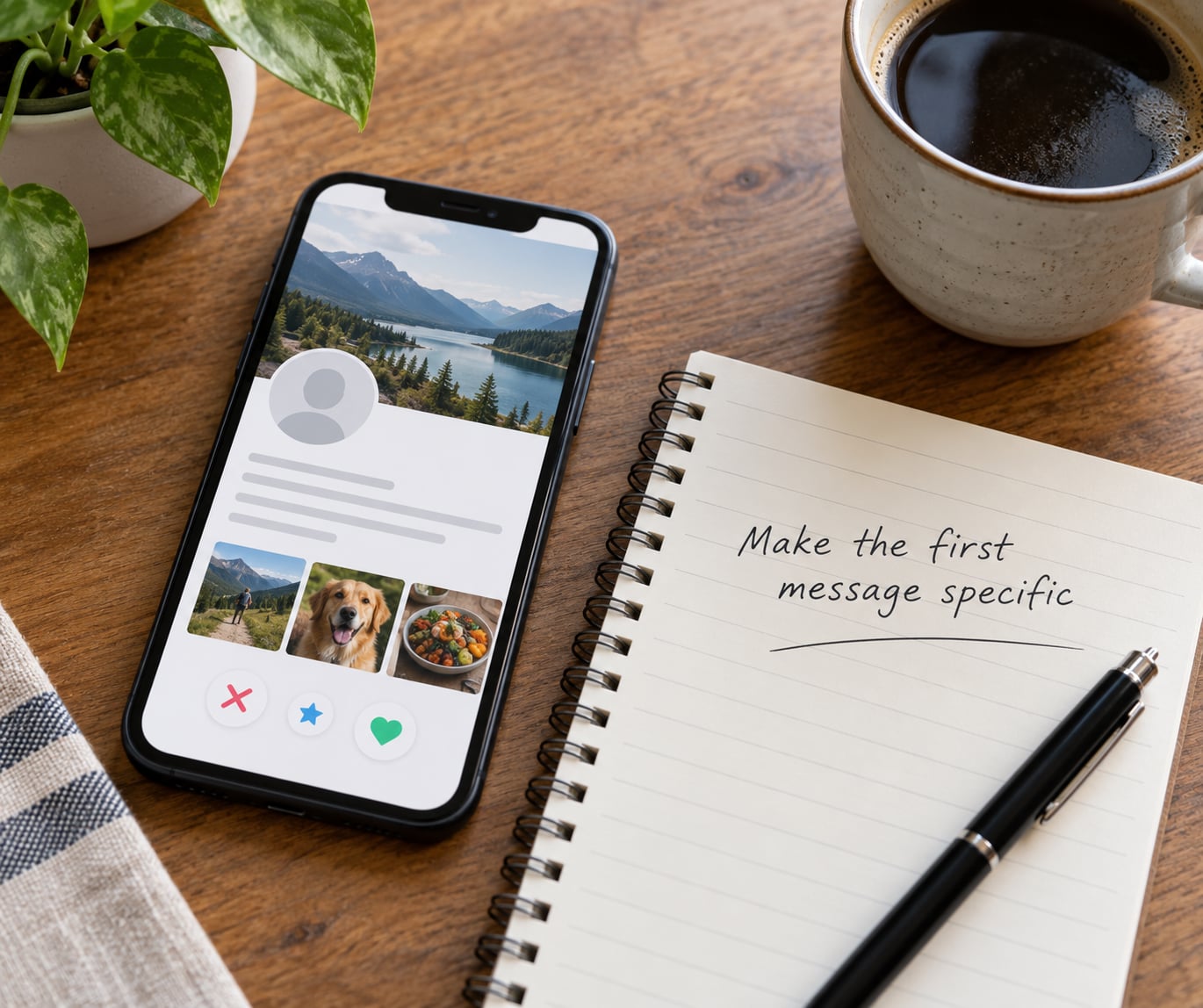
The message decides whether anyone ever sees you in person, so it has to do a small amount of real work. Reference one actual thing from their profile, add a sentence that shows personality, and make replying easy by ending with something that invites a response rather than a thumbs-up.
“Hey, your dog is better trained than I am. What command took the longest?” beats “Hey, what’s up?” every time, because it can only be answered by that person. If someone has a clearly stated goal on their profile, mentioning it early is fine and saves you both weeks of guessing.
Set boundaries before emotional investment grows
Decide your rules early, while it is still boring, so you don’t renegotiate them at midnight because someone was slightly interesting. Three that hold up well: exchange a real first name or handle before voice notes, never move to another platform within the first two messages, and never carry more than five open conversations at once.
Saying you only take things slow is a useful phrase, but “I’ve got a coffee tomorrow and I’m taking Friday off, so nothing’s on my calendar” does more work because it sets a rhythm instead of an attitude.
Evaluate conversations by connection, not constant availability
Fast replies are mostly a scheduling fact, not a measure of interest. Judge what you have by asking whether they ask you things, whether they remember details, and whether the conversation goes somewhere neither of you planned.
Three questions worth asking in the first week: what does a good week look like for you, what made your last relationship end, and what are you doing when you’re not working. Slow replies from someone who writes real answers beat instant replies from someone sending the same half-sentence to six people.
Review your results and adjust your approach
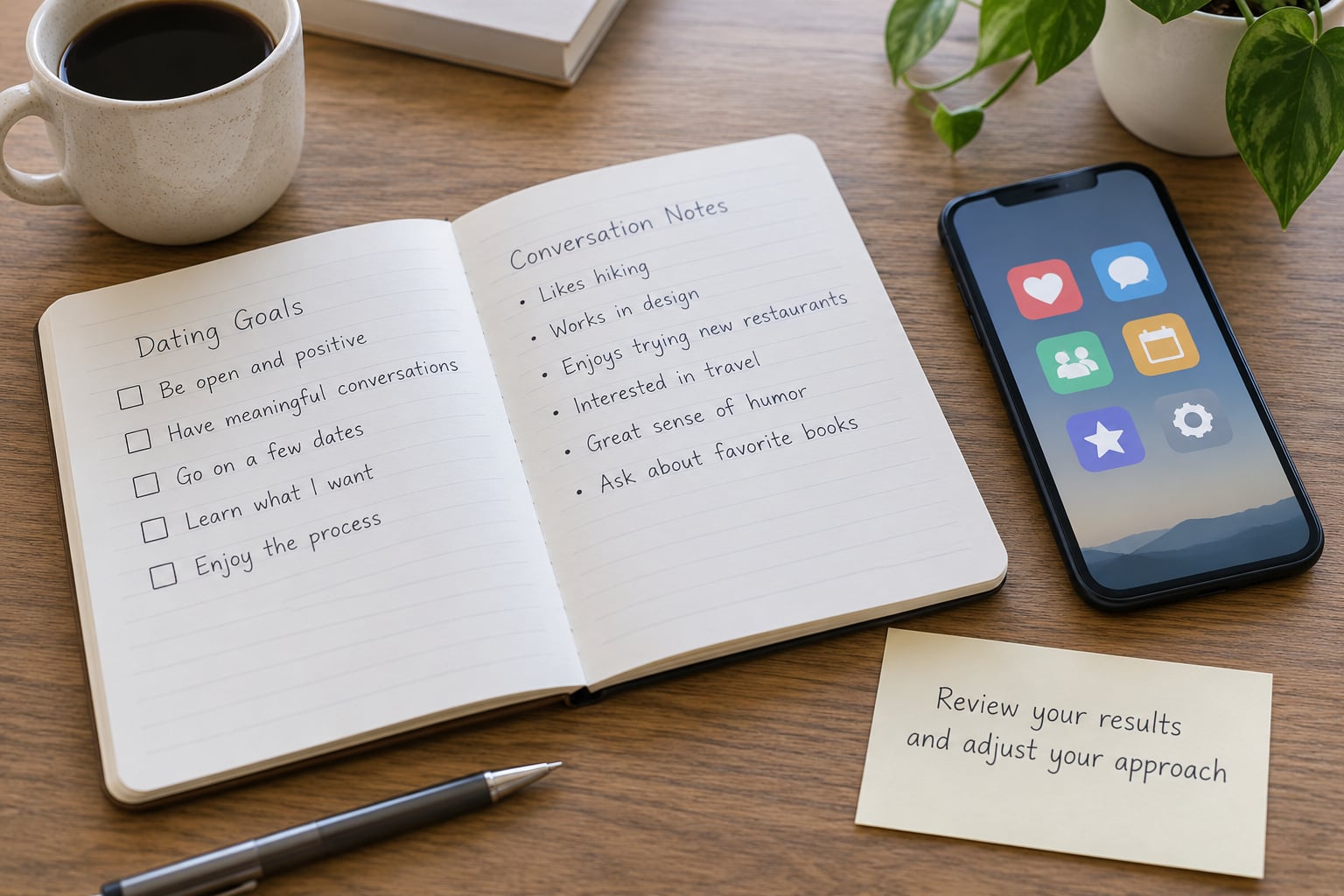
Look at your results every two weeks, not every night. Count conversations started, conversations that reached a real plan, and dates that actually happened. If you are getting plenty of matches and no dates, the problem is the messaging or the timing, not your photos.
Adjust one variable at a time. Swipe less and message more, move one photo, or state your goal more plainly. People overcorrect into cynicism when a slow month happens, and cynicism is not a strategy; it’s the same doom-scrolling with extra steps.
Common Mistakes
- Treating every mismatch as a verdict on you. Someone you pass on isn’t a rejection, and so isn’t someone who passes on you. Right-swiping through hundreds of profiles is a scoring exercise, not evidence about your attractiveness.
- Holding fifteen conversations. Every extra thread is a small tax on attention, and attention is what you bring to the one date that actually matters. Users on r/datingoverthirty describe the opposite problem clearly: too many open chats, half-assed attention in each, burnout by month two.
- Chatting forever to avoid a real date. Three weeks of goodnight texts is avoidance. It feels safe because nobody gets disappointed, and it ends in the situationship zone where nobody has defined anything.
- Reading silence as strategy. Waiting three days to reply looks like confidence to you and reads as disinterest to them. Play hard to get and the people who want you quietly leave.
- Building a rigid checklist. Ten hard rules and you will reject someone excellent over a quirk. Keep the genuine deal-breakers, let preferences stay preferences.
- Confusing intensity with intention. Wanting a partner is not the same as wanting a partner by Thursday. Rushing people into a label because you are tired of swiping produces the same exhaustion you started with.
- Swiping from boredom. People cycle between avoiding dating entirely and manic swiping, and boredom usually drives both. Fill your own time first; the feed is a bad cure for an empty evening.
Tips for Building a More Intentional Dating Routine
- Two app-free days a week. Pick them in advance and put the phone in another room. Rest is part of the system, not a reward for tolerating it.
- A weekly match limit of ten. Ten profiles chosen carefully beats a hundred chosen on autopilot, and it makes you read them properly.
- One lead photo of your face, mid-distance, in decent light. People on r/dating_advice consistently report that the group shot full of mates is the biggest thing killing their match-to-date ratio.
- Ask for the date in the first week. Coffee, a walk, something short and low-stakes. Two hours is enough to know if you want more.
- Meet people offline too. A recurring class, a club that meets monthly, volunteering, a sport team. Repeat contact is what makes real friendship and dating possible, and it also screens for how someone behaves when nobody is performing.
- Take breaks in cycles, not forever. A month off to reset is sensible. Quitting out of frustration and never returning just leaves the pool colder and older.
- Notice the trend, not the single date. One weird evening is noise. Three dates in a row where you feel nothing is information about the filter, not about you.
Frequently Asked Questions
How do I stop swiping and actually meet people?
Stop treating the app as browsing and start treating it as a shortlist. Set non-negotiables, message only profiles that pass them, keep three to five conversations open at once, and propose a coffee or walk within the first week. People who cap themselves to about an hour a day report better results precisely because they stop browsing and start booking.
Should I delete my dating apps or just use them less?
Both work, and the right choice depends on why you are tired. If you are tired of swiping, keep one app and cap it. If you are tired of being judged by strangers, delete all three and put the time into classes, clubs and volunteering for a month. Review after that month: keep what you actually did, drop what you only installed.
How do I respond when someone takes days to text back?
Reply at your own pace and do not treat the delay as a problem to solve. Notice what you are reacting to: a message with real content is worth answering, a delay next to empty messages is not. If it bothers you after two weeks, say so plainly and move on. People respect a direct boundary more than a test.
How soon should I suggest meeting after matching on an app?
Within the first week of good conversation, not the first day and not the third week. Early enough that the chemistry is still untested, late enough that you know you like each other. Keep it short and public, around two hours, and give an easy out so nobody feels trapped. Sustained chatting without a plan is the main way a good match quietly dies.
Is meeting people offline better than meeting them on apps?
Different rather than better. Apps are faster and cheaper for finding someone in your general area; recurring groups give you repeated contact with the same people, which is where real friendships come from. Most people who describe less app burnout are not replacing apps, they are adding one or two recurring activities and lowering how much the app has to carry.
Are Gen Z ditching dating apps?
Not en masse. What is changing is how much time goes into them. Threads on r/datingoverthirty and r/OnlineDating describe people deleting Tinder, Hinge and Bumble, feeling like a person rather than a profile for a few weeks, and often going back with limits. The recurring complaints are about volume, fatigue and cost of attention, not about apps disappearing.
Conclusion
Dating intentionally is mostly subtraction. Fewer open conversations, fewer hours in the app, fewer rules, and one clear objective doing the work that a hundred half-decisions used to do badly. Write your three non-negotiables tonight, pick your ten matches for the week, and send one specific message to the person who actually passes them.